As an engine components supplier who’s spent the last 12 years working with everything from small passenger vehicle piston sets to heavy-duty commercial engine camshafts, I’ve seen firsthand how overheating can turn a routine engine check into a major repair bill—worse, it can completely ruin a customer’s operating day, especially for fleet managers relying on their trucks to meet delivery deadlines. Overheating isn’t just a “driver forgot to check coolant” issue, either; it’s a failure point that starts deep within component design, manufacturing, installation, or even the materials we use to build parts. Let’s break down the most common, science-backed causes, and why partnering with a reliable components supplier matters to prevent these headaches. Engine Components

First and foremost, let’s talk about thermal load mismatches between components. Every engine part—pistons, cylinder heads, valves, connecting rods, even turbocharger housings—is engineered to dissipate heat at a specific rate to match the engine’s operating cycle. For example, a cast aluminum piston, which we supply for most light-duty engines, has a thermal conductivity nearly three times higher than cast iron, so it’s designed to absorb and transfer heat quickly to the cylinder wall. If a customer accidentally swaps that aluminum piston for an iron one (or vice versa, in a heavy-duty diesel), the mismatch creates hot spots. The iron piston can’t pull heat fast enough from the combustion chamber, so its top ring groove overheats, leading to ring sticking, loss of compression, and ultimately, partial or total seizure. I once had a local auto repair shop reach out to us a few years back; they’d installed cheaper, unbranded iron pistons in a 2018 pickup, and the truck seized 1,200 miles later because the thermal load didn’t align. That’s a perfect example: cheap, off-spec components aren’t just a cost-cutting trick—they directly cause overheating by ignoring basic thermal engineering.
Next, inadequate heat transfer surface area and fouling of cooling pathways. Let’s get specific with cylinder heads, a component we manufacture in-house. The intake and exhaust ports, plus the coolant jackets around the combustion chamber, form the network that moves combustion heat away. If that coolant jacket is too narrow during casting, or becomes clogged over time with scale, oil sludge, or corrosion, coolant can’t circulate to pull heat away from the exhaust valves, which already see 1,800°F+ temperatures during combustion. Even a 10% reduction in coolant flow, which happens with minor scale buildup, can raise exhaust valve temperatures by 200°F—enough to soften the valve’s alloy, leading to distortion and leak seats. Another common fouling issue: carbon buildup on piston tops. When unburned fuel or oil burns onto the piston’s crown, it acts as an insulator, trapping heat instead of letting it transfer. We test for this in our quality control lab; we’ve seen test pistons with 0.5mm of carbon buildup run 150°F hotter than a clean, standard piston. That’s a preventable issue, but it’s one that’s often overlooked when customers source parts without understanding how heat moves through their entire engine’s system.
Then there’s the issue of material compatibility and thermal expansion mismatches. Every metal expands at a different rate when heated, and when mating components have mismatched coefficients of thermal expansion (CTE), it creates stress that leads to overheating and component failure. For example, aluminum alloy pistons have a CTE of roughly 23 x 10^-6 per °C, while cast iron cylinder walls have a CTE of about 12 x 10^-6. To compensate, we machine piston skirts with a slight taper and clearance at room temperature, so when heated, the piston expands to match the cylinder wall. If a customer uses an aftermarket bronze wrist pin (CTE 18 x 10^-6) that’s not paired with a matched piston material, the pin will bind as the engine warms up, creating friction that turns into heat. We had a fleet customer in Texas last year that ran 30 heavy-duty trucks on mis-sourced wrist pins; 8 of them threw connecting rods within 3 months because the pin seized, the connecting rod couldn’t rotate, and the friction-generated heat melted the rod’s bearing. That’s a direct result of ignoring material CTE compatibility—something a specialized components supplier will audit before shipping parts, not something you’ll get with a generic off-the-shelf part.
Cooling system component failure ties directly to engine part overheating, too—especially radiators, water pumps, and thermostats. It’s easy to blame the engine part itself, but a failed water pump impeller (which we supply as a balance set with pistons and connecting rods for some engines) can reduce coolant flow by 40% or more. Impellers are often made of cast zinc for cheap parts, but that metal corrodes quickly in antifreeze, shedding fragments that clog the radiator. We test our water pump impellers with accelerated corrosion tests (1,000 hours in a 50/50 antifreeze-water mix) to ensure they don’t break down prematurely. Thermostats, another component we stock, are calibrated to open at a specific temperature; if a generic thermostat opens too late, coolant never circulates to the cylinder head, leading to extreme overheating. Last winter, a customer tried to replace a faulty thermostat with a $10 generic part, and it opened at 195°F instead of the specified 180°F—their cylinder head cracked in 50 miles of highway driving, because the heat couldn’t dissipate fast enough. That’s a case where choosing the wrong cooling component, even if it’s listed as “compatible,” leads directly to engine part overheating.
Let’s not overlook combustion-related overheating, which is often misdiagnosed as a component failure itself. Lean air-fuel mixtures, for example, mean more oxygen in the combustion chamber, leading to higher flame temperatures—up to 2,500°F, compared to 1,800°F for a stoichiometric mixture. That extra heat doesn’t just stress the piston and cylinder head; it can cause pre-ignition, where the fuel-air mix ignites before the spark plug fires, creating a shock wave that hits the piston’s crown. We’ve seen pistons with melted crowns from pre-ignition, a problem that’s often blamed on a “bad piston” when it’s actually a fuel system issue. Similarly, excessive idle time—common for delivery vans or construction equipment sitting idle on job sites—keeps the engine at a low operating temperature, allowing unburned fuel to wash over the cylinder walls and thin the oil. Thin oil doesn’t lubricate or transfer heat well, so the piston rings can’t move freely, leading to hot spots on the piston skirt. As a components supplier, we work with our customers to connect the dots: a piston issue isn’t always the piston’s fault, which means avoiding costly replacements for parts that were actually working as designed.
Now, why does this matter for you, as someone relying on engine components to keep your business running? Overheating isn’t an inevitable part of engine ownership—it’s a preventable issue when you work with a supplier who understands the science behind thermal management, not just how to stamp a part with a part number. At our company, we don’t just ship pistons or valves; we test every component for thermal conductivity, CTE alignment, and fit to match the original equipment manufacturer (OEM) specifications, because we know that a part that fits and performs as designed is the first line of defense against overheating. We also offer technical support to help customers diagnose root causes, not just replace faulty parts—like when that fleet customer had wrist pin issues, we helped them trace it back to a parts supplier that sold untested, non-matched components, and adjusted their sourcing to use our calibrated sets.
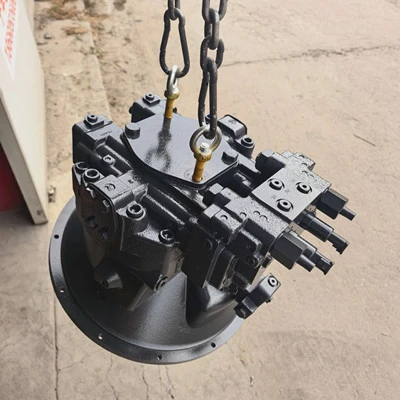
If you’re experiencing recurring overheating issues, or you’re looking to upgrade your engine components to prevent future failures, we can walk you through every step. From selecting the right piston material for your application to auditing your cooling system’s components, we’ll provide the expertise you need to keep your engines running at optimal temperatures. There’s no need to deal with hidden costs or unexpected downtime when you partner with a supplier that’s invested in your success, not just a one-time sale. If you’re ready to discuss your specific engine needs, we encourage you to reach out and schedule a consultation to review your current components and overheating concerns.
Engine Consumables References
- Heywood, J.B. Internal Combustion Engine Fundamentals. McGraw-Hill Education, 2018.
- Taylor, H.C. The Thermodynamics and Thermal Loading of Internal Combustion Engine Components. SAE International Journal of Engines, vol. 100, no. 3, 1992, pp. 1457-1472.
- Kern, D.Q. Process Heat Transfer. Pearson Education, 2013.
- SAE International. Thermal Management for Passenger Vehicle Engines: Best Practices and Failure Modes. SAE International, 2021.
Yantai Dayun Machinery Parts Co., Ltd.
As one of the most professional engine components suppliers in China, we are committed to providing high quality products with low price. Please feel free to buy discount engine components in stock here from our factory. Contact us for quotation and free sample.
Address: NO91, Zhenzhong Street, Fushan District, Yantai City
E-mail: dayunhyd5123@163.com
WebSite: https://www.dayunexcavator.com/
