If you’re in the market for office space these days, you’ve probably stumbled on modular options and wondered: how much does a modular office actually cost? As a modular building supplier, I get this question all the time—from small startups needing a couple of rooms to big corporations looking to outfit an entire floor or even a full campus. The truth is, there’s no one-size-fits-all price tag, and it’s way more than just “cheap versus traditional construction.” Let’s break this down like I would chat with a client over coffee, no boring spreadsheets or jargon. Modular Building
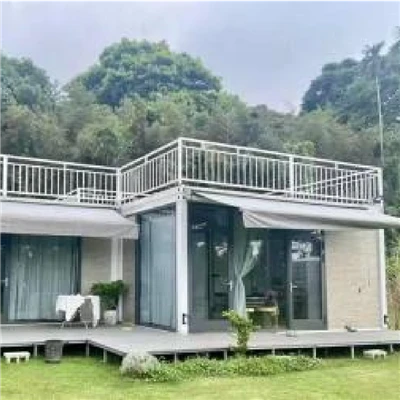
First off, let’s clear up a common myth: modular offices aren’t just the cramped, temporary trailers you see at a construction site. Today’s modern modular units look just like stick-built offices—floor-to-ceiling windows, open workstations, conference rooms, even kitchenettes and break spaces. They’re built in a factory, not on-site, which cuts down on waste and labor costs, but that efficiency doesn’t mean you can guess a price off the top of your head.
So, what are the main factors that tweak the cost? Let’s start with size. A basic 2-person office pod? That’s usually $15,000 to $25,000 total. It comes with drywall, a door, a desk, and a window—ready to drop and plug in. But if you’re a 20-person startup needing an open floor plan with 3 private offices, a conference room, and a 2-stall restroom? That jumps to $100,000 to $150,000. Size is the big-ticket variable, but it’s not the only one.
Next, finishes and customizations. If you go super basic with white walls, vinyl floors, and no frills, you’re on the lower end. But if you want hardwood floors, granite countertops in the break room, smart tech like video conferencing screens and keyless entry, or even branded wall graphics? Add 15 to 30% to the base cost. A lot of people don’t factor in tech upgrades, and by the time they’re ready to move in, their budget’s stretched thin. Pro tip: ask your supplier if you can bundle tech with the unit—we often do that at a small discount instead of adding it on later.
Location and site prep are also make-or-break. Wait, right—modular units don’t just float; you need a spot to put them. If your property already has a level concrete pad, access for delivery trucks, and utility hookups (electric, water, sewer, internet), site prep is minimal: maybe $5,000 to $10,000. But if you’re on a sloped lot, or don’t have utilities run to the area, or need to build a ramp for accessibility, that can jump to $20,000 or more. And don’t forget delivery and installation fees—most suppliers charge 10 to 15% of the unit’s base price to drop it, set it, and connect everything. For a 2,000 sq ft office, that’s $10,000 to $15,000 right there.
Another thing: permanent versus temporary. If you need an office for 1 to 3 years, renting a modular unit might make sense—usually $150 to $300 per person per month. But if you’re planning a 10+ year setup, buying is almost always cheaper. We’ve had clients who thought renting would save them money, only to realize over 5 years, they’d pay more than the cost of buying a custom unit and selling it later. Also, some buyers don’t know that modular offices are mobile, but moving them after setup can cost $10,000 to $20,000, so if you think you might relocate, build that into your budget early.
Wait, what about building codes and permits? A lot of first-time buyers skip this, and it’s a headache. Modular units are pre-inspected by the factory, but you still need local permits for site placement and utility connections. Permit costs vary by city, but they usually run 5 to 10% of the total project budget. For example, a $120,000 office would have $6,000 to $12,000 in permits. Some suppliers include permit assistance, so ask about that—if they handle the paperwork, it saves you time and often avoids fees for mistakes.
Let’s throw in a real example to make this concrete. A small marketing agency I worked with last year needed a 1,800 sq ft office for 15 people, right next to their existing brick building. They had a level gravel pad, existing electric and water lines. They went with a custom design: 2 private offices, a conference room, a break room, and open workstations with laminate floors and painted walls. The base unit was $85,000, finishes added 10% ($8,500), delivery/installation was $9,000, permits were $5,000. Total cost came to $107,500. They were able to move in in 8 weeks (way faster than the 6 months they’d planned for stick-built) and had no surprises. That’s way more accurate than the $60,000 they’d originally estimated.
Now, why does speed matter here? Factory-built modular offices are done in 4 to 12 weeks, compared to 4 to 8 months for traditional construction. That shorter timeline saves you money on things like rent for temporary space, lost productivity from being displaced, or even delayed client projects. We had a restaurant chain a couple years back that needed 4 new offices for their operations team to launch a new loyalty program—they would have had to delay the launch 3 months with stick-built. Modular let them move in in 6 weeks, and the extra revenue from the early launch covered the entire difference in cost between modular and traditional. A lot of clients forget to factor in those indirect savings, but they’re huge.
What about common mistakes that drive up costs? One big one is choosing the wrong size. A lot of people size their office for their current team, not accounting for growth. If you hire 5 more people in a year, you’ll either have to add on a module (which costs 20 to 25% more per square foot than a base unit) or move entirely. We usually recommend adding 10 to 15% extra space for future hires—it adds a few thousand dollars upfront but saves you a big headache later.
Another mistake: skipping utility checks. If your site doesn’t have the right electrical capacity for office equipment, you might need to upgrade that, which can add $5,000 to $10,000. Always have a local electrician do a quick check before you finalize your plan—we’re happy to connect you to trusted folks, since we work with them all the time.
And what about maintenance? Modular offices are just as easy to maintain as stick-built, but there are a few small things to note. Factory finishes are durable, so scratches and scuffs are easy to touch up, and the HVAC systems in modern modular units are energy-efficient, which cuts down on utility bills by 10 to 15% compared to older trailers. We offer a 1-year maintenance package for about 5% of the total cost, which covers any repairs or tune-ups—worth it for peace of mind.
Wait, let’s address the elephant in the room: is modular more expensive than traditional construction? It depends. If you’re building a basic, small office, traditional might be slightly cheaper. But if you want custom finishes, smart tech, or need to move in fast, modular often ends up being a wash or even cheaper when you factor in time and utility savings. Plus, modular is more sustainable—factory-built units produce 30% less waste than stick-built, which is a big plus for eco-focused companies.
I’ve had clients come in thinking modular is a cheap, temporary fix, then leave shocked at how nice the units are and how flexible they are. We’ve even had schools turn modular offices into classrooms, and churches use them as youth spaces. The key is working with a supplier who can walk you through every cost, no hidden fees.
So, how do you get an accurate number? The best thing is to share your needs with a supplier—tell them your size, location, timeline, and must-have features. We’ll send a detailed quote that breaks down every cost: unit price, site prep, delivery, installation, permits, even maintenance options. No vague numbers, no “call us for pricing” tricks. We want you to feel confident in what you’re spending, no surprises halfway through.
If you’re ready to stop guessing and get a real idea of what your modular office will cost, reach out to us to chat through your project. We’re here to answer questions, adjust your plan to fit your budget, and make the process as stress-free as possible.
Flexible Stone Panel References
- Modular Building Institute. (2023). Cost Comparison of Modular vs. Traditional Construction.
- National Association of Home Builders. (2022). Factory-Built Housing: Waste Reduction and Efficiency Metrics.
- U.S. Small Business Administration. (2021). Cost Considerations for Temporary and Permanent Office Space.
Lvke Prefabricated Building (Suzhou) Co., Ltd.
With abundant experience, we are one of the most reliable modular building manufacturers and suppliers in China. Please feel free to wholesale custom made modular building at competitive price from our factory. Good service and quality products are available.
Address: 102, #8 JinPu Road, SuZhou, China
E-mail: Ray.li@lvkegroup.cn
WebSite: https://www.lvkebuilding.com/
