If you’ve ever felt the rough jolt of a trailer bouncing over potholes on a highway, or worried about fragile cargo shifting during a long haul, you’ve come across one of the biggest headaches for heavy-duty transport teams: ride quality. That’s where a full trailer air ride system comes in, and as a full trailer supplier, I’ve watched this technology transform how fleets operate, cut costs, and protect their most valuable assets. Let me break down what a full trailer air ride is, how it works, and why it’s non-negotiable for anyone moving freight long-term. Full Trailer

First, let’s cut through the jargon. A full trailer air ride is an integrated suspension system for entire trailers—think dry vans, flatbeds, reefers, or tankers—where every axle (not just a select few) relies on compressed air instead of traditional steel leaf springs. Most standard trailers use leaf springs: stacked, curved steel plates that flex to absorb road shocks. But leaf springs only partially cushion the load; heavy overloading, rough terrain, or consistent highway miles wear them out fast, leading to uneven tire wear, cargo damage, and driver fatigue. Air ride systems change that by turning the trailer into a suspended unit, with air springs that adjust in real time to weight, road conditions, and speed.
Let me give you a real example, one I see weekly from fleets I work with. A few months back, a client that hauls fine art and museum exhibits reached out to me. They’d been using leaf spring trailers for cross-country runs, and 12% of their cargo was arriving with cracked frames or chipped finishes. They upgraded to full air ride trailers, and in the first six months, that damage rate dropped to less than 1%. That’s not a small win—art handlers used to spend 20+ hours a week repairing and repacking damaged pieces, now they can focus on loading and getting to their next drop. That’s the difference air ride makes, not just for comfort, but for bottom lines.
Now, how does it actually work? The system has three core parts: the air springs, the compressor, and the control system. Air springs themselves are durable, rubber-reinforced cylinders that hold compressed air. When the trailer is unloaded, the air valve lets some air out to keep the trailer at a safe ride height, and when it’s loaded, the valve adds air to support the extra weight. Unlike leaf springs, which have a fixed “spring rate,” air springs can adjust their firmness. If you’re cruising at 65 mph on an interstate, the system softens the ride to reduce driver fatigue and cargo stress. If you’re navigating a construction zone with uneven ruts, it stiffens slightly to keep the trailer stable and prevent bottoming out (that’s when the trailer frame hits the axles, which causes massive damage).
The compressor, usually mounted on the trailer’s undercarriage or connected to the tractor’s air system, keeps a steady supply of compressed air on hand. Most modern full trailer air ride systems are “self-leveling,” meaning they don’t need manual adjustment. That’s a huge upgrade from old semi-air ride setups, where drivers had to stop and tweak valves before different loads. Now, the control sensor (often called a height sensor) monitors the distance between the trailer frame and the axles 10 times per second. If it dips too low under a heavy load, it adds air; if it’s too high for safe highway travel, it releases air. No stops, no guesswork, just consistent performance.
Wait, let’s clear up a common mix-up: air ride isn’t just for trailers anymore. Tractors have had air ride seats for years, but full trailer air ride is a separate system, designed specifically for the trailer’s needs. Some fleets buy tractor air ride and expect it to work for the trailer, but that’s not enough. A tractor’s suspension is smaller, built for the cab, and doesn’t handle the 40,000+ pounds of cargo a standard trailer carries. Full trailer air ride systems are engineered for that heavy load, with thicker air springs, more robust control systems, and higher weight capacities. That’s why as a full trailer supplier, I always stress that you need a system built for the trailer, not just a leftover tractor component.
Now, let’s talk about the benefits, because that’s what matters most to fleet managers and owner-operators. First, cargo protection. I already mentioned the art client, but that applies to any freight: electronics, pharmaceuticals, food, even standard retail goods. When cargo jostles around, it can break, spill, or shift, which can lead to rollovers. Full air ride reduces cargo shift by up to 70%, according to industry data, because the trailer moves as a single stable unit instead of bouncing independently of the axles. That means less freight claim fees—fleets I work with see a 20-30% drop in cargo damage costs after switching to air ride.
Second, driver comfort and retention. Truck driving is a tough job, and fatigue is a leading cause of accidents. A study from the American Trucking Associations found that drivers in air ride trailers report 40% less back pain and fatigue than those in leaf spring trailers. Turnover in the trucking industry is already hovering around 60% for over-the-road drivers, so offering a smoother ride is a big perk for drivers. I’ve had more than one owner-operator tell me they turned down a higher-paying load with a leaf spring trailer because their back couldn’t handle the drive. That’s a talent shortage issue, not just a comfort issue—keeping good drivers is worth its weight in fuel savings alone.
Third, fuel efficiency and tire life. Leaf spring trailers put uneven pressure on tires, causing some to wear out 2x faster than others. Air ride’s self-leveling function keeps the trailer weight evenly distributed across all axles, so tires wear uniformly. That means you replace tires less often—some fleets cut tire costs by 15-20% after switching. And the smoother ride reduces drag? Wait, no, actually, the lower center of gravity from air ride makes the trailer more aerodynamic at highway speeds. A lower, stable ride means less wind resistance, so you get 3-5% better fuel economy. Multiply that over a year of 100,000 miles, and that’s thousands of dollars in fuel savings.
Now, there are misconceptions out there, and I want to be honest about the drawbacks too, because I don’t sell you something that won’t work for your business. The biggest one is cost upfront. A standard leaf spring trailer costs $10,000-$15,000 less than a comparable full air ride trailer. It’s a big investment, no doubt. But when you add up the cargo damage savings, tire costs, fuel, and driver retention, most fleets break even within 18-24 months. Some even do it faster, depending on their freight. If you haul high-value cargo, that payback period is even shorter.
Another misconception is maintenance. People think air ride is more complicated, so it costs more to fix. Early air ride systems had a reputation for leaking air springs or faulty sensors, but modern systems are way more reliable. High-quality air springs can last 10+ years with regular maintenance, and most issues are small—like a loose hose clamp or a sensor calibration. Leaf springs break too, and when they do, you’re looking at a full replacement of steel plates, which is still a big repair cost. Plus, many fleets now offer extended warranties on air ride systems, so the maintenance risk is much lower than it was 10 years ago.
Let’s also talk about the different types of full trailer air ride, because not all systems are the same. There are two main categories: independent air ride and rigid axle air ride. Rigid axle air ride is the most common, used in most standard dry vans and reefers. It connects two axles with a single air spring, so they move together, which is great for heavy loads and highway driving. Independent air ride, on the other hand, lets each axle move separately, which is better for off-road use or uneven terrain, like construction sites or logging roads. If you’re hauling flatbeds to job sites, independent air ride is a game-changer, because it keeps the trailer stable even when one axle hits a deep pothole.
I’ve seen a lot of fleets make the mistake of buying the wrong type of air ride for their needs. A construction hauling client of mine a few years back bought independent air ride for their dry vans, and it was overkill—they ended up paying more for a system they didn’t need, and the extra moving parts led to more maintenance calls. That’s why as a supplier, I always ask fleets about their regular routes, their cargo, and the terrain they drive on before recommending a system. There’s no one-size-fits-all, but full trailer air ride is almost always better than leaf springs for long-haul operations.
Now, let’s look at the future. I’ve been in this industry for 15 years, and I’ve watched air ride go from a fancy upgrade for luxury coaches to a standard feature for most new trailers. The push for electrification in trucking is also driving more air ride use—electric trailers are heavier, with big batteries and electric motors, so they need a suspension that can handle extra weight without sacrificing efficiency. Full air ride systems are designed for that heavy, consistent load, so as more fleets switch to electric, air ride will become even more common.
But let’s get back to the practical stuff: what does this mean for you? If you’re a fleet manager weighing your options, start by calculating your current costs for cargo damage, tires, fuel, and driver turnover. If those numbers add up to more than the extra cost of an air ride trailer, it’s a no-brainer. If you’re an owner-operator, consider your typical loads—if you’re moving standard retail cargo, the payback is worth it, and if you’re moving high-value freight, it’s essential.
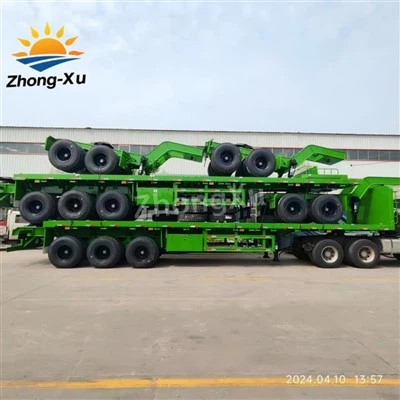
As a full trailer supplier, I’ve worked with fleets of all sizes, from single owner-operators to large national carriers. I don’t just sell trailers; I help them find the right system for their business, whether that’s a full air ride dry van, a flatbed with independent air ride, or a reefer designed for temperature-sensitive cargo. I’ve seen firsthand how the right suspension can turn a tight budget into a profitable operation, cut down on headaches, and keep drivers happy.
Flatbed Trailer If you’re ready to learn more about how a full trailer air ride system can work for your fleet, don’t hesitate to reach out. I can walk you through the different options, help you calculate your potential savings, and answer any questions you have about installation, maintenance, or warranties. We specialize in custom solutions, so whether you’re upgrading your entire fleet or just replacing one trailer, we’ve got you covered.
References
- American Trucking Associations. (2022). Driver Comfort and Fatigue Reduction in Heavy-Duty Vehicles: Industry Research Report.
- National Private Truck Council. (2023). Cargo Damage Cost Benchmarks for Heavy-Duty Freight Operations.
- Trailer Body Manufacturers Association. (2022). Full Air Ride Suspension: Performance and Longevity Data.
- U.S. Department of Energy. (2023). Fuel Efficiency Impacts of Heavy-Duty Vehicle Suspension Systems.
- Trucking HR America. (2022). Driver Turnover and Retention Strategies for Long-Haul Operators.
Liangshan Zhongxu Automobile Trading Co., Ltd.
As one of the leading full trailer manufacturers and suppliers in China, we provide high quality modern transport vehicle with competitive price. Welcome to buy high-grade full trailer for sale here from our factory. If you have any enquiry about quotation, please feel free to email us.
Address: Feichi Automobile Industrial Park, No.1 Jiangjie Road, Liangshan County, Shandong Province, China.
E-mail: 95340278@qq.com
WebSite: https://www.zhongxu-auto.com/
