Hey everyone, Steel Cord Conveyor Belt
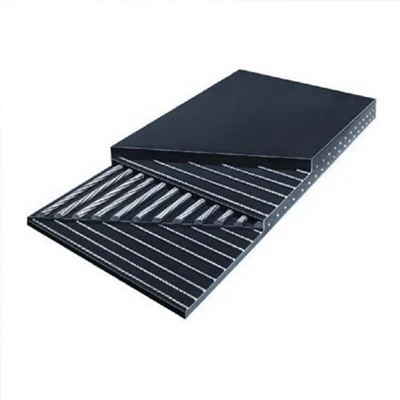
If you’ve ever worked in mining, quarrying, port operations, or heavy manufacturing, you know how crucial conveyor belts are for moving tonnes of material day in and day out. But let’s be real—when you’re hauling heavy stuff like iron ore, coal, or even raw steel parts, regular belts just don’t cut it. A lot of folks reach out to me as a steel cord conveyor belt supplier and ask the same question: “Are steel cord belts actually built for heavy loads?” Spoiler alert: Yes, but there’s way more to it than just “they’re sturdier.” Let’s break this down like we’re chatting over a coffee, no confusing jargon, just straight facts.
First off, let’s do a quick reality check on what heavy loads mean here. For most standard conveyor belts, “heavy” might be a few hundred kilos per metre of material, but when you’re talking mining, that’s often over a tonne per metre. Imagine a single conveyor carrying 5,000 tonnes of coal an hour— that’s like lifting a small car every second. Regular belts use textile cords (polyester or nylon) to reinforce their core, right? Those are great for light to medium loads, but push them too hard, and you’ll get stretching, fraying, or even a full belt snap mid-operation. That’s not just downtime; that’s thousands of dollars lost every hour your plant is idle.
Steel cord belts? Their reinforcement is exactly what it sounds like: high-tensile steel wires twisted together into cords. It’s like the difference between a cotton rope and a steel cable— same basic shape, but way more strength. Let’s put numbers to this, because numbers don’t lie. A standard textile conveyor belt might have a tensile strength of 1,000 Newtons per millimetre (N/mm) of belt width. A steel cord belt? We’re talking 3,000 to 10,000 N/mm, depending on the grade. That’s 3 to 10 times the strength. No wonder mines and ports that move heavy bulk materials swear by them. But wait, strength alone isn’t enough for heavy loads— you need durability too, right?
Heavy loads don’t just put stress on the belt’s length; they also bash against the belt’s surface, drag over idlers, and carry sharp, abrasive materials. Steel cord belts handle this way better than textile ones for a couple of reasons. First, the steel cords are embedded in a rubber compound that’s way more resistant to cuts and tears— perfect for moving rock or metal scrap that would slice a textile belt in two in no time. Second, steel has way less stretch than polyester or nylon. A textile belt might stretch 2-3% under a heavy load, which means you have to adjust tension constantly, replace splices more often, and waste energy fighting that extra slack. A steel cord belt stretches less than 0.5% under the same load. Less stretching = more consistent operation = lower maintenance costs, which is a huge win when you’re running 24/7.
But here’s the thing I tell every new customer: steel cord belts aren’t one-size-fits-all for heavy loads. You can’t just grab a random steel cord belt and expect it to work for hauling 10,000 tonnes of iron ore. We’ve got to match the belt’s specs to your exact operation. For example, if you’re moving heavy, sharp materials, you need a thicker top cover with high abrasion-resistant rubber, not a basic cover. If your conveyor has a steep angle, you might need a profile belt with cleats attached— steel cord’s rigidity makes it perfect for those cleats to stay attached without pulling loose. And don’t even get me started on splices. A bad splice is the number one cause of conveyor breakdowns, especially with heavy loads. Steel cord splices aren’t just cut and glued; they’re usually made by overlapping the steel cords, vulcanizing them with rubber, and sometimes even using steel plates to reinforce the splice— that’s why a good steel cord splice can handle almost as much strength as the belt itself. Textile splices, by contrast, are much weaker, so they’re the first thing to go when load gets heavy.
Now, let’s talk about common myths I hear from people who are new to steel cord belts. First myth: “They’re way too expensive for my operation.” Sure, upfront they might cost more than a textile belt, but let’s do the math on long-term costs. A heavy-duty textile belt might last 2-3 years in a harsh mining environment, while a steel cord belt can last 7-10 years. Add in less downtime (no mid-operation snaps, fewer tension adjustments), lower maintenance (no frequent splice repairs, less replacement), and higher energy efficiency (less stretching means less power needed to move the belt), and the steel cord belt actually saves you money in the long run. I’ve had customers tell me they made back the extra cost in 6 months just from reduced downtime after switching.
Second myth: “Steel cord belts are too heavy to install.” Okay, they are heavier than textile belts, but that’s where your installation team’s expertise comes in— and we usually help with that. We provide specific guidelines for lifting, splicing, and aligning the belt, and even work with installation crews to make sure it’s done right. Plus, modern steel cord belts are engineered to be more flexible than old-school versions, so they can bend around conveyor pulleys with smaller diameters, which means you don’t need to redesign your whole conveyor system to use one. That’s a big one— no need for a full plant overhaul, just a simple switch if your current setup can handle the pulley size.
Wait, let’s also mention real-world examples to make this concrete. Last year, a coal mine in West Virginia hit me up because their textile belts were snapping every 6 months when hauling 8,000 tonnes of coal per hour. They were losing $15,000 every time the belt broke, plus the cost of replacement. We swapped their old belts for a grade 5 steel cord belt with a thick abrasion-resistant cover, and now that mine hasn’t had a belt failure in over 18 months. They told me the maintenance costs dropped by 70% too. Another one: a port in Rotterdam that moves heavy steel coils. They used to use flat belts that would slip or wear out quickly under the weight of coils. We recommended a steel cord profile belt with cleats that keeps coils from sliding, and it’s cut their belt replacement rate by half.
Of course, no product is perfect, and steel cord belts aren’t either. They do have limits. If you’re moving extremely light, fine material (like grain or sand), a textile belt is more than enough and might be cheaper upfront. Steel cord belts are also more susceptible to damage from sharp, impactful loads if the idlers aren’t installed correctly— a big rock dropping onto the belt from a height can dent the rubber around the cords, so we advise adding impact beds at loading points to absorb that shock. And if your conveyor is very short, the extra strength of a steel cord belt might be overkill. But for any heavy-load operation where uptime and durability matter, steel cord belts are hard to beat.
So, to circle back to the original question: yes, steel cord conveyor belts are absolutely suitable for heavy loads— when they’re chosen and installed correctly. They’re built with stronger reinforcement, less stretch, and better durability than textile belts, which translates to less downtime, lower maintenance, and long-term cost savings. But don’t just take my word for it— look at the numbers, talk to other operators in your industry, and make sure you pick the right grade for your exact needs.

If you’re dealing with heavy loads and tired of conveyor belt breakdowns, let’s chat. I can walk you through the right steel cord belt spec for your operation, answer any questions you have about durability, installation, or costs, and help you figure out if a switch makes sense for your plant. Drop me a line to start the conversation.
Aramid Conveyor Belt References:
- International Association of Mining and Construction Equipment, Conveyor Belt Performance Standards for Heavy Bulk Handling, 2022.
- Rubber Manufacturers Association, Reinforced Conveyor Belt Material Comparison, 2021.
- Global Port Operations Network, Heavy Load Conveyor Belt Case Studies, 2023.
Alumina Technology (Qingdao) New Materials Co., Ltd.
As one of the most professional steel cord conveyor belt manufacturers and suppliers in China, we also support customized service. With abundant experience, we warmly welcome you to buy steel cord conveyor belt for sale here and get quotation from our factory. For price consultation, contact us.
Address: No.448, Jiangshan South Road, Huangdao District, Qingdao City, Shandong Province
E-mail: Gloria.zhang@contitech.cn
WebSite: https://www.altechconveyorbelt.com/
