As a used tower crane supplier who’s spent the last 12 years navigating crane yards, construction sites, and late-night calls with project managers, I’ve lost count of how many times I’ve heard a general contractor say, “A crane’s a crane, right?” Wrong. That mistake can lead to budget overruns, safety scares, or even a project grinding to a halt before the first steel beam goes up. Two of the most common confusions we get at the yard are flat top tower cranes and used tower cranes—wait, no, actually, flat top is a type of tower crane, and “used tower crane” is just the category of cranes we sell, but the mix-up comes when people compare flat top models to other types of used cranes (like hammerhead or luffing jib) and don’t grasp why that difference matters for their project. Let’s break this down like we do for our site superintendents, no jargon overload, just what you actually need to know before you buy a used crane. Used Tower Crane
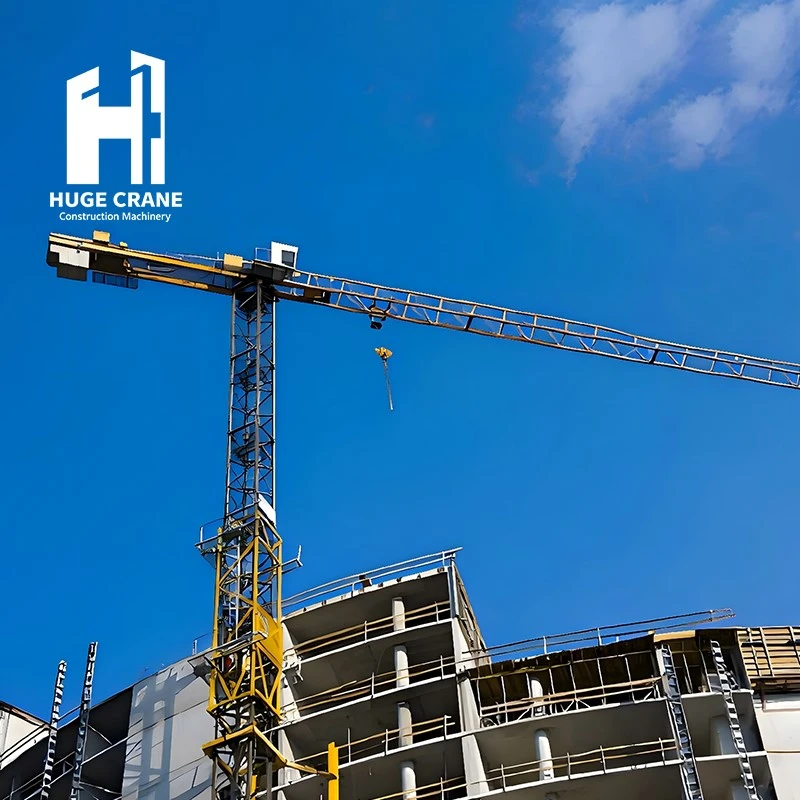
First, let’s clear up the basic definitions, because that’s where the confusion starts. A flat top tower crane (sometimes called a “hammerhead flat top” or “topless crane”) is a specific design of tower crane. Unlike a traditional hammerhead crane, which has a large, bulky horizontal head at the top of the tower that holds the jib and counter-jib, a flat top’s top structure is low-profile, with the jib and counterweight directly attached to the tower’s turret. There’s no overhanging head sticking out the top. A used tower crane, on the other hand, is just any crane we’ve refurbished, inspected, and put up for sale that’s not brand-new straight from the manufacturer. That means a used flat top crane is one type of unit in our inventory, but we also sell used hammerhead cranes, used luffing cranes, and even used mobile tower cranes. The real difference isn’t just in the name—it’s in how these cranes operate, fit on a site, and hold up over years of use, which is everything when you’re buying secondhand.
Let’s start with site footprint, because that’s the first thing a project manager cares about when they’re staring at a 5-acre urban lot or a tight suburban construction site. Traditional hammerhead cranes (the ones with the big top) have a problem with their working radius: the bulky head means you have to leave extra space around the crane’s base, and the end of the jib might hit nearby buildings, power lines, or even other cranes if you’re working on a dense site. Flat top cranes eliminate that overhanging head, so the jib can extend closer to other structures without risk. For a used crane buyer, that’s a huge win if you’re working in downtown areas where space is at a premium. We had a client last year building a 42-story apartment building in Chicago’s Gold Coast, and they couldn’t fit a traditional hammerhead crane because the adjacent building was only 20 feet from their lot line. They went with a used flat top crane we had in inventory, and it fit perfectly—no need to get a special permit for extra space, and they didn’t have to worry about the head clipping the neighbor’s rooftop HVAC units.
What about lifting capacity, though? Some used crane buyers think flat tops are only for small jobs, but that’s a myth. Modern flat top designs can lift heavier loads than a lot of old hammerhead models, even when they’re used. Wait, let’s clarify: a 10-ton used flat top can lift that full 10 tons at a longer radius than a 10-ton used hammerhead. The lack of that bulky head reduces wind resistance too, which makes flat tops more stable in high winds—critical for mid-rise and high-rise projects on the coast or in plains states. Our 2018 flat top crane, for example, has a maximum lifting capacity of 12 tons at a 190-foot radius, whereas a 2015 hammerhead crane of the same lift rating could only do 9 tons at that same distance. For used equipment, that means you’re getting more performance from a flat top without paying a premium for a brand-new unit, or even a used one that’s been sitting in a yard for years.
Now, there’s a big difference in assembly and disassembly, which is another cost factor for used crane buyers. Traditional hammerhead cranes take twice as long to put up and take down because you have to attach the large head separately, and that process requires extra heavy-lift equipment at the site. Flat top cranes are assembled in sections: the tower goes up first, then the jib is attached directly to the turret, no separate head needed. That cuts assembly time by 20 to 30%, according to the crane engineers we work with. For a project with a tight schedule, that’s thousands of dollars saved on crane rental or additional labor. We had a project in Dallas last year that was a 12-story office building; they used a used flat top crane we sold them, and their assembly took 3 days, whereas a similar hammerhead crane would have taken 5 days. That meant they started structural work 2 days early, which helped them meet their deadline and avoid a $15,000 late penalty clause in their contract.
But flat tops aren’t perfect, and that’s where the confusion comes in—some used crane buyers try to fit a flat top into a job where a hammerhead is the right call. Let’s talk about the limitations. If you’re working on a small, low-rise project—like a 2-story strip mall or a residential addition— a flat top is overkill. Their design is built for medium to high-rise jobs, so their cost can be higher than a smaller, used hammerhead crane for a small site. Also, flat tops don’t work well in areas with extremely high wind loads, like offshore construction or exposed mountain sites. The low profile might seem like it would handle wind better, but their jib design relies on a different weight distribution, so in winds over 50 mph, a hammerhead crane’s stability is better for those extreme conditions. We turned down a client last year who wanted a flat top for a construction project on the Gulf Coast, because their engineer recommended a used luffing crane instead—flat tops just aren’t rated for the sustained high winds in that region.
Another key difference is maintenance and aftermarket support, which is make-or-break when you’re buying a used crane. Flat top cranes have fewer moving parts than traditional hammerheads, because there’s no head mechanism, no counter-jib connection at the top, and fewer cables to route. That means less to repair, lower annual maintenance costs, and easier access for technicians. We stock replacement parts for our used flat top cranes at our yard in Houston, so if a client has a part break, they can get it in 24 hours, which cuts down on downtime. Hammerhead cranes, especially older models, have parts that are harder to find—some manufacturers stopped producing them 10 years ago, so you might have to custom-make a part, which can take weeks and cost twice as much. That’s a big deal for used crane buyers; downtime on a crane can cost $2,000 to $5,000 a day in lost labor and delayed materials, so a crane that’s easier to maintain saves you more in the long run.
Wait, let’s circle back to the initial confusion, because a lot of people mix up “flat top” and “used tower crane” because they think all used cranes are flat tops, or all flat tops are new. That’s not true. We’ve got used cranes in inventory that are all types: used hammerhead, used luffing, used mobile, and yes, used flat tops. The flat top is just a design choice, regardless of whether it’s new or used. The mistake we see most is a contractor who’s shopping for a used crane and only looks at flat tops, not realizing a hammerhead or luffing crane would be a better fit for their specific job. For example, a construction company working on a bridge project called us last month; they needed a crane that could lift heavy materials at a short radius, and a used hammerhead crane we had in inventory was perfect—cheaper than a flat top, easier to maintain for their small site, and had the lift capacity they needed. A flat top would have been overkill for that job, but they almost bought one because they thought it was the only “modern” option.
Let’s also talk about safety, because that’s non-negotiable for any construction site. Flat top cranes have a lower profile, so they’re less likely to be struck by overhead objects like tree branches or falling debris from adjacent buildings, which reduces workplace accidents. The lack of a head also means there’s fewer places where debris can get trapped or fall off, which is a big safety win for workers below. Traditional hammerhead cranes, because of their large head, have more points where bolts can loosen, and the head is more likely to sway in high winds, which is a safety risk for both the crane operator and workers on the ground. When we inspect all our used cranes, including flat tops, we run load tests, wind resistance tests, and bolt tightness checks, but flat tops often pass those tests with fewer issues because their design is more streamlined. That’s why many safety organizations recommend flat top cranes for urban construction sites, where worker density is higher.
Now, if you’re a used crane buyer, how do you decide which is right for you: a flat top or another type of used tower crane? Let’s break it down into three questions to ask yourself first. First, what’s your site’s space constraints? If you’re working in a dense urban area with limited space between structures, a flat top is almost always the better choice. If you have a large, open site with no nearby obstacles, a hammerhead might be cheaper and easier. Second, what’s your project’s height and load needs? If you’re building 10 stories or higher and need to lift heavy loads at a long radius, a flat top will outperform most used hammerhead models. For low-rise projects under 5 stories, a smaller used hammerhead is more cost-effective. Third, what’s your budget and timeline? Flat tops cost slightly more upfront than comparable used hammerheads, but you’ll save on assembly, maintenance, and potential late penalties if your schedule is tight.

At the end of the day, buying a used tower crane isn’t just about picking a “used” one—it’s about picking the right design for your job, whether that’s a flat top, hammerhead, or another type. We’ve seen contractors make the wrong choice, and we’ve seen them make the right one; the difference is understanding how each design works for their specific site, timeline, and budget. If you’re in the market for a used crane and want to walk through your project needs, feel free to reach out to our team to discuss the best options for you.
Used Tower Crane References:
- National Association of Construction Equipment Rental (NACER). (2022). Tower Crane Design Specifications for Urban Construction.
- International Code Council (ICC). (2021). Safety Standards for Flat Top and Hammerhead Tower Cranes.
- Crane Manufacturers Association of America (CMAA). (2020). Performance Comparison of Used Tower Crane Designs.
- Occupational Safety and Health Administration (OSHA). (2023). Tower Crane Assembly and Disassembly Guidelines for Commercial Construction.
Tianjin Huizhi Import and Export Trading Co., Ltd.
We’re well-known as one of the leading used tower crane manufacturers and suppliers in China, specialized in providing high quality customized service. Please feel free to buy cheap used tower crane for sale here from our factory. Contact us for more details.
Address: Room 4175, Building D2, Zone D, Airport International Headquarters Base, Guangxuan Road, Dongli District, Tianjin, China
E-mail: admin@hugecrane.com
WebSite: https://www.hugecrane.com/
