If you’ve ever stood in front of a messy pneumatic system, watching pressure drop mid-cycle or components cycle too fast, you’ve probably wondered if you can skip buying a separate shutoff valve. Maybe your pneumatic pressure reducing valve (PRV) looks like it can block flow, right? I get that—when I first started selling pneumatic valves 12 years ago, a client in the packaging industry came to me asking exactly this question. His setup had a single PRV feeding all its inline packaging stations, and he wanted to turn off the entire system at the PRV instead of hunting down a shutoff valve tucked away near the compressor. I told him then what I still tell every customer today: it’s not that simple. Let’s break down why, what the risks are, and when (if ever) using a PRV as a shutoff valve works—straight from a supplier who’s worked with this gear every single day. Pneumatic Pressure Reducing Valve
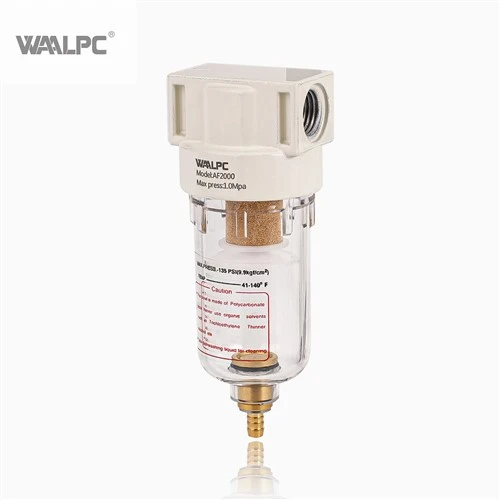
First, let’s make sure we’re on the same page about what each valve does. A pneumatic pressure reducing valve’s whole job is not to block flow—it’s to regulate it. In simple terms: you have a primary compressed air supply, which usually sits at 100 to 125 PSI coming straight from the compressor. A PRV’s inlet connects to that high-pressure line, and it drops that pressure down to whatever your downstream components need—say 60 PSI for a cylinder, or 30 PSI for a precision air logic circuit. It does this with a diaphragm, a spring, and an adjustment screw: turn the screw, compress or release the spring, and the diaphragm opens or closes a tiny orifice to maintain a steady downstream pressure. Its design is all about modulation, not on/off control. Shutoff valves—ball valves, gate valves, or solenoid shutoffs—are built for exactly that: fully opening to let unobstructed flow pass, or fully closing to stop flow dead, no in-between. That’s the core functional difference, and it’s where most of the confusion comes from.
Now, here’s where people try to make it work, and where they run into trouble. A lot of PRVs have a handwheel or a locking lever on top. If you turn that lever all the way down, it presses the diaphragm closed against the valve seat, right? So it feels like it’s stopping flow. But test this over time, and you’ll see it doesn’t hold pressure for long. Why? The seal on a PRV’s diaphragm is not designed for the constant stress of fully blocking high-pressure air. Every time you cycle that valve between open and closed (or even leave it closed for hours or days), the soft rubber diaphragm flexes, compresses, and eventually wears out. Within a few weeks, you’ll get tiny leaks past the seat—leaks that add up to hundreds of dollars in wasted compressed air every month, not to mention pressure fluctuations that mess up your downstream equipment. I’ve seen this firsthand: a metal parts stamping plant in Ohio tried this hack for three months, their PRV diaphragm failed so bad they were losing 15 PSI of downstream pressure overnight, and they had to replace it mid-shift, costing them $2,000 in downtime alone. That’s the kind of hidden cost people don’t think about when they reach for their PRV as a shutoff.
Then there’s the pressure balance issue. Compressed air systems don’t stay static—temperature changes, compressor cycling, and demand spikes create pressure variations upstream. A PRV that’s closed partially (or even fully) won’t handle those changes like a shutoff valve would. If upstream pressure rises, a PRV that’s trying to stay closed will experience backpressure on the inlet side. That backpressure can warp the valve body over time, especially if it’s made of the cheaper aluminum alloy that’s common in low-cost PRVs. We once got a PRV back from a food and beverage client who’d used it as a shutoff for a carbonated beverage line; the backpressure from the compressor cycling had bent the valve body enough that it couldn’t hold pressure when they tried to use it for its intended job, and they had to replace it entirely. Shutoff valves, by contrast, are rated for full working pressure and designed to resist that kind of strain without deforming.
Wait—are there any cases where using a PRV as a shutoff valve isn’t a terrible idea? Let’s be honest: every rule has an exception. Small, low-demand systems with very low pressure (under 30 PSI) and short shutdown periods (a few hours at most) might get away with it, but even then, it’s a gamble. For example, a small craft business with a 5-station pneumatic woodworking setup that only shuts down overnight might have no major issues, but only for a short time. If you leave it closed for a week, the diaphragm’s rubber will degrade even faster, and you’ll come back to a leaky line or a valve that won’t open properly when you need it. The only time I explicitly recommend using a PRV as a shutoff is in emergency, short-term situations—like if a shutoff valve fails mid-shift, and you need to isolate a section of the line while waiting for a replacement. But I always make sure to follow up with a reminder to replace it with a dedicated shutoff valve as soon as possible.
Let’s also talk about code and safety. Most industrial pneumatic systems are regulated by OSHA and NFPA 99, the standard for compressed air systems in commercial and industrial settings. These codes require that every section of a compressed air system has a dedicated shutoff valve to isolate it for maintenance, repairs, or emergency shutdowns. Using a PRV for this purpose can put your operation out of compliance, and if something goes wrong—like a leak that causes a pressure drop mid-process, or a valve failure that leads to a burst line—you could face fines, liability, or even safety hazards for your team. I remember a client in the automotive parts industry who got cited by OSHA for using a PRV as a shutoff valve; the inspector noted that there was no dedicated isolation point for the robotic welding arm line, and if a leak had occurred, workers couldn’t shut off air to that section quickly, putting them at risk of injury. That’s not a risk you want to take to save a few dollars on a valve.
Now, let’s address the cost myth that makes people consider this in the first place. It’s true: a PRV might cost around $50, while a basic shutoff valve costs $20. But the hidden costs add up fast. If your PRV leaks, you’re wasting compressed air—energy that your compressor has to produce, which adds to your utility bills. The Department of Energy estimates that compressed air systems waste up to 30% of their energy through leaks, and a leak from a misused PRV can make that number even higher. On top of that, if your PRV wears out prematurely, you’re replacing it every few months instead of every 1 to 2 years, which adds to maintenance costs. And if downtime costs you $10,000 an hour (which is common for manufacturing operations), that’s a tiny mistake that can cost you way more than the price of a proper shutoff valve.
I also want to touch on a common misconception about pilot-operated PRVs, which are more common in large systems. Some people think that because pilot PRVs have a separate control line, they can use that to block flow, but that’s not true either. The pilot line is designed to regulate pressure, not isolate flow—turning off the pilot on a pilot PRV will still let small amounts of air pass through the main valve, because the main valve is spring-loaded to stay open even when the pilot is off. That means you’ll still get leaks, and you won’t have full isolation. Pilot PRVs are built for steady pressure in large, high-demand systems, so using them as a shutoff is even worse than with a standard direct-operated PRV.
So what should you do if you’re trying to isolate a pneumatic line, or you’re looking for a way to turn off your system without hunting for a valve? First, assess your needs. If you need a valve to fully isolate a line for maintenance, emergency shutdown, or code compliance, buy a dedicated shutoff valve—we carry ball valves, gate valves, and solenoid shutoffs in all sizes, rated for all working pressures, and designed to hold full pressure without leaks. If you’re in a pinch and your shutoff valve is broken, you can use your PRV as a temporary fix, but only for a few hours, and make sure to order a proper shutoff valve right away.

At the end of the day, valves are designed for specific jobs. Using a PRV as a shutoff valve might seem like a quick, easy fix, but it’s a bad idea that will lead to leaks, downtime, and extra costs. As a pneumatic valve supplier, my job isn’t just to sell you parts—it’s to help you build systems that work reliably, safely, and cost-effectively. If you’re not sure which valves you need for your setup, or you have questions about PRVs, shutoff valves, or any other pneumatic gear, feel free to reach out to discuss your specific application. Don’t cut corners on valve selection—it will pay off in the long run.
Pressure Regulating Valve References
- Compressed Air and Gas Institute. Compressed Air System Design and Operation Guide. 2021.
- National Fire Protection Association. NFPA 99: Health Care Facilities Code. 2021.
- U.S. Department of Energy. Compressed Air Challenge: Fundamentals of Compressed Air Systems. 2019.
- Valve Manufacturers Association. Pneumatic Valve Design and Application Standards. 2020.
Hangzhou Evershine Pneumatic Import & Export Co., Ltd.
Hangzhou Evershine Pneumatic Import & Export Co., Ltd. is one of the most professional pneumatic pressure reducing valve manufacturers and suppliers in China, featured by high quality pneumatic components. Please rest assured to wholesale bulk durable pneumatic pressure reducing valve from our factory. Welcome to contact us for custom service and OEM service.
Address: Hengkun Smart Industrial Park, No.176, Golf Road, Yinhu Street, Fuyang District, Hangzhou City, Zhejiang Province, China 311400
E-mail: Felix@waalpc.com
WebSite: https://www.evspneu.com/
