Hey there, I’m Jake, and I’ve been selling gate valves for over 8 years now—so I’ve heard every single question under the sun about these things. Today, one I get all the time is: Can a gate valve actually be used for throttling flow? And honestly? The short answer is… it’s not the best call. But let’s break this down like we’re chatting over a cold coffee at the shop, not a stuffy engineering seminar. No jargon overload, promise. Gate Valve

First, let’s do a quick 101 on what a gate valve is, in case you’re new here. Gate valves are that workhorse of the piping world, right? They have a big, flat (or sometimes wedge-shaped) disk that slides up and down through the pipe’s center to open or close the line fully. When it’s all the way up, flow is unobstructed—like a straight, wide highway. When it’s all the way down, it seals tight, no leaks. That’s why they’re go-tos for when you just need “open” or “closed” in your system—water mains, oil pipelines, industrial HVAC, you name it.
Throttling, on the other hand, is when you partially open a valve to control how much fluid (liquid, gas, even slurry) flows through. Think of it like cranking down your car’s AC a little instead of hitting the full blast, or turning a garden hose valve to make the spray narrower. A lot of people mix up gate valves with globe valves here, because globe valves are designed for throttling—they have that round disk that sits right up against the seat, so you can crack it a quarter-turn or half-turn and adjust flow smoothly. But gate valves? They’re built for two positions: full open or full closed.
Now, let’s get into why that’s a big deal if you try to throttle with a gate valve. First up: wear and tear. When you leave a gate valve partially open, that disk isn’t sitting all the way up out of the flow path. It’s dangling there, right in the middle of the pipe, and the fluid is slamming into it at full pressure. Over time, that constant friction and impact eats away at the disk and the valve seat—like dragging a fork across a glass table over and over. Before you know it, you’ve got a leak that no amount of tightening will fix. I’ve seen customers who tried to save money by using gate valves for throttling end up replacing them 2-3 times a year, instead of the 5-10 years they should last. That’s not saving money—that’s throwing it down the drain.
Wait, but what if you have to use a gate valve for throttling? Are there any exceptions? Let’s be real, not every shop has the budget to stock every single valve type. Sometimes, in a pinch, a partially open gate valve can work for low-pressure, low-flow systems—like a small irrigation line or a residential hot water loop where you don’t need super precise control, and you check the valve regularly. But even then, it’s a band-aid, not a solution. And there are hard no-gos here: high-pressure lines, systems with abrasive fluids (like sand in water or chemical slurries), or anywhere flow control is critical (like chemical processing or boiler systems). Throttling a gate valve in those situations is a disaster waiting to happen—burst pipes, equipment damage, safety hazards, you name it.
Another big one: flow control precision. Globe valves, ball valves, even needle valves—they let you adjust flow in tiny increments. A gate valve? Once you crack it open a little, flow jumps way more than you expect. You can’t get that fine-tune control, because the disk has to move a lot to make a small change in flow. I once had a customer who tried to use a gate valve to regulate chemical flow to a reactor—they kept over-dosing or under-dosing, and their product was garbage for a month until they switched to globe valves. Total waste of time and materials.
But here’s the thing: gate valves are amazing at what they’re designed for, even if throttling isn’t it. Don’t get me wrong—we sell tons of gate valves every week, and they’re perfect for isolating sections of pipe. When you need to shut down a pump for maintenance, or isolate a leak in a line, a gate valve is your guy. They have almost no pressure drop when fully open, so they don’t waste energy moving fluid through the pipe. That’s their superpower. So instead of fighting a gate valve for throttling, use it where it shines, and get a globe valve or a ball valve (wait, ball valves actually work okay for throttling too, by the way—don’t sleep on those) for your flow control needs.
Let me share a real story that drives this home. Last year, a construction guy named Mike came into our shop, all frustrated. He’d installed a bunch of gate valves on a commercial building’s sprinkler lines to adjust flow to each zone, and within 6 months, half of them were leaking. He’d been told by some random internet forum that gate valves work for throttling, so he saved a few bucks upfront. But when he called us, he showed me the valves—their seats were all gouged, the gates were worn thin. I explained the same stuff I’m telling you now: gate valves aren’t made for partial openings. We swapped them out for ball valves (which are way better for that sprinkler zone control) and he’s had zero issues since. He even sent me a case of beer a few months later, said he saved thousands in repairs. That’s the kind of win I love.
Now, I know what some of you are thinking: “What if my system only has gate valves?” Fair enough. If you’re stuck with a gate valve for flow control, here’s a rule of thumb: never open it more than a quarter-turn, and never close it partially. Wait, no—actually, even a quarter-turn is risky if it’s more than the valve’s stem travel. Most gate valves have a stem that shows how far open they are—if the stem is sticking out more than a quarter of the total length, that means the disk is partially exposed, and you’re asking for trouble. Stick to full open or full closed, and if you need to adjust flow, use a different valve. And no matter what, never leave a gate valve partially open for long periods—open it all the way when you’re done adjusting flow, then use a control valve to tweak the flow. That’s a hack I’ve given hundreds of customers, and it works.
Let’s also talk about industry standards, because this isn’t just my opinion. The American Water Works Association (AWWA) and the American Petroleum Institute (API)—two big names that set the rules for valves—both explicitly state that gate valves should not be used for throttling or flow control. API 600, which covers steel gate valves for refineries, says throttling can cause excessive wear and damage. AWWA C500, for waterworks gate valves, even warns that partial opening can lead to cavitation—wait, cavitation is that thing where bubbles form in fluid, collapse, and eat away at metal. That’s a whole other level of damage I didn’t even get into earlier. Partial opening a gate valve in a high-pressure line causes cavitation, and that can destroy the valve and adjacent piping in months. So it’s not just a “wears out fast” issue—it’s a safety hazard.
I get it, saving money is top of mind. When you’re budgeting for a project, you look at gate valves because they’re cheaper than control valves or globe valves. But like I told Mike, the upfront savings will cost you more later in repairs, downtime, and replacements. We’ve had customers who tried to cut corners on valve selection, and they ended up paying 3x what they would have if they’d just bought the right valve for the job. Gate valves are cost-effective when used for their intended purpose—isolating flow, not controlling it.
So to circle back to the original question: Can a gate valve be used for throttling flow? Technically, maybe—if it’s a tiny, low-pressure system, a quick, temporary adjustment. But practically? No, you shouldn’t do it. It’s bad for the valve, bad for your system, and bad for your wallet. Save the gate valves for when you need to open or close a line completely, and use a valve designed for throttling for flow control. That’s the smart move.
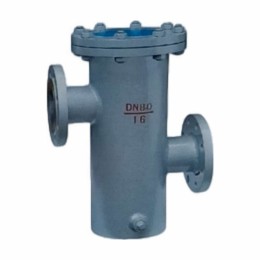
Here’s the deal, if you’re still on the fence, or you’re not sure what valve you need for your specific project—we’re here to help. I’ve helped plumbers, oil rig workers, HVAC techs, you name it, pick the right valves for their systems for years. No pressure, no sales pitch that’s too pushy. Just tell me what you’re working on, what kind of fluid you’re moving, the pressure, and what you need the valve to do, and I’ll hook you up with the right solution. We’ve got gate valves, globe valves, ball valves, all sizes, for every industry out there. Don’t waste time and money fighting a valve that’s not built for the job—hit me up, and let’s get you set up right.
Ball Valve References:
- American Water Works Association. (2020). AWWA C500: Metallic Gate Valves for Water Works Service.
- American Petroleum Institute. (2022). API 600: Steel Gate Valves for Refinery Service.
- Miller, J. E. (2019). Flow Control Valves: Selection, Application, and Troubleshooting (2nd ed.). Industrial Press.
Xiongxiang Valve Group Co., Ltd.
As one of the most professional gate valve manufacturers and suppliers in China, we’re featured by quality products and good price. Please rest assured to wholesale cheap gate valve for sale here from our factory. Contact us for more details.
Address: Building 1, No.306, 12th Binhai Road, Jinkai District, Wenzhou City, Zhejiang Province, China
E-mail: info@xiongxiangvalve.com.cn
WebSite: https://www.steelvalvegroup.com/
