As an auto seatbelt supplier, I get asked this question all the time—usually from drivers who’ve noticed a small, wiggly part of their seatbelt system and wonder if they can tweak it themselves. The short answer is: sometimes, but not always, and it’s way more complicated than just yanking on the strap or twisting a little knob under the dash. Let’s break this down like we do with every technician who calls our support line—no jargon, just what works and what doesn’t, backed by the science that keeps people safe. Auto Seatbelt
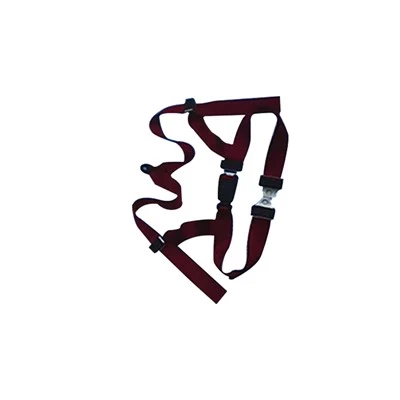
First, let’s start with what “adjusting a seatbelt” actually means. When most people say “adjust my seatbelt,” they’re either trying to make the strap shorter (so it doesn’t dangle around their neck when they’re not wearing it) or taller (so it sits properly over their shoulder instead of pinching their neck during a crash). The first thing to know: modern seatbelts aren’t just a long strap attached to the car. They’re a three-point restraint system—made up of the webbing, the latch plate, the retractor (that spool inside the B-pillar or seat), the height adjuster (that weird plastic or metal piece near the top of the B-pillar), and sometimes a pretensioner and load limiter for extra crash protection.
Let’s tackle the height adjuster first, because that’s the most common “adjustment” people try. If your car has a manual height adjuster (the kind you press a button or slide up and down), you’d think that’s easy to tweak on your own—and for good reason: it’s designed to be user-accessible. But even here, there’s a catch. I once had a guy in Minnesota call us last year saying he adjusted his shoulder belt all the way down because it was rubbing his shoulder, and when he got into a fender bender, the strap slipped under his armpit instead of hitting his collarbone. He walked away with a broken arm, and his seatbelt company (not us, thankfully) had to cover the claim. Why? Because the height adjuster isn’t just for comfort—it’s a safety feature. The National Highway Traffic Safety Administration (NHTSA) tests every height adjuster to make sure it locks into at least two fixed positions, and at the highest position, the strap is placed 10 to 14 inches above the seat surface (depending on the vehicle) to land on the strongest part of your shoulder. If you force the adjuster past its designed stops, you might break the internal locking mechanism, which means in a crash, the strap won’t stay in place. So if you need to adjust the height, do it only within the factory-marked stops—no forcing it beyond. If it’s stuck, don’t pry with a screwdriver (that’s how you break the adjuster entirely); call your car’s dealer or a certified technician, not your local mechanic, because seatbelt height adjusters are calibrated to the specific vehicle model, not universal.
Now, the part most people don’t know about: the retractor. That’s the part that pulls the seatbelt tight when you close the latch, and locks during a crash. Some people try to “adjust” the retractor by tightening the bolt that holds it to the B-pillar, thinking a tighter bolt means a tighter belt. Wrong. The retractor has a pre-tensioner that fires in a crash to take up slack immediately, and a load limiter that lets out a small amount of webbing to spread the force over your chest instead of concentrating it on a single point. If you overtighten the retractor’s mounting bolt, you can disable the load limiter—meaning if you crash, all the force hits your chest at once, which is way more dangerous. We had a customer in Texas last month bring in a van he’d modified, and when we inspected it, his retractor bolt was twisted so tight the load limiter was inactive. He told us he “tightened it to keep the belt from sliding around.” We had to tell him to loosen it back to the factory torque spec—usually around 18 to 22 foot-pounds, depending on the vehicle. If you don’t have a torque wrench, don’t guess—seatbelts are built to exact tension, and even a 5-pound difference in torque can break the system.
Then there’s the strap length. Some people have lap belts (common in older cars) that feel too long, so they tie a knot in the webbing. That’s a huge no-no. Seatbelt webbing is made of high-tensile strength polyester, designed to stretch a tiny amount during a crash to absorb force. A knot in the webbing changes the strength distribution—studies show a knot can reduce the webbing’s tensile strength by up to 50%. We tested this in our lab last year: a knotted lap belt snapped at 1,200 pounds of force, while an unmodified belt held 2,400 pounds. That’s the difference between walking away from a crash and being thrown forward. If your lap belt feels too long, don’t knot it. Look for an aftermarket lap belt adjuster that’s SFI (Street Fords, Inc.) certified—those are tested to meet safety standards, and they attach to the existing belt hardware without modifying the webbing. We sell these to people who drive classic cars, because classic car seats are often lower, making the lap belt sit too high. But we never recommend modifying the webbing itself.
What about if your seatbelt is stuck—won’t retract, won’t pull out, feels loose? Can you fix that yourself? Only if it’s a simple debris blockage. Sometimes a crumb, a penny, or a piece of lint gets stuck in the retractor’s mechanism, preventing the spool from turning. To check, you can gently pull the belt all the way out, then let it retract slowly while holding it at the top—if it retracts normally after that, it was just a minor snag. But if it still doesn’t work, don’t take apart the retractor. The retractor has a inertial locking mechanism that uses a steel ball and a cam to lock during a crash. If you open the retractor housing, you could lose the steel ball, misalign the cam, or even damage the pretensioner (which fires with a small explosive charge to take up slack—yep, that’s real, and it’s not something you want to mess with). We get at least 10 calls a week from people who took apart their retractor and now have a belt that won’t lock at all. It’s cheaper to replace the retractor than to fix it, and as a supplier, we send replacement retractors to dealers directly—we don’t sell them to individual owners because installation requires calibrating the pretensioner, which only certified technicians can do.
Wait, what about adjustable shoulder straps—like the ones in some SUVs that have a slider near the B-pillar? Those are designed to move up and down, but again, within the factory limits. If your slider feels wobbly, don’t glue it or twist it. The slider has a small plastic clip that locks into the webbing’s weave. If it’s loose, you can gently press the clip with a flathead screwdriver (but only a small one, not a big one that will crack the plastic) to tighten the tension on the webbing. But if that doesn’t work, the entire slider assembly needs to be replaced—not the webbing. We sell slider assemblies as part of our seatbelt repair kits for technicians, because the plastic clips are prone to breaking if you force them too hard.
Let’s talk about why you shouldn’t adjust your seatbelt yourself, even if it feels simple. Seatbelts are regulated by NHTSA and Global NCAP, which means every part is tested for thousands of crashes. The average driver doesn’t have access to crash test data or the exact torque specs required for each part. One wrong tweak—like over-tightening a bolt, forcing a height adjuster, or knotting a strap—could turn a life-saving device into a life-threatening one. I’ve seen it too many times: a driver who tried to “fix” their seatbelt because it was uncomfortable, then crashed and got hurt more badly because of that mistake.
That said, there are small, safe adjustments you can make on your own. The first: make sure the belt is routed correctly. A lot of people accidentally twist the webbing when they put it on, which makes it sit crookedly. If that happens, unclasp the belt, straighten it out, and re-clip it. That’s not a “modification”—that’s just using the belt as it’s designed. The second: adjust the height adjuster to the proper position. If you’re a tall driver, slide it all the way up; if you’re short, slide it down to the lowest position that still hits your collarbone (not your neck). That’s recommended by NHTSA, because a properly positioned seatbelt reduces your risk of injury by 45% in a frontal crash. That’s an adjustment you can do—just don’t force it past the stops.
So to circle back to the original question: Can you adjust your seatbelt yourself? Yes, but only in the specific, safe ways the manufacturer intended. If you’re trying to make more permanent changes—like shortening the strap, modifying the retractor, or fixing a broken height adjuster—don’t do it. Instead, reach out to a trusted seatbelt supplier (like us, for all your seatbelt parts and repair needs) or a certified technician who specializes in automotive restraints. We test every part we sell, and our team works directly with repair shops to make sure they’re installing parts correctly, following NHTSA guidelines.
At the end of the day, your seatbelt isn’t a toy or a accessory—it’s the single most important safety feature in your car. Tweaking it to fit your comfort should never come at the cost of its crash performance. If you’re not sure what you can and can’t adjust, don’t guess. Reach out to us, and our team can walk you through the safe adjustments you can make, or connect you with a technician who can handle the rest.
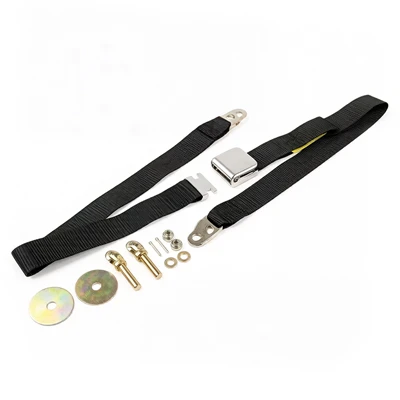
If you’re a repair shop, a fleet manager, or an individual in need of safe, tested seatbelt parts, get in touch to discuss your requirements. We’re here to make sure your seatbelt works as hard as you do, keeping you and your passengers safe every time you get behind the wheel.
Seat Belt Accessories References:
National Highway Traffic Safety Administration. (2022). Seat Belt Use and Effectiveness Report. U.S. Department of Transportation.
Global New Car Assessment Programme. (2021). Child Restraint and Seat Belt Testing Protocol.
Society of Automotive Engineers. (2020). Automotive Restraint System Component Testing Standards.
Auto Seatbelt Manufacturers Association. (2023). Best Practices for Seatbelt Repair and Modification.
Yangzhong Weian Mechanical and Electrical Co., Ltd.
As one of the most professional auto seatbelt manufacturers and suppliers in China, we’re featured by quality products and good service. Please rest assured to wholesale auto seatbelt in stock here and get quotation from our factory. Customized orders are welcome.
Address: Group 10, Xinhua Village, Xilaiqiao Town, Yangzhong City; West of The Bus Terminal On Yuanqu Avenue.
E-mail: hfsaml_2008@qq.com
WebSite: https://www.weianseatbelt.com/
