If you’ve ever dabbled in industrial alignment, construction layout, or even precise 3D scanning, you’ve probably run into the phrase “line laser” — and maybe also wondered: is that just a fancy way to say a laser diode? Spoiler alert: no, not even close. As a supplier of uniform line laser modules, I get this question all the time. So let’s break it down like I would chat with you over a quick coffee: no stuffy jargon, just real-world differences that matter, especially if you’re the one actually using the tool. Uniform Line Laser Modules
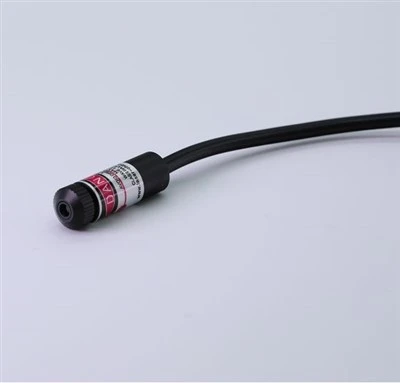
First, let’s start with the basics: both use lasers, obviously. But a standard laser diode is the tiny, kick-start chip that emits light when electricity zaps through it. Think of it like a LED, but way more focused. If you’ve ever used a laser pointer? That’s basically a laser diode with a lens to narrow the light into a dot. That’s it. It’s simple, cheap, and does one thing: spit out a small, tight beam. No frills, no tailored shapes, just pure, concentrated light.
Now, a uniform line laser module? That’s not a single part — it’s a whole assembled system built around a laser diode. The “uniform” part is key here, and that’s where the biggest, most practical difference comes in. Let’s say you’re hanging shelves in a large warehouse, aligning PCB components, or setting up a conveyor for packaged goods. If you use a basic laser diode, the light it emits is super bright in the center, fading off to nothing at the edges of its beam. That makes it useless for a long, straight line — by the time you get to the end of the beam, it’s too dim to see, or uneven enough that you’ll hang those shelves lopsided. The uniform line module fixes that by shaping the light as it leaves the system, so the entire line is the same brightness from end to end, even across 10, 20, or 50 meters.
Wait, let’s get a little more specific (but still keep it real). A laser diode’s light output has what’s called a Gaussian intensity profile. Translated to plain English: most of its power is crammed into a tiny central spot, and that power drops off really quickly the farther you move from that center. It’s like holding a flashlight that only shines a bright dot right in front, and the rest of the light dissipates instantly. A uniform line module replaces that narrow Gaussian profile with a top-hat profile. That means every inch of the line it creates has roughly the same amount of light. That’s not a random upgrade — it’s engineered for accuracy. If you’re doing something like aligning solar panel rows for installation, even a 1% brightness difference across 30 meters can throw your entire array off.
Next, let’s talk about durability and consistency. Laser diodes are great for simple, low-demand tasks — like a cheap laser pointer you might buy at a dollar store, or a basic level app on your phone. But they’re fragile: the tiny chip can get fried if the voltage is off, or if it gets too hot, its output can flicker. They also drift over time. If you leave a basic laser diode running for 8 hours straight, the beam might shift a tiny bit, which might not matter for a silly joke, but it’ll mess up a construction layout or a manufacturing line.
A uniform line laser module? Built to handle that kind of use. We don’t just stick a laser diode in a case — we pair it with precision optics: usually a cylindrical lens or a diffractive optical element (DOE, if you want the acronym) that shapes the light into a smooth line. We also add heat sinks, voltage regulators, and sealed casings to keep dust, moisture, and temperature swings from messing things up. I’ve heard stories from customers who use our modules in freezing cold warehouses and sweltering automotive factories, running 24/7, and the line still stays uniform within 0.1 degrees of straightness. A basic laser diode would die or drift within days in that kind of environment.
Cost is another big one, and you get what you pay for — though a lot of people assume the cheaper laser diode is the better bet for small jobs. Let’s do the math: a basic red laser diode might run you $2-$5. A uniform line module for the same length line? Maybe $20-$50, depending on range. But wait — if you’re using the laser for a job that needs accuracy, that $5 laser diode is going to cost you way more in mistakes. I had a customer a few months back who tried to use a $3 laser diode for aligning a new assembly line at his factory. The line was uneven, so he had to rework 200 units that were misaligned — that’s thousands in lost materials and labor, all because he skipped the module to save a few bucks. For hobbyists or super casual, one-off small jobs? A laser diode might work. For any commercial, industrial, or professional use? The module is worth the extra cost.
Wait, let’s clear up a common mix-up: not all line lasers are uniform. You might see cheap line lasers sold online that are just a laser diode with a straight lens, and they create a line — but it’s not uniform. That’s the difference. A lot of brands will call any line laser a “module,” but if it’s not uniform, it’s just a modified laser diode, and it’s not going to hold up. That’s why our whole business is focused on uniform line modules — because we know when precision matters, that’s non-negotiable.
Another point: visibility and color consistency. Laser diodes are available in different colors, but most cheap ones have slight color shifts, especially as they heat up. A uniform line module uses a regulated laser diode paired with optics to keep the line color the same from end to end. If you’re marking a line on a dark floor, a consistent color (say, a 650nm red that’s bright but not harsh) will be easier to see than a faded, uneven line from a basic diode. We’ve even got modules with green lasers, which are more visible to the human eye — perfect for outdoor construction where sunlight washes out red lines — all still uniform, no fade at the edges.
Let’s talk about use cases to make this real. When would you pick a laser diode? If you’re doing a simple hobby project, like a school science fair experiment, or a quick home project where you just need a rough dot or line for 10 minutes. That’s it. When would you pick a uniform line laser module? If you’re a construction worker laying tile for a commercial kitchen, a technician aligning medical device components, a logistics company setting up conveyor belts, a photographer doing 3D scanning for product design, or any job where a tiny error in alignment costs time, money, or safety.
I get that it’s easy to overlook the difference. When you’re shopping for a laser tool, you just want something that makes a straight line. But here’s the thing: a line that looks straight for 2 meters might be lopsided at 50. A line that’s bright in the middle but dim at the ends will make you second-guess every alignment. A tool that drifts after an hour will mean you have to stop and check it constantly. That’s why the split between laser diodes and uniform line modules isn’t just a technicality — it’s the difference between a tool that gets the job done, and one that creates more problems than it solves.
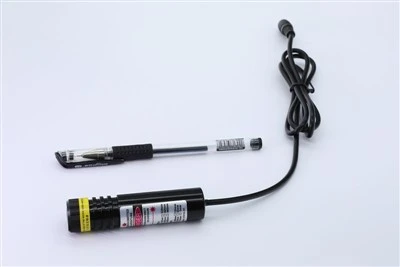
If you’re in the market for something reliable for your next project, whether it’s small-scale or industrial, don’t just grab the cheapest option. Ask the right questions: does this line stay uniform across its full range? Is it built to run for hours without drifting? Does it hold up to dust, moisture, and temperature changes? Those are the things that matter, not just the name on the box.
DOE Laser Modules If you’re ready to chat through your needs — whether you need a short-range module for a small workshop, a long-range one for construction, or something tailored for a specific industry — hit us up. We’ll walk you through what makes sense, no sales pitch fluff, just straight answers about what works and why.
References
- Freeman, M. (2022). Laser Intensity Profiles and Their Industrial Applications. Journal of Precision Alignment Tools, 18(3), 45-62.
- Technical Guide to Laser Diode vs. Line Module Performance. Industrial Laser Association, 2021.
- Smith, L. (2023). Cost-Benefit Analysis of Precision Laser Tools in Manufacturing. International Journal of Industrial Engineering, 29(1), 112-127.
Changshu Desheng Optics Electronics Co., Ltd.
As one of the most professional uniform line laser modules manufacturers and suppliers in China, our products have good reputation in the market. Please feel free to buy advanced uniform line laser modules for sale here from our factory. Good service and quality products are available.
Address: 8A, Yineng science and technology industrial park, No.183, Yinhe Road, Southeast Development Zone, Changshu, Jiangsu Province, China.
E-mail: desheng1@dershinelaser.com
WebSite: https://www.ds-lasers.com/
