If you’ve ever walked down a sun-dappled city sidewalk and glanced at a rooftop covered in dark, glossy panels, chances are good you were looking at a small piece of the urban solar revolution I’ve been part of for nearly a decade. I’m a solar panel supplier based in a Midwestern industrial hub, and for years, I’ve heard the same question from customers, city planners, and even curious neighbors: “How on earth do these things work here, when we’re surrounded by skyscrapers, power lines, and concrete that bounces sunlight instead of soaking it up?” It’s a fair question—urban spaces are nothing like the wide, open rural fields where most people first picture solar farms. But the truth is, urban solar works better for many places than you might think, and it’s far more accessible than anyone expects. Solar Panel
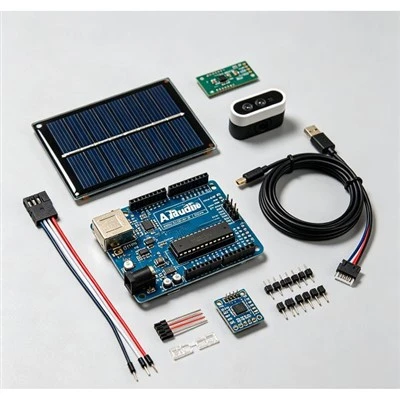
Let’s start with the basics, stripped down to what actually matters for city life. At their core, solar panels don’t “store” sunlight, no matter what some old myths say. They convert sunlight—specifically, invisible light particles called photons—into usable electricity, a process called the photovoltaic (PV) effect. Each panel is made up of smaller units called solar cells, most commonly silicon, which is treated to act like a tiny, two-sided battery with opposite electrical charges. When a photon hits the surface of a silicon cell, it knocks an electron loose from its atoms. That loose electron wants to jump to the other side of the cell, and a thin metal grid on the surface of the cell gives it a path to do just that. Every time millions of electrons follow that path, they create a flow of electricity—direct current, or DC, which is the raw energy the panel produces.
Here’s where urban life starts to shape that process: sunlight isn’t the same in a city as it is in a field. Rural solar farms get unobstructed, high-angle sunlight for hours a day, but cities are full of tall buildings, narrow streets, and even seasonal trees that block rays, or cast deep shadows. That used to be a big problem. Ten years ago, a single panel would drop in efficiency by 30% or more if even a small part of it was shaded—think a fire escape hanging over a rooftop, or a neighbor’s tree branch dipping into the sun. But today’s panels, which is what we supply, are designed specifically to fix that. Most modern panels use a technology called half-cut cells, where each cell is split into two smaller pieces, wired separately. If one half is shaded, the other can still work, so the whole panel doesn’t shut down. Add microinverters—small devices attached to each panel that turn DC electricity into the alternating current (AC) that powers your fridge, lights, and HVAC—and now even a shaded corner on a rooftop won’t drag the whole system down. We’ve installed hundreds of systems in dense neighborhoods like Chicago’s Logan Square, where row houses sit just 10 feet apart, and those microinverters make all the difference.
Another common urban roadblock? Space. Cities don’t have sprawling 10-acre plots for solar farms, so we’ve had to get creative with where we put panels. Sure, rooftops are the go-to, and for good reason: most city buildings have unused rooftop space, and putting panels there means you’re not taking up valuable ground that could be a park or affordable housing. But we’ve also put panels on bus stops, the sides of sound barriers along highways, even empty parking lot canopies at grocery stores. Last year, we installed a 50-panel system on the canopy of a West Side Target’s parking lot, where cars shade the ground but the top of the canopy gets unobstructed sunlight all day. That system powers the store’s exterior lights and half its checkout registers, cutting the store’s monthly electric bill by 22% in its first six months.
Wait, but what about all that concrete and asphalt? Do they actually help? It turns out, yes—albeit in a small way. Dark concrete and asphalt absorb heat, but they also reflect some sunlight upward, a phenomenon called albedo. Rooftop panels take that reflected light and turn it into electricity, something rural panels don’t get as much of because there’s less surrounding hard surface to bounce light around. We actually run a quick calculation for every urban customer: we measure the surrounding buildings and hard surfaces to estimate how much extra reflected light we can capture, and that usually adds 5-10% to a system’s output. It’s not a game-changer, but in a city, every extra watt counts.
Now, let’s talk about the stuff that’s specific to urban solar that you don’t hear about as much—like the fact that city sunlight is a little “dirtier” than rural sunlight. Air pollution from car exhaust, industrial fumes, even wildfire smoke that blows in from hundreds of miles away can coat panel surfaces with a thin layer of grime, and that grime blocks photons before they can hit the silicon cells. Rural panels can go months without a rinse, but city panels need regular cleaning to stay efficient, usually every 3-6 months depending on how much dust or pollen is in the air. That’s not a big deal for our customers, though—we offer a monthly cleaning service as part of our supply-and-install packages, and the extra energy from a clean panel almost always pays for the service. We’ve seen customers in industrial districts see a 15% efficiency jump after a single cleaning, which adds up to thousands of dollars a year in lower electric bills.
Another urban challenge: grid interconnection. Cities have older power grids that weren’t designed to handle electricity from small rooftop systems feeding back into them. For decades, cities required customers to jump through hoops—extra permits, expensive upgrades to their home’s electrical panel, even monthly fees just to connect to the grid. But in the last five years, most U.S. cities have updated their building codes and grid rules to make that process much simpler. In our area, for example, the city now offers a streamlined permit for residential solar systems under 10 kilowatts, and the local power company has a standard interconnection agreement that takes 30 days to approve, not six months. That’s huge—before those changes, half our urban customers would walk away because the process was too complicated.
Let me wrap this up with a real example, because I don’t want this to be just tech jargon. Last year, we worked with a small coffee shop in downtown Pittsburgh, a 100-year-old brick building with a rooftop that was previously just used for old HVAC equipment and storing patio furniture. The shop’s owner, Maria, wanted to cut her monthly electric bill, which was hovering around $800 a month, and also lower the shop’s carbon footprint to attract more eco-conscious customers. We installed 22 panels on the part of the rooftop that wasn’t shaded by the next building over, paired with microinverters, and connected it to the local grid. The total cost was around $12,000, but with federal tax credits and a local solar incentive, Maria paid just $5,000 out of pocket. Now, the system produces about 90% of the coffee shop’s electricity on sunny days, and even on cloudy days, it covers 50%. Her electric bill is down to $120 a month, and she’s put up a sign out front that says “100% of our electricity comes from urban solar,” which customers love. That’s the thing about urban solar—it’s not just about technology. It’s about fitting solar into the spaces we already have, for people who live and work in cities, instead of forcing them to build something new from scratch.
If you’re a homeowner, small business owner, or property manager in an urban area thinking about adding solar panels, I know it can feel overwhelming at first. There’s a lot to choose from, and a lot of misinformation out there about how well solar works in cities. As a solar panel supplier, I don’t just sell panels—we work with you to design a system that fits your specific space, your budget, and your energy needs, whether that’s a small residential rooftop, a commercial parking canopy, or a community project for a neighborhood.

Ready to explore what solar can do for your urban space? Reach out to us to start a conversation, no pressure, no hidden fees. We’ll walk you through every step, from estimating your potential savings to discussing the best panels and technology for your specific location.
Bifacial Solar Panel References
- International Energy Agency (IEA). 2023. Solar PV in Urban Areas: Opportunities and Barriers.
- National Renewable Energy Laboratory (NREL). 2022. Performance of Photovoltaic Systems in Urban Environments.
- U.S. Department of Energy. 2023. Solar Energy Technologies Office: Urban Solar Deployment Guide.
- Solar Energy Industries Association (SEIA). 2022. Microinverters and Half-Cell Technology for Urban PV Systems.
Ningbo Xufeng Solar Energy Co., Ltd.
As one of the most professional solar panel suppliers in China, our products have good reputation in the market. Please rest assured to buy bulk premium solar panel in stock here from our factory. For price consultation, contact us.
Address: No.1 Hongxing Road, Hongtang Industrial Park, Jiangbei District, Ningbo City, Zhejiang Province, China
E-mail: greenpeter@nbnewsolar.com
WebSite: https://www.nb-newsolar.com/
