If you’ve ever visited a job site and watched a ready-mix concrete (RMC) truck wind its way through tight turns or idle for hours between loads, you know how efficient that system is. For most concrete materials, it’s the standard: mix it at the plant, haul it to the site, pour it within the workable window, and move on. But when it comes to ultra-high-performance concrete (UHPC)—that stuff with compressive strengths of 12,000 psi and higher, made with fine aggregates, silica fume, and sometimes steel fibers—there’s a persistent question that comes up on every job I walk into: “Can we just mix UHPC in a regular ready-mix truck?” As someone who’s been supplying UHPC mixing equipment for over a decade, I get why people ask. The RMC model is cheap, familiar, and cuts out an extra step. But the short answer? No, you can’t—at least not without workarounds that defeat the purpose of using UHPC in the first place. Let me break this down the way I explain it to contractors, engineers, and plant managers every single week. UHPC Mixer
First, let’s ground this in what makes UHPC different from the regular concrete you’re used to. Normal RMC is a combination of coarse aggregate (rocks up to 1.5 inches), Portland cement, water, sand, and air-entraining agents. Its workability is tied to the water-cement ratio, and it stays workable for 60 to 90 minutes after mixing, which gives drivers time to haul it. UHPC, on the other hand, is a dense, fiber-reinforced composite designed to be far stronger, more durable, and less porous than normal concrete. To achieve that strength, it uses no coarse aggregate—just fine sand (particles smaller than 0.5 millimeters), silica fume, fly ash, and a very low water-cement ratio (usually around 0.2 to 0.25). Add steel or synthetic fibers, and suddenly you’ve got a material that doesn’t behave like regular concrete.
The first big problem with mixing UHPC in a standard ready-mix truck is the fibers. Most ready-mix trucks use large rotating drums with angled blades that lift and drop concrete to keep it workable. When you add fibers to UHPC at the plant, those blades can clump the fibers together into ball-like masses. Those balls don’t just ruin the material’s strength—they create weak points that crack under load, which is the last thing you want in a UHPC structure. I’ve seen a job try this on a pedestrian bridge project a few years back: the contractor added steel fibers to the RMC drum mid-mix, and when they poured, every other square foot had a fiber clump. They ended up having to grind out the bad sections and re-pour, costing them three weeks of time and $120,000 in materials. That’s not a risk anyone wants to take with a material that’s supposed to last 100 years or more.
Then there’s the workability window. UHPC’s low water-cement ratio means it sets much faster than regular concrete, especially when you’re mixing it in a drum that’s rotating constantly. The friction between the blades, the aggregate, and the water generates heat, which speeds up hydration. A standard RMC truck might haul 10 cubic yards of concrete, but UHPC’s mix is so dense that even a 5 cubic yard load can set in the drum in 45 minutes if you’re not careful. I’ve had plant managers call me panicking because their truck driver showed up at the site and the UHPC was already solid in the drum—they had to leave it idle with water in the drum overnight to clean it out, which cost them a full day’s work and damaged the truck’s blades. Regular concrete can sit in a drum for 2 hours without setting, but UHPC? It’s a whole different ballgame.
Wait, some people will say: “What if we add superplasticizers to extend the workability?” Superplasticizers work great for UHPC, but here’s the catch: you can’t add them at the plant and expect them to keep working while the truck is bouncing down the highway. Ready-mix trucks experience vibration from the road, which can trigger the superplasticizer too early, making the UHPC lose workability before it reaches the site. Or if you add it at the site, you’ve got to have a way to inject it into the drum while it’s rotating—but most standard trucks don’t have that feature. You’d end up with a messy manual process, where workers are standing next to a spinning drum pouring in liquid superplasticizer, which is slow, dangerous, and leads to inconsistent mixes.
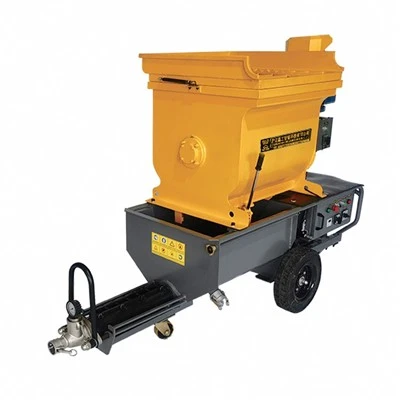
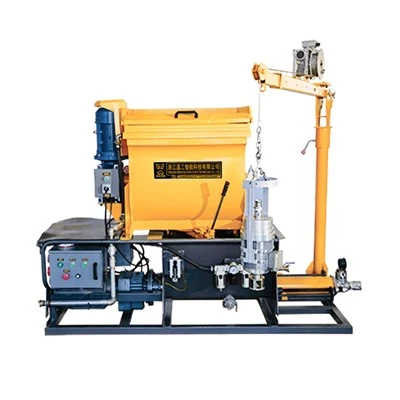
Now, let’s talk about the alternative. The right way to mix UHPC isn’t in a ready-mix truck—it’s in a batch mixer designed specifically for UHPC. I’ve been building UHPC mixers for years, and the key features we build into these machines are exactly what standard trucks lack. First, we use small, high-shear mixing blades that break down fiber clumps without damaging the fibers themselves. We also build in variable speed controls, so you can mix the dry powders, add water and superplasticizers, and then add fibers slowly while the mixer runs at a low speed—this ensures every fiber is evenly distributed, no clumps, no weak spots.
Another thing we design into our UHPC mixers is temperature control. UHPC’s hydration is very sensitive to heat, so our mixers have jackets that circulate cool water to keep the mix temperature between 70 and 75 degrees Fahrenheit. That extends the workability window to 90 minutes, which is more than enough time to haul it to even the farthest job site, or split loads between multiple spots on a large project.
I know what you’re thinking: “This is more expensive than a ready-mix truck.” But let’s do the math. A standard cubic yard of UHPC can cost 2 to 3 times more than regular concrete, because of the specialty materials. If you mess up the mix by using a standard truck, you’re not just wasting concrete—you’re risking the structural integrity of the entire project. I had a bridge engineer tell me once that a UHPC failure on a bridge could lead to lawsuits, shutdowns, and years of repairs. It’s not worth cutting corners on the mixing process.
Plus, when you use a dedicated UHPC mixer, you get consistency. Every batch has the same fiber distribution, the same water-cement ratio, the same strength. Ready-mix trucks can vary more because of how the drum rotates, how long it’s been mixing, and even the road conditions on the way to the site. For projects that use UHPC precast panels, consistency is everything—one bad panel can ruin an entire facade or bridge deck.
Don’t get me wrong, there are some cases where people try to adapt. I’ve seen plants add fiber injection systems to their ready-mix trucks, but those systems are expensive, and they only work for small fiber loads. If you’re mixing UHPC with 2% steel fibers by volume (which is standard for most structural applications), those modified trucks still cause clumping. It’s a band-aid on a problem that’s inherent to standard RMC drum design.
Another common misconception: “Can I mix a small batch of UHPC in a ready-mix truck for a small job?” Even for a 1 or 2 cubic yard load, it’s not worth it. The small volume means the blades don’t have enough material to lift and mix, so you end up with a mix that’s uneven—some parts have too many fibers, some have too little, some are too wet, some are too dry. I once worked with a contractor who tried this for a small residential foundation repair, and they had to replace the entire foundation six months later because the UHPC was so inconsistent it didn’t seal properly. That cost them more than if they’d rented a dedicated UHPC mixer for a day.
Now, let’s talk about what UHPC is used for these days, because that puts the mixing question in context. It’s used for bridge girders that last 100 years without maintenance, precast wall panels for skyscrapers that cut down on weight and construction time, and even repair materials for aging infrastructure. These are not small jobs—they’re high-stakes projects where every part of the process matters. Cutting corners on mixing to save a few dollars on hauling is reckless, plain and simple.
I’ve been in this industry long enough to see trends come and go. Ten years ago, everyone was asking if UHPC could be mixed in a standard truck. Now, most professionals know the answer is no—but there are still new contractors and engineers who haven’t learned the hard way. That’s why I spend so much time talking to people about this, walking them through the science, showing them examples of what goes wrong when you cut corners.
If you’re a plant manager looking to add UHPC to your lineup, or a contractor considering UHPC for your next project, don’t fall for the “just use a ready-mix truck” myth. It might seem like a way to save time and money upfront, but it will cost you in the long run. The right equipment makes all the difference. Our team specializes in UHPC mixing solutions tailored to your specific project, whether you’re a small contractor doing a residential repair or a large plant supplying bridge projects across the country.
Ready to talk through what you need? Whether you’re looking to rent a mixer for a single job, purchase a system for your plant, or just have questions about UHPC mixing best practices, we’re here to help. Don’t risk your project on a makeshift mixing solution—reach out to our team today to discuss your requirements and find the right UHPC mixing setup for you.
Continuous Mortar Mixer References
- ACI 239R-15. (2015). Ultra-High Performance Concrete. American Concrete Institute.
- Russell, H. G., & Graybeal, B. A. (2013). Ultra-High Performance Concrete: A State-of-the-Art Report for the Bridge Community. Federal Highway Administration.
- Naaman, A. E. (2003). Ultra High Performance Concrete: Properties and Applications. Proceedings of the International Symposium on Ultra High Performance Concrete.
- Ready-Mix Concrete Association. (2021). Best Practices for Concrete Mixing and Hauling. National Ready Mixed Concrete Association.
- ASTM C1856/C1856M-17. (2017). Standard Practice for Fabricating and Testing Specimens of Ultra-High Performance Concrete. American Society for Testing and Materials.
Zhejiang Wengong Intelligent Technology Co., Ltd.
Zhejiang Wengong Intelligent Technology Co., Ltd. is one of the most professional uhpc mixer manufacturers and suppliers in China. With abundant experience, we warmly welcome you to buy durable uhpc mixer made in China here and get quotation from our factory. Quality products and reasonable price are available.
Address: No.111 Huakang Road, Liuao Village, Qiaoxia Town, Yongjia County, Wenzhou City, Zhejiang Province, China
E-mail: sales007@cngcjx.com
WebSite: https://www.wallgoe.com/
