If you’re in the market for Cisco switches—whether you’re a small business expanding your network, a IT technician upgrading a data center, or a managed service provider setting up client sites—you know that even the most reliable hardware won’t perform as intended without the right installation tools. Over the years, I’ve helped hundreds of businesses source and deploy Cisco switches, and I’ve lost count of how many times I’ve heard, “I thought we could just plug them in!” The truth is, Cisco switches demand careful, tool-aided installation to avoid misconfiguration, physical damage, and long-term downtime. As a supplier specializing exclusively in Cisco switches, I’ve learned that the right tools aren’t just nice-to-haves—they’re non-negotiable for a smooth deployment. Let’s break down exactly what you need, why each tool matters, and how to make the most of them during your next setup. Switches for Cisco

First, let’s start with physical installation tools, because the basics set the foundation for everything else. You might be tempted to grab a random screwdriver from your toolbox, but Cisco switches require specific fasteners, so a precision screwdriver kit tailored to network hardware is essential. Most Cisco switch mounting brackets use #6-32 UNC screws, which are smaller and finer-threaded than standard household screws. A standard Phillips screwdriver can strip these screws, making it impossible to secure the switch to a rack. For this, I recommend a kit that includes Phillips #1 and #2 heads, flathead screwdrivers (for small terminal blocks on some models), and a Torx T15 driver—many newer Cisco switches use Torx screws for access ports, so skipping that could leave you stranded when you need to reset a password or replace a fan module mid-deployment.
Next, a rack-mounting tool isn’t just a convenience—it’s a time-saver. Racking a Cisco switch might seem straightforward: slide it into the rails, tighten the screws, and go. But if you’re working alone (which is common for small to medium businesses), a rack-mounting tool with a pivot mechanism lets you lift the switch, align the brackets, and secure it without straining your back or risking dropping the hardware. I’ve seen too many technicians fumble with a 10-pound Cisco Catalyst 9300 switch in a tight rack space, and that’s how scratches, bent ports, or even broken internal components happen. Even if you have a helper, a rack-mounting tool ensures the switch is aligned straight, which prevents airflow blockages (a major cause of overheating in data centers) and keeps your rack neat.
Cable management is another often overlooked physical tool category, and bad cable management doesn’t just look messy—it can cause network outages. For Cisco switches, you’ll need cable ties (preferably Velcro or reusable plastic ties, not zip ties that can cut insulation over time), a cable tie tool to tighten them evenly without damaging cables, and a cable tester to verify that Ethernet cables are properly crimped. Many Cisco switch ports are small and closely spaced, so a cable stripper with a precision blade ensures you don’t nick the outer insulation of Cat 5e, Cat 6, or fiber optic cables—nicked insulation can cause signal loss, which is a common hidden issue that only shows up months after installation. If you’re working with fiber, you’ll also need a fiber cleaver, which cuts fiber ends to a perfect angle for low-loss connections; a rough cut can drop signal strength enough to make long-haul fiber links unusable.
Now, moving to configuration and diagnostic tools, because installing a Cisco switch doesn’t end with physically mounting it—you have to set it up to work with your network. The first must-have here is a console cable, specifically a USB-to-RJ45 console cable. Cisco switches use a console port for initial setup before they’re connected to the network, and a standard USB cable won’t work. Many technicians grab a random console cable online, but cheap ones often have compatibility issues with newer Windows or macOS devices. As a Cisco switch supplier, I always recommend branded Cisco console cables or high-quality third-party equivalents that work with both native terminal emulators (like Windows HyperTerminal or macOS Terminal) and popular tools like PuTTY. Without a working console cable, you’ll be stuck trying to configure the switch remotely if it’s not on your existing network, which is a nightmare for new deployments.
Next, a laptop or desktop with the latest Cisco IOS (Internetwork Operating System) Software, or a network management tool like Cisco DNA Center, is non-negotiable for configuring switches. Cisco releases regular IOS updates that fix security vulnerabilities, add features, and improve performance—installing an outdated IOS can leave your network open to breaches, which is a big risk for any business. For small-scale deployments, a laptop with Cisco’s Command-Line Interface (CLI) tools or the Cisco Network Assistant (a user-friendly GUI for small networks) works great. For larger data centers, Cisco DNA Center automates switch configuration, which cuts down on human error and speeds up deployments by up to 70% (I’ve seen this firsthand with a client who deployed 20 Catalyst 9200 switches in 2 days instead of the 5 days their IT team estimated).
Diagnostic tools are also critical for troubleshooting during and after installation. A Cisco Discovery Protocol (CDP) analyzer lets you see all Cisco devices connected to the switch ports, which is useful for verifying that servers, routers, or other switches are connected correctly. For wireless networks, a Wireless LAN Controller (WLC) tool integrated with your Cisco switch lets you configure and troubleshoot access points attached to the switch. Even a simple multimeter can help you check power connections: Cisco switches require a consistent power supply, and a loose power cord or faulty UPS can cause intermittent outages, so testing power with a multimeter before you power on the switch saves you from chasing issues later.
One tool that many first-time Cisco switch users forget is an ESD (Electrostatic Discharge) wristband. Static electricity from your body can damage sensitive Cisco switch components like integrated circuits, which are often located just under the port panels. I once had a customer return a brand-new Catalyst 1000 switch because it wouldn’t power on, only to find out their IT tech had installed it without an ESD wristband—static had fried the power module. ESD wristbands are cheap, easy to use, and prevent that kind of avoidable damage. For larger data center deployments, ESD mats and heel straps are also a good investment, but even a basic wristband will cover you for most small to medium installations.
Now, let’s talk about tools that make maintenance and future upgrades easier. A switch puller tool—also called a rack extractor—lets you slide a Cisco switch out of the rack without disconnecting all the cables first, which is a huge time-saver when you need to replace a faulty module or upgrade firmware. I’ve had clients who tried to pull a switch out of the rack without a puller, only to yank out Ethernet cables connected to 10 different devices, causing a network outage that cost them thousands in lost productivity. A $20 tool saves you from a lot of stress.
Another key tool is a label maker with water-resistant, acid-free labels. Cisco switch ports are often hard to reach, and over time, cables get mixed up—labeling each port, VLAN, and cable run makes troubleshooting or reconfiguring the switch years later so much easier. I always include a roll of professional labels with every switch I sell, because I’ve seen too many small businesses use regular tape that peels off, leading to days of trying to figure out which cable goes to which device.
Wait, but let’s not overlook the fact that some tools are specific to the type of Cisco switch you’re using. For example, Cisco’s modular switches (like the Catalyst 9400 series) require tools to install line cards and power supplies—specifically, a torque screwdriver to tighten line card screws to the manufacturer’s specification. If you over-tighten, you can crack the card; if you under-tighten, it can come loose and cause downtime. For fixed-configuration switches (like the Catalyst 9200), you might only need the basic screwdrivers, but a cable tester is still essential. As someone who works with Cisco switches daily, I always ask customers what type of switch they’re installing before I recommend tools—one size doesn’t fit all.
Now, let’s address a common myth: you don’t need expensive tools to install Cisco switches. I’ve installed hundreds of switches with basic tools, but skimping on quality will cost you more in the long run. A $5 screwdriver that strips screws can ruin a $1,000 switch, and a cheap console cable that doesn’t work can delay your deployment for hours. As a Cisco switch supplier, I only recommend tools that are proven to work with Cisco hardware, because I’ve seen the mistakes that come with cutting corners.
Let’s also talk about safety. Working with network equipment, especially in racks, can be dangerous. A step ladder with a stabilizer is better than a wobbly chair, and a flashlight for dark server rooms is non-negotiable—many server closets don’t have bright lighting, and trying to work in dim light leads to mistakes. I once had an IT tech trip over a cable while installing a switch because he didn’t have a flashlight, and he dropped the switch, breaking a port. That’s why a basic flashlight is an often-overlooked tool that’s worth its weight in gold.
So, to wrap up, the essential tools for installing Cisco switches fall into four categories: physical mounting tools (precision screwdrivers, rack tools, ESD protection), cable management tools (cable strippers, testers, ties), configuration tools (console cables, IOS tools, management software), and diagnostic tools (multimeters, CDP analyzers, torque screwdrivers). Skipping any of these can lead to physical damage, network outages, or misconfiguration that takes weeks to fix.
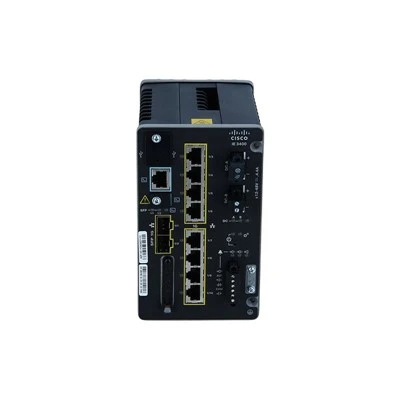
If you’re planning to deploy Cisco switches, don’t leave your installation to chance. Having the right tools on hand doesn’t just make the job easier—it ensures your network runs smoothly from day one. I’ve helped businesses of all sizes avoid costly mistakes by supplying not just the switches, but also the tools they need to set them up correctly. If you’re ready to purchase Cisco switches and get the right installation tools to go with them, reach out to our team to discuss your specific needs—we’ll help you pick out every tool you need, from the basics to the specialized gear for your switch model, to make your deployment stress-free.
Firewalls References
- Cisco Systems, Inc. "Cisco Catalyst Switch Installation Guide." Cisco.com, 2024.
- Network Computing Magazine. "Essential Tools for Network Hardware Installation." NetworkComputing.com, 2023.
- Electronic Industries Alliance. "ESD Protection Requirements for Network Equipment." EIA.org, 2022.
- Cisco Systems, Inc. "CLI and Management Tools for Cisco Switches." Cisco DevNet, 2024.
- Small Business Technology Journal. "Cable Management Best Practices for Network Deployments." SmallBizTechJournal.com, 2023.
AITI Tech Limited
AITI Tech Limited is one of the most professional switches for cisco manufacturers and suppliers in China for over 20 years, featured by quality products and low price. Welcome to buy bulk discount switches for cisco in stock here from our factory. If you have any enquiry about pricelist, please feel free to email us.
Address: 6F, Haogong Building, Yannan Road, Futian District, Shenzhen, China
E-mail: kelly@hkaiti.com
WebSite: https://www.hkaiti.com/
