As a PVC grinding mill supplier who has worked in this industry for over a decade, I get at least one question every single week from potential clients: “Can you customize a PVC grinding mill to fit what we actually need?” At first, I used to answer with a generic “Yes, of course” — but over time, I’ve learned that answer is only half the story. Customization isn’t just about adjusting a few settings; it’s about understanding the unique pressures your business faces, the material properties of the PVC you process, and the long-term goals you have for your production line. Today, I want to walk you through what customization actually means for PVC grinding mills, why it matters, and how we make it work for real operations every day. PVC Grinding Mill
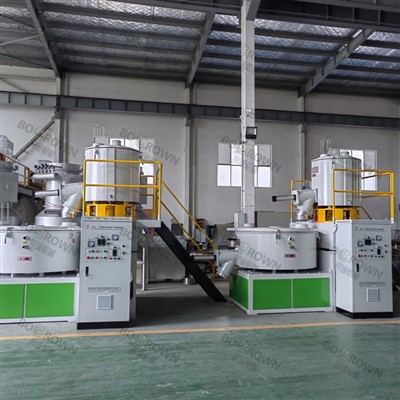
Let’s start with the basics: what makes a PVC grinding mill different from other plastic grinding equipment. PVC (polyvinyl chloride) is a tricky material. It’s rigid, often mixed with additives like plasticizers, stabilizers, and pigments, and it degrades if it gets too hot — a problem that can ruin your material batch or even damage the mill itself. So off-the-shelf mills are built for general use, but they rarely account for the specific nuances of your PVC waste or product scrap. A manufacturer making rigid PVC pipe, for example, will have different grinding needs than a company processing flexible PVC film scraps, or a recycler handling mixed PVC with small amounts of other plastics. That’s where customization comes in.
Last year, a mid-sized PVC pipe manufacturer reached out to us with a problem. They were grinding 12-foot pipe offcuts and end pieces in a standard mill, but the output was inconsistent: some pieces were too large to feed into their extrusion lines, others were ground too fine and became dusty, which caused clogs in their conveyor systems. They also had a 10% waste rate from pipe joints, which were thicker and denser than the main pipe, so those pieces kept dulling the mill’s blades faster. When we looked at their process, we realized a standard mill couldn’t adjust for the density difference between pipe and joint scrap. So we customized two parts of their mill: first, we modified the screening system to include interchangeable mesh sizes, so they could switch between fine grind for pipe scraps and a coarser grind for joints without reconfiguring the whole setup. Second, we upgraded the blade material to a high-chrome alloy that holds an edge 30% longer on dense PVC, cutting their blade replacement costs by almost half. That’s the kind of customization that solves real, immediate pain points, not just a theoretical adjustment.
Another common request we get is for mills that fit into tight production floor layouts. Many small to mid-sized manufacturers don’t have the luxury of large, open spaces — their equipment is stacked against walls, or they need the mill to connect directly to an existing conveyor system without extra piping. A few months ago, a window profile manufacturer in Ohio told us their existing mill was taking up too much space, and their workers were having to carry scrap from the cutting table across the floor, which added time and risk of injury. We designed a compact, vertical grinding mill that mounted directly to the end of their profile cutting line, eliminating the need for separate scrap handling. We also adjusted the feed hopper to match the exact dimensions of their cut profile pieces, so there was no spillage during loading. This customization didn’t just save space; it cut their scrap processing time by 25% because they didn’t have to move material between machines.
But here’s the thing: customization isn’t one-size-fits-all. It depends on three key factors that every client needs to define upfront: what type of PVC you’re grinding, what size and consistency you need your final output to be, and how the mill will fit into your existing workflow. Let’s break each of these down.
First, the type of PVC. PVC comes in two main categories: rigid (uPVC) and flexible (PVC-P). Rigid PVC is used for pipes, windows, and window profiles — it’s hard, brittle, and doesn’t deform easily. Flexible PVC is used for hoses, flooring, and wire insulation; it’s softer, more elastic, and contains higher amounts of plasticizers. Grinding these two requires different mill configurations. For rigid PVC, you need sharp, durable blades that can handle dense material, and a cooling system to prevent overheating during grinding. For flexible PVC, blades need to be slightly duller to avoid smearing the plastic, and the mill’s screening system needs to handle a more pliable material without clogging. We’ve had clients who process both rigid and flexible PVC, so we build mills with adjustable blade angles and cooling fans that switch modes based on the material — another customization we’ve refined over the years.
Second, output requirements. What do you plan to do with the ground PVC? If you’re recycling it back into new pipe, you need a consistent particle size, usually between 2 and 5 millimeters, to mix with virgin resin. If you’re selling ground PVC as a raw material to other manufacturers, you might need a specific shape or color consistency. A client in Texas that recycles PVC for synthetic turf backing needed a very fine grind — less than 1 millimeter — with almost no dust, because dust would get caught in the turf fibers and reduce durability. We customized the mill’s air classification system, which separates fine particles from coarser ones, to capture almost 95% of the output in the exact 0.8mm range they needed, eliminating the need for extra processing steps after grinding. On the other end, a client that uses ground PVC for road construction needed larger particles, around 10mm, to add structural integrity. We adjusted the mill’s rotor speed and screening size to produce that, which a standard mill can’t do without major modifications.
Third, integration with existing equipment. Many manufacturers already have conveyors, mixers, or storage bins on their production lines, so a new mill can’t be a standalone unit — it has to work with what they already have. A food-grade PVC film processor we worked with in California needed to ensure no cross-contamination between their PVC scrap and other food-safe plastics they process. We customized the mill’s hopper and grinding chamber to be made of FDA-approved stainless steel, and added a sealed feed system that prevented dust from escaping, so they didn’t have to adjust their existing dust collection system. Another client connected their mill to a robotic sorting system, so we customized the mill’s control panel to sync with the robot’s schedule, automatically adjusting feed rate when the robot detects a batch of PVC scrap. This kind of integration cuts down on manual labor and reduces downtime, which is a huge win for production efficiency.
I know some clients worry that customization will mean higher costs or longer lead times, but that’s not always the case. When we work with a client early in the process — before they even buy a mill — we can tailor the design to their needs without adding unnecessary features. For example, a small startup that’s just starting out might not need heavy-duty blades that last 10 years; they might be fine with a mid-grade blade that fits their smaller production volume, which cuts the mill’s cost by 15%. We also offer modular customization, so if a client’s needs change down the line, they can add or adjust parts without buying an entirely new mill. Last year, a client who originally bought a basic mill for rigid PVC expanded to process flexible PVC six months later; we added adjustable blades and a flexible feed hopper for a fraction of the cost of a new mill. That’s the value of working with a supplier who understands that your business will grow, not just what you need today.
Of course, customization also comes with challenges. The biggest one is making sure we test the mill before it leaves our facility. Every custom mill we build goes through a 48-hour test run with the client’s actual PVC material, so we can adjust settings on site before shipping. Last year, a client in Canada sent us a sample of their PVC window profile scrap, and during the test run, we noticed that the mill’s cooling system wasn’t keeping up with the cold Canadian air — wait, no, actually, the scrap contained a small amount of metal contaminants that were wearing down the blades faster than expected. We added a magnetic separator to the feed hopper during the test, which solved the problem. If we had shipped the mill without that test, the client would have had to deal with downtime and extra costs right after installation. That’s why we never skip the testing step — it’s how we make sure the custom mill works as promised.
So, can a PVC grinding mill be customized according to specific requirements? The answer is a resounding yes, but only if you choose a supplier who will take the time to understand your needs, not just sell you a machine. At the end of the day, your mill should be an investment, not a one-size-fits-all piece of equipment. It should fit your material, your space, your production goals, and your budget.
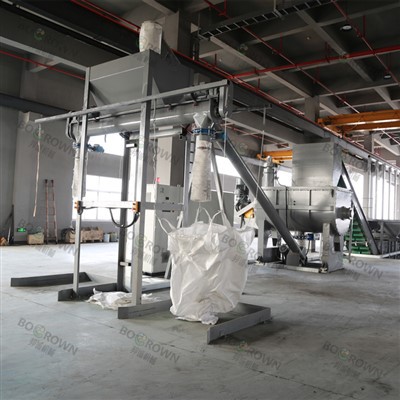
If you’re tired of off-the-shelf mills that don’t meet your needs — whether you’re dealing with inconsistent output, space constraints, or material-specific issues — let’s talk. We can walk through your current process, what you need from a grinding mill, and build a solution that works for your business. There’s no obligation, just a chance to make your production more efficient and less stressful.
PVC Additives Dosing Machine References
- Plastic Recycling Equipment Manufacturers Association. (2022). Customization Trends in Plastic Processing Machinery.
- European Polyvinyl chloride Association. (2021). Guidelines for Grinding and Processing PVC Materials.
- Industrial Machinery Digest. (2023). Modular Design in Manufacturing Equipment: Benefits for Small to Mid-Sized Operations.
- Journal of Plastic Recycling and Technology. (2022). Thermal Management in PVC Grinding: Key Considerations for Process Efficiency.
ZJG BC Machinery Co., Ltd.
As one of the most professional pvc grinding mill manufacturers and suppliers in China, we’re featured by quality products and good price. Please rest assured to buy cost-efficient pvc grinding mill for sale here from our factory. Contact us for custom service and OEM service.
Address: No.8 Lexi Road, Leyu Town, Zhangjiagang City
E-mail: sales@bcextruder.com
WebSite: https://www.bcextruder.com/
