If you’ve ever wondered how the small, unassuming pieces that keep our daily world moving work, you’re not alone. As someone who’s spent the last 12 years working as a mechanical parts supplier—walking factory floors, troubleshooting custom orders, and sitting across from engineers who swear by a well-machined bolt over any expensive digital tool—I get asked this question all the time. “What exactly are mechanical parts?” It sounds simple, but the answer is the backbone of almost every product, machine, or system you use, from the car that drops your kid at school to the wind turbines that power half the region. Let me break this down like I would for a new engineer just starting out, no fancy jargon (okay, maybe a little, but I’ll explain it). Mechanical Parts

At its core, a mechanical part is any individual, discrete component designed to perform a specific mechanical function within a larger assembly. Unlike electronic parts, which deal with electricity, data, or signal processing, mechanical parts rely on physical forces—pressure, tension, torque, friction—to do their job. Think of it like building a bike: each piece has a job. The chain transfers power from the pedals to the wheels, the brake pads create friction to stop, the spokes hold the wheel’s shape. None of these are a “machine” on their own, but together, they make something that works. That’s the essence of a mechanical part: specialized, physical, and critical to making a system operate reliably.
Now, let’s get into the different types, because not all mechanical parts are created equal. I’ve categorized these over the years by how they function, and it’s helped my team and our clients pick the right parts fast.
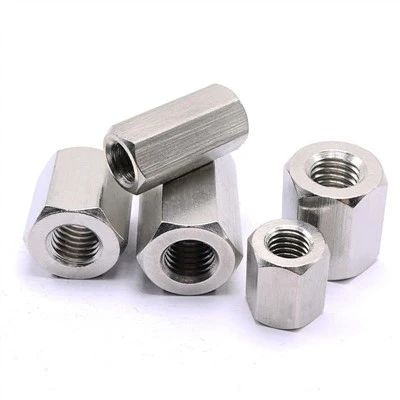
First, there are fasteners. These are the unsung heroes—they hold everything together. Bolts, nuts, screws, washers, rivets, even clips. I once had a client in the construction industry call me in a panic because a batch of bolts they’d ordered started rusting on a bridge project before installation. Turns out, they’d picked a low-grade carbon steel instead of the hot-dip galvanized stainless steel we recommended. Fasteners aren’t just “generic metal bits”; their material, thread pattern, and tensile strength (how much pull they can take before breaking) are non-negotiable. For critical infrastructure, a bolt that can’t handle 10,000 psi of pressure isn’t just a inconvenience—it’s a safety risk. That’s why my team audits every fastener order, even the “routine” ones, to make sure they match the application.
Next, motion transmission parts. These are the parts that make things move, or change the way motion works. Gears are the most obvious example—they change speed, torque (rotational force), or direction. A gear in a car’s transmission, for example, lets you go from slow, high-torque for climbing hills to fast, low-torque for highways. Then there are shafts, which act as the axis for gears or pulleys; bearings, which reduce friction between moving surfaces (think the wheel hubs on your car or a ceiling fan); and belts and chains, which transfer power from one shaft to another. I worked with a robotics client last year that needed custom timing belts for their assembly line robots. The standard belts they’d ordered kept stretching, which threw off the robot’s precision by 0.5 millimeters—enough to misalign tiny circuit boards. We switched them to a reinforced polyurethane belt with metal core wires, and that problem was gone. That’s the thing about motion parts: if they’re off, the whole system is off.
Then there are structural parts, which form the backbone of an assembly. Think of the frame of a truck, the chassis of a tractor, or the housing for a pump. These parts need to be strong, rigid, and often lightweight. For aerospace clients, we work with aluminum and titanium alloys that balance strength and weight to meet strict fuel efficiency standards. For agricultural equipment, we use high-strength carbon steel that can handle the rough, dusty, high-stress conditions of farm fields. A few months back, a farmer came to us needing replacement parts for his old cotton picker. Instead of just copying the worn parts he had, we suggested a upgraded steel alloy that’s more resistant to wear from sand and cotton fibers. He saved thousands in repairs because those parts lasted twice as long as the original ones. That’s where being a mechanical parts supplier isn’t just about filling orders—it’s about solving problems.
We also have precision parts, the small, tight-tolerance components that go in high-tech systems. Valves, actuators, custom machined components for medical devices, and aerospace parts all fall here. Tolerance is the key term here—it means how much a part can vary from its exact size and still work. For a valve in a medical pump that delivers insulin, a tolerance of 0.001 inches (about the thickness of a human hair) is standard. If the valve is even a hair too big or too small, it could deliver the wrong dose, which is life-threatening. My team works with CNC (Computer Numerical Control) machines that cut these parts with that level of precision, and every single one goes through a quality check with coordinate measuring machines to make sure it meets specs. I’ve seen first-hand how a tiny mistake in a precision part can have huge consequences, so we don’t cut corners here.
Now, you might be wondering: how are mechanical parts made? That’s another question I get all the time, and it’s not just casting or stamping (though those are common methods). The process depends on the part’s size, material, precision, and application. For high-volume, simple parts like bolts, we use cold heading, where metal is shaped by being forced into a die at room temperature—it’s fast, consistent, and cost-effective for millions of parts. For custom, high-precision parts like aerospace brackets, we use CNC machining, where a computer cuts a solid block of metal bit by bit to the exact shape, with tolerances down to microns. For parts that need to withstand extreme heat or corrosion, we might use casting, where molten metal is poured into a mold, or forging, where metal is heated and hammered into shape to make it stronger and more durable. I always tell clients that the manufacturing method is as important as the part’s design—pick the wrong one, and you’ll end up with a part that’s either too expensive or doesn’t work.
A common misconception I run into is that all mechanical parts are the same, or that off-the-shelf parts work for every application. That’s almost never true. I had a client in the marine industry once who tried to use standard steel bearings for a fishing trawler’s propeller shaft. Saltwater is way more corrosive than fresh or even tap water, and standard steel bearings rusted out in six months. We switched them to bronze bearings with a special polymer coating that’s resistant to saltwater, and those bearings lasted five years. That’s the value of a good mechanical parts supplier: we don’t just sell you a part—we understand the environment it’s going to operate in, the loads it will carry, and how long it needs to last, then help you pick the right part for the job.
Another thing that makes mechanical parts critical is their role in sustainability and efficiency. As companies around the world push to reduce their carbon footprint, mechanical parts are a big part of that. Lighter structural parts mean vehicles and machines use less fuel. Friction-reducing bearings and gears mean less energy is wasted as heat, so systems are more efficient. Durable parts that last longer mean less waste from replacement parts. My team has worked with several electric vehicle manufacturers over the last few years, helping them design custom lightweight aluminum components that cut the overall weight of their vehicles, which extends battery range. It’s not just about making parts that work—it’s about making parts that help build a more efficient, sustainable world.
At the end of the day, whether you’re a small business owner putting together a custom piece of equipment, an engineer designing a new wind turbine, or a farmer needing replacement parts for your tractor, mechanical parts are the building blocks that make your operation work. They’re not flashy, they don’t have fancy screens or lights, but they’re the reason things run smoothly, safely, and reliably.
If you’re working on a project and need mechanical parts that fit your exact needs—whether you need a small batch of custom precision parts, a bulk order of fasteners, or advice on the right components for your application—we’re here to help. We don’t do one-size-fits-all orders; every client, every project, every part gets the time and attention it deserves. Reach out to our team to discuss your requirements, and we’ll work with you to find the right mechanical parts at a price that fits your budget.
Cold Forged Parts References
- Kalpakjian, S., & Schmid, S. R. (2020). Manufacturing Processes for Engineering Materials. Pearson Education.
- Shigley, J. E., Mischke, C. R., & Budynas, R. G. (2011). Standard Handbook of Machine Design. McGraw-Hill Education.
- ASME B1.1-2020, Unified Inch Screw Threads (UN and UNR Thread Form). American Society of Mechanical Engineers.
- Bhushan, B. (2013). Introduction to Tribology. John Wiley & Sons.
Ningbo Jinghao Warm Upsetting Hydraulic Technology Co., Ltd.
As one of the most professional mechanical parts manufacturers and suppliers in China, we offer a wide range of products with superior quality. Please feel free to wholesale bulk customized mechanical parts from our factory. For quotation, contact us now.
Address: 32-1, Phase II, Wanyang Innovation & Entrepreneurship City, Shipu, Xiangshan County, Ningbo City
E-mail: 13736096018@163.com
WebSite: https://www.warmherding.com/
