If you’ve ever stood next to a commercial pressure washer working on a concrete driveway, or watched a industrial surface cleaning crew prep a metal part for coating, you’ve probably wondered the same thing: does that super high-pressure spray actually damage the surface it’s hitting? As a supplier of high pressure nozzles, I get this question at least a dozen times a week—from homeowners planning a deck refresh to manufacturing engineers sourcing parts for assembly lines. A lot of folks come to us with a vague fear: the myth that all high-pressure spray is inherently destructive, that even a tiny misstep will etch concrete, warp metal, or strip paint to the core. The truth is way less black-and-white than that. Damage isn’t a given, it’s a choice—one that depends on three non-negotiable factors: nozzle type, pressure level, and how the spray is applied. Let’s break this down, because getting it right saves you time, money, and a whole lot of avoidable headaches. High Pressure Nozzle
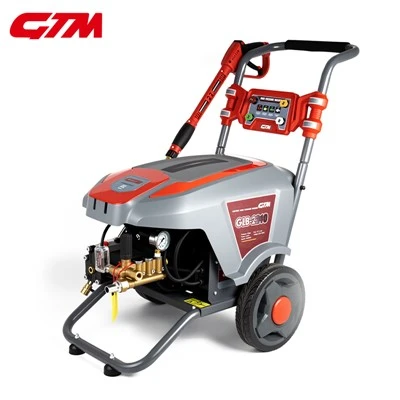
First, let’s do a quick crash course on how high pressure nozzles work, because that’s where the line between cleaning and damage starts. A high pressure nozzle isn’t just a hole at the end of a hose—it’s engineered to control the flow of pressurized water (or sometimes air, chemicals, or abrasives) into a specific spray pattern. The core of nozzle design is pressure amplification and distribution. When water is pumped from a pressure washer or industrial pump system, it’s pushed through a tiny orifice, which speeds up the flow and concentrates kinetic energy into a narrow jet. Different nozzles tweak that energy differently: for example, a 0-degree nozzle delivers a tight, pencil-like jet with massive kinetic energy at its center, while a 25-degree nozzle spreads the energy across a wider, softer fan. It’s the difference between a drill bit and a wide, gentle brush—one can pierce metal, the other can scrub dirt without scratching a glass window.
So when can this jet cause damage? The most common mistake I see is operators pairing the wrong nozzle and pressure setting for the surface they’re working on. Take concrete, for example. Most driveways have a pressure rating of around 3,000 PSI before surface damage becomes likely—but that’s not a hard number. If you’re using a 0-degree nozzle at 4,000 PSI and holding it within an inch of the concrete, you’re not just cleaning mildew; you’re cutting into the top layer (called the paste) that gives concrete its smooth, even finish. Etching, pitting, and even chipping are common here— I’ve seen a homeowner’s brand-new stamped concrete driveway ruined in 10 minutes because they grabbed the wrong nozzle from their garage. But that same concrete driveway can be cleaned safely with a 25-degree nozzle at 2,500 PSI, held 6 to 12 inches away from the surface, with overlapping passes. No damage, just a spotless driveway. Even more striking: some concrete prep work for staining actually uses targeted high pressure nozzles to etch the surface on purpose— that’s a controlled application of damage, designed to make stain adhere better, not a mistake.
Metal surfaces are another area where damage happens easily when you’re not matching your nozzle to the job. Soft metals like aluminum, brass, and even mild steel are way more sensitive than people realize. A 15-degree nozzle at 3,000 PSI can gouge aluminum siding if held too close, leaving permanent marks that aren’t just unsightly— they can also create rust points where moisture gets trapped in the gouge. Even stainless steel, which is marketed as tough, can get surface damage if you use a nozzle that’s not rated for food-grade or delicate surface work. Here’s a pro tip from our industrial clients: we sell specialty nozzles with a fan-shaped spray and a “wide-angle” pattern (like 40 or 65 degrees) for metal surfaces, paired with pressure settings under 1,500 PSI for residential metal siding, and up to 2,000 PSI for industrial metal parts that have heavy grease buildup. That’s enough pressure to cut through grease, but not enough to scratch or dent the surface.
Wait, but what about coatings— paint, powder coating, sealants? This is where nozzle technology has come a long way in the last decade, and a lot of old myths haven’t caught up. Ten years ago, using high pressure to strip old paint or prep a surface almost always meant damaging the underlying substrate, but modern low-pressure, wide-fan nozzles change that. The key here is “pressure washing for surface prep” vs. “pressure washing for paint stripping.” If you’re stripping lead paint from a old house, a 0-degree nozzle at 3,500 PSI is designed to lift paint off, and that will almost always damage the underlying wood or drywall. But if you’re prepping a garage floor to apply a new epoxy coating, a 25-degree nozzle at 1,800 PSI will etch the top layer just enough to make the epoxy stick, without etching deep enough to cause damage. I’ve even worked with a commercial painting company that switched to our low-impact nozzles for residential paint prep— they cut their material waste by 30% because they no longer over-prep surfaces, and their callback rate for peeling paint dropped by half. The mistake isn’t using high pressure, it’s using the wrong nozzle for the task.
Of course, there are edge cases where damage is almost unavoidable, even with the right nozzle settings. Porous or fragile surfaces like stone, glass, or wood that’s been sanded down are tricky. For example, natural stone like marble or granite has a porous top layer that can be etched by pressure that’s too high, especially if there’s acid in the cleaning solution (though that’s a chemical reaction, not just pressure). Glass, while tough overall, can get micro-cracks if hit with a narrow high-pressure jet— those cracks are almost impossible to see at first, but they’ll spread when the glass is exposed to temperature changes. Wood is another one: pressure washing a old weathered deck with a narrow nozzle can strip the wood grain, leaving it rough and uneven. But even here, we have solutions: our soft-jet nozzles deliver a pressurized spray that’s been diffused through a fine mesh, cutting pressure at impact by 40% without losing cleaning power, making them safe for deck wood, stone, and even painted window frames.
Another factor a lot of people overlook is nozzle wear. Nozzles are simple parts, but they take a beating over time: debris, minerals from water, and repeated high pressure can erode the inner orifice, changing the spray pattern. A worn nozzle that was once delivering a even 25-degree fan might start spraying a uneven, narrow stream with higher impact in some areas— that’s a hidden damage risk. I can’t tell you how many times a customer has come back complaining about surface damage, only to realize their nozzle is 2 years old and worn down, not because they were using too much pressure. We always recommend inspecting nozzles after every use, replacing them every 6 to 12 months depending on usage, and matching nozzle material to your water supply: for hard water areas, we sell nozzles with ceramic cores instead of plastic, which resist wear way better.
Now, let’s talk about how this applies to different industries, because our customers run the gamut from homeowners to Fortune 500 manufacturing companies. In agriculture, for example, high pressure nozzles are used to clean milking equipment, which is critical for food safety. The wrong nozzle here can not only damage the stainless steel equipment, creating bacterial harbor points, but also contaminate milk. Our food-grade nozzles are designed to deliver a consistent, low-impact spray that meets FDA standards for dairy equipment cleaning, with zero damage to the metal surface. In construction, contractors use high pressure nozzles to remove formwork residue from concrete, and our team works with them to pick nozzles that remove residue without chipping the new concrete— saving them thousands of dollars in rework costs. Even in marine industry, where cleaning boat hulls is a daily task, using a wrong nozzle can scratch the anti-fouling paint, leading to increased drag and higher fuel costs.
I’ll be honest: there is no one-size-fits-all answer to whether high pressure nozzles damage surfaces. The short version is: they can damage surfaces if you use the wrong nozzle, wrong pressure, or wrong application. But when matched correctly, they’re one of the safest, most efficient cleaning and surface prep tools available. I’ve been in this business for 12 years, and I’ve seen hundreds of projects go south because someone skipped the step of matching the nozzle to the job, and hundreds more go perfectly because they took the time to get that right.
If you’re working on a project and unsure which nozzle is right for your surface, don’t guess. Too often, people default to the highest pressure setting they have, because they think “more power = better cleaning.” But that’s not true. The best cleaning is effective, efficient, and non-damaging. We help customers every day narrow down the right nozzle, adjust their pressure settings, and even train their teams on proper application— because our goal isn’t just to sell you a nozzle, it’s to make sure it works for your specific needs, without damaging the surfaces you care about.
At the end of the day, high pressure nozzles are tools, like any other. A hammer can build a house or break a window, depending on how you use it. The same goes for high pressure. The myth that all high pressure nozzles damage surfaces is outdated, rooted in old, poorly designed nozzle technology. Modern nozzle engineering has come so far that we can tailor the spray to almost any surface, safe and effective.
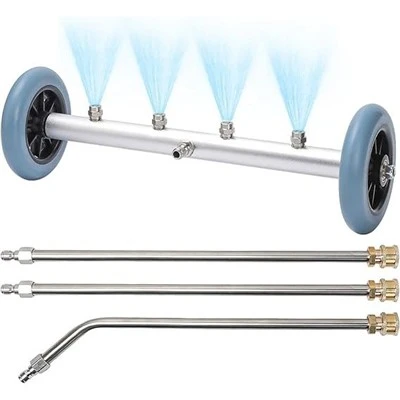
If you’re planning a cleaning or surface prep project, and you want to make sure you’re not accidentally damaging surfaces, let’s talk. We can walk you through the different nozzle types, pressure requirements, and application tips specific to your material and project size, to help you get the job done right. No guesswork, no wasted time, no ruined surfaces.
Plunger Pump References:
- American Society of Mechanical Engineers (ASME). Pressure Technology for Surface Cleaning: Principles and Best Practices. 2021.
- National Association of Home Builders (NAHB). Guide to Pressure Washing Residential Surfaces. 2022.
- International Organization for Standardization (ISO). High Pressure Nozzle Performance Standards for Industrial Cleaning. ISO 16061:2020.
- Journal of Materials Processing Technology. Effects of High-Pressure Water Jet Parameters on Surface Integrity of Concrete and Metal Substrates. Vol. 298, 2021.
- Food and Drug Administration (FDA). Sanitation Equipment Standards for Dairy and Food Processing Facilities. 2023.
Zhejiang GTM Hi-Tech Intelligent Equipment Co., Ltd.
We are one of the most experienced high pressure nozzle manufacturers and suppliers in China, also support customized service. Please feel free to buy discount high pressure nozzle for sale here from our factory. Quality products and reasonable price are available.
Address: No.5 of Changjiang Road, 2nd Economic Development Zone of Wenling, Zhejiang, China
E-mail: yehuanting1@hongyemfg.com
WebSite: https://www.gtmplungerpump.com/
