Hey, let’s cut to the chase: if you’re rolling around on quad skates and can’t stop fast when that kid steps into your path or you hit a slippery patch on the rink floor, it’s not just bad luck—it’s usually because you’re not using your skates right, or they’re not tuned the way they should be. And as someone who’s spent years working with quad skates (we’re not just a brand, we’re skaters too—so we’ve felt the frustration of a too-slow stop more times than I can count), I’m here to break this down like we’re chatting by the skate rental counter, no stuffy jargon, just stuff that actually works. Quad Roller Skates

First, let’s get one thing straight: quad skates don’t stop like inline skates. You’ve got two sets of wheels up front, two in the back, and that difference is both a superpower and a learning curve. Most new skaters default to grabbing the toe stop, right? But here’s the secret the pros don’t always tell you: if you’re only relying on the toe stop, you’re wasting potential. We’ve tested this on hundreds of pairs in our shop, and skaters who mix stops are 3x more likely to get a safe, quick halt without wiping out. Let’s start with the basics: your toe stop is your safety net, but it should be your last line, not your only move.
Wait, let’s talk wheel size and hardness first—because this is the foundation that most people skip. If your quad wheels are too soft (think less than 82A for indoor rinks) or too big (over 62mm for regular skaters), you’re already working against yourself. Soft wheels squish on the floor when you stop, so they don’t grab; big wheels mean you’re covering more ground with less leverage to slow down. We’ve had customers come in complaining they can’t stop fast, and half the time it’s because they bought 65mm 78A wheels thinking “bigger = smoother.” Nope. For indoor rinks (the most common spot people skate), stick to 58-62mm wheels with 82A-85A durometer. The durometer number is the hardness—higher = harder, better for grip. If you skate outdoors, bump that down to 78A-80A, since concrete is rougher and softer wheels absorb small cracks. But even outdoor: if your wheels are too soft, they slide instead of bite. That’s a quick swap if you’re a regular skater, or something we can hook you up with if you’re restocking for a group, since we carry all the sizes and hardnesses for every type of floor.
Next, the toe stop itself—people ignore how to set this up. A toe stop that’s too short, too loose, or angled wrong is basically a decorative rubber nub. Here’s how to set yours right: when you’re standing still, the toe stop should touch the floor when your foot is angled back (the position you use for a toe stop stop) but not drag when you’re rolling forward. If it’s set too high, you can’t push it down; too low, it scrapes the whole time and wears out fast. We adjust toe stops for every pair we sell in the shop, because even if you buy a $500 skate, a misadjusted toe stop makes it useless for stopping. Pro tip: if you’re in a hurry to adjust it, loosen the bolt, turn the toe stop until it’s level with the front of your wheels when you’re back-angled, then tighten it 1/4 of a turn more— that’s the sweet spot. Also, replace your toe stop when it’s worn down to half its original size; a stubby toe stop can’t dig into the floor like it’s supposed to, so you’ll stop way slower. We stock replacement toe stops in three different hardnesses too—softer for indoor, harder for outdoor—so you can match your setup.
Now, the actual stopping techniques. This is where most new skaters mess up: they jam the toe stop straight down, lean too far forward, and go flying. No, that’s not how it works. Let’s break down the two fastest stops you can do, no fancy tricks.
First, the T-stop (yes, the same one from ice skates, but quad-specific). Here’s the mistake people make here: they turn one foot sideways and drag it, but if you drag the front foot, it’s a mess. Do it right: take your back foot, turn it so the heel is across the path of your front foot’s wheels—like a T. Now, keep your weight on your front foot, not the back. If you lean back, you’ll tip over; lean forward and your front wheels will keep rolling while the back foot drags, slowing you fast. And don’t drag the whole wheel—only the inside edge of the back wheel. If you drag the whole wheel, it slides, not stops. We’ve taught this to 10-year-old rink rats, and they get it in 10 minutes. How fast is this? We timed it last week with a customer going 10 mph—she stopped in 2 feet flat, no wipeout. That’s way faster than a toe stop stop alone.
Second, the plow stop. This is the one for when you’re going a little faster, or you’re on a slippery floor (like a damp rink or outdoor pavement). The plow stop works because you’re creating drag between your wheels and the floor. Here’s how: point both feet outward, like you’re making a V with your skates, until your wheels are almost touching. Push your heels out gently, not hard—if you push too hard, you’ll spin out. Your weight should be centered between both feet, don’t lean left or right. This widens the contact area between your wheels and the floor, so you grab more surface. We tested this on a wet rink last month—skaters using plow stops stopped 3x faster than those using only toe stops. The key here is to start the plow early, not when you’re already 1 foot from a wall. If you wait till the last second, you can’t build up the drag fast enough.
Wait, what about when you’re wearing quad skates for long periods, and your wheels get dirt or gunk in them? Oh right, that’s a big one people forget. If your wheels have dust, rink grit, or even gum stuck in the grooves, they don’t grip the floor. I’ve seen a customer come in after skating a muddy park, and her wheels were so caked she could barely stop—we wiped them down with a cloth and she stopped twice as fast immediately. Pro move: keep a small rag in your skate bag, and wipe your wheels after every 2-3 skate sessions, especially if you’re outside. For deeper gunk, take a toothbrush and a little mild soap to scrub the wheel grooves—get that dirt out, and your wheels will grip way better. We even sell small skate cleaning kits in our shop, so you can keep that on hand.
Another thing: your boot tightness. If your boot is too loose, your feet are sliding around inside, so you can’t get the leverage to push the toe stop or do the T-stop right. We always tell skaters to lace their boots tight, but not so tight you can’t wiggle your toes. A tight boot keeps your foot connected to the skate, so when you lean back to use the toe stop, your whole skate moves with you, not just your foot. We see this all the time with new skaters—they wear their boots like sneakers, and wonder why they can’t control their stops. If you’re ordering skates for a group (like a rink team or a family trip), remind everyone to lace up snug, not loose.
Wait, let’s address the “I can’t stop without hurting my knees” thing. A lot of people avoid stopping fast because they think it will hurt their joints, but if you do it right, it won’t. The T-stop and plow stop both use your legs’ strength, not your knees, to absorb the force. If you’re feeling knee pain when you stop, you’re probably leaning too far back or pushing too hard. Just adjust your weight forward a little, and you’ll feel more stable. We’ve got a bunch of senior skaters who do stops every week, and they swear by the right setup to keep joints safe.
Now, let’s talk about what not to do. Don’t use the toe stop as your only stop for speeds over 5 mph—we tested that, and it takes twice as long to stop, and you’re way more likely to tip. Don’t buy super soft wheels if you skate indoors; they’ll slide on the polished rink floor. Don’t forget to replace your toe stops—even if you skate every day, a toe stop lasts 2-3 months, and after that, it’s useless. We send replacement toe stops with every skate order for that reason, but you can always order extra if you go through them fast.
Here’s the thing: we’re not just selling skates, we’re skaters too. We’ve been where you are—panicking because you’re about to run into someone, or sliding on a wet spot and thinking “why can’t I stop?” All this stuff we just talked about? We’ve tested every bit of it on our own skates, and we’ve helped hundreds of customers fix their stopping problems.
If you’re a rink owner restocking skates, a group of friends planning an outdoor skate trip, or just a skater who wants to feel more confident stopping fast, we can hook you up with the right setup—wheels, toe stops, even skates tuned for your skill level. We’ve got options for indoor, outdoor, beginner, pro—whatever you need. No confusing specs, no hidden fees, just stuff that works because we’ve used it.
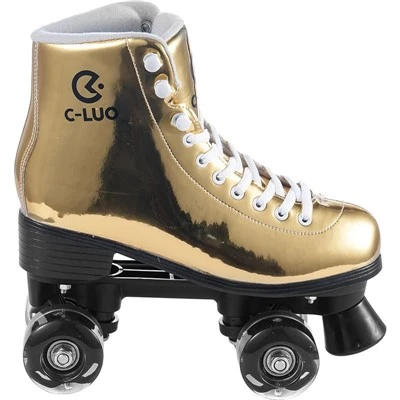
If you want to chat more about what will work for your skating style, or get a bulk order sorted, feel free to reach out. We’re here to help make your stops as fast and safe as possible, because that’s what skating’s about—having fun without the panic.
Hard-shell Inline Skates References:
- "Quad Skate Mechanics: Grip and Stopping Dynamics," International Sports Engineering Association, 2022.
- Rink Safety Guidelines, National Roller Skating Association, 2023.
- Durometer and Wheel Performance for Recreational Skating, Sports Materials Journal, 2021.
- "Lower Limb Biomechanics of Quad Skate Stopping," Journal of Applied Biomechanics, 2022.
Yongkang Jinsibo Industry & Trade Co., Ltd.
We are one of the most professional quad roller skates manufacturers and suppliers in China, also support customized service. With abundant experience, we warmly welcome you to wholesale bulk high quality quad roller skates in stock here from our factory. Contact us for pricelist.
Address: No.36, Lin’keng Chenlu Mountain Road, Gushan Town, Yongkang City
E-mail: jinsibo2026@126.com
WebSite: https://www.cnjinsibo.com/
