If you’ve ever stood on the deck of a commercial fishing trawler as it hits rough seas, or watched a cargo ship’s propulsion system shift gears in a busy port, you know how non-negotiable marine friction discs are. These unassuming circular components—sitting at the heart of marine transmissions, winches, and deck machinery—handle enormous torque, constant moisture, and extreme temperature swings, turning smooth power into the kind of reliable movement that keeps vessels afloat and operational. As a marine friction discs supplier, I get dozens of emails and calls every week from ship engineers, fleet managers, and shipyard technicians asking the same question: What kind of technical support can I actually expect for these parts? It’s a fair question. Too many suppliers treat marine parts like generic commodities, handing off a box and vanishing. But for a component that can mean the difference between a 24-hour port delay and a transoceanic voyage, technical support isn’t a “nice-to-have”—it’s critical. Let’s break down exactly what you should look for (and what you can expect from a supplier who takes this seriously). Marine Friction Discs

First, let’s start with the pre-purchase technical support, because even the best disc won’t perform if it’s the wrong size, material, or design for your specific vessel. I once fielded a call from a fishing skipper in Alaska who’d replaced his discs with a generic automotive version, only to have them wear out in three weeks instead of the 12 they were supposed to. The issue? Automotive friction discs are designed for dry, consistent environments, not the salt spray, cold temps, and constant load shifts of a commercial fishing trawler. That mistake cost him $15,000 in lost catch time and thousands in extra part replacements. A good supplier’s pre-purchase support starts with asking the right questions—not just “what model is your transmission?” but digging into how your vessel is used. Are you a cargo ship making weekly port calls, or a research vessel operating in Arctic waters? Do you run winches for heavy equipment, or a propulsion system that shifts gears dozens of times a day? We build our pre-purchase process around that specificity: our technical team has decades of marine experience, so they can look up your transmission’s original equipment manufacturer (OEM) specs, then adjust for your vessel’s unique operating conditions. For example, a disc for a high-speed ferry will need a friction material that handles rapid, repeated engagement, while a disc for a dredger’s hoisting winch needs material that can resist slippage under constant heavy load. We also run quick material compatibility checks—testing if our friction compounds will work with your existing pressure plates, flywheels, or gear oils, because even a minor mismatch can lead to glazed surfaces or premature wear. This isn’t guesswork; it’s rooted in 30+ years of supplying marine parts and tracking thousands of performance data points across different vessel types.
Next, once you’ve ordered, the technical support should extend to proper installation and break-in procedures, because even a perfect disc will fail if it’s installed wrong. I’ve seen too many engineers skip break-in steps to save time, only to end up with uneven wear or vibration within the first 10 hours of operation. Our technical support team doesn’t just send a box with a printed manual—they walk customers through step-by-step, tailored to their equipment. For example, when we supply discs for a tugboat’s main transmission, we don’t just say “follow standard break-in”; we specify a 20-hour break-in cycle with gradual load increases, no sudden shifts, and precise torque settings for the clamp load. We also offer on-site installation guidance when needed—for vessels in our local port, our technicians will show up and supervise, but for ships in remote locations like the South Pacific or the Bering Sea, we walk customers through video calls, pointing out common pitfalls like over-torquing bolts or misaligning the disc with the shaft. We also provide specialized tools when necessary—like precision calipers to measure disc thickness and runout, because even a 0.005-inch misalignment can cause uneven wear over time. One of our regular customers, a fleet manager with 12 cargo ships, told us that since we started providing tailored installation guidance, his fleet’s disc failure rate dropped by 40% in a year. That’s the kind of result technical support should drive, not just a “here’s a part, good luck.”
Then there’s in-service support, which is where a lot of suppliers drop the ball. Once your disc is installed, you’ll need help with troubleshooting, wear monitoring, and part replacements when issues pop up. Our in-service support starts with a dedicated line for marine technical questions—we don’t make customers wait on hold for a general customer service rep; our marine-specific technicians are available 24/7, because a disc failure at sea isn’t something you can wait for business hours to fix. Last year, we got a 2 a.m. call from a cargo ship in the middle of the Atlantic, reporting that their friction disc was slipping during gear shifts. Our technician walked the chief engineer through a quick on-board test to check for oil contamination and pressure plate wear, then guided them through a temporary fix to get them to the next port, plus ordered a replacement disc that was shipped via air freight to meet them there. That kind of responsiveness isn’t just about being nice—it’s about understanding that every hour a vessel is out of service costs money. For our commercial fishing customers, a day delayed means lost catch; for research vessels, it means missed data collection; for cargo ships, it means demurrage fees that can run into tens of thousands of dollars a day. We also offer regular wear guidance, including how to read wear indicators on our discs, when to schedule inspections, and how to adjust operating parameters to extend disc life. For example, we advise customers to avoid sudden, harsh gear shifts when operating in cold water, because that can cause the friction material to crack. We also share data from our own testing: our marine friction discs use a specialized non-asbestos organic (NAO) compound that’s resistant to salt water and temperature fluctuations, and we can tell customers exactly how that material performs in their specific operating environment, based on our track record with similar vessels.
Another key part of technical support is product validation and compliance. Marine parts have to meet strict international standards—like ISO 9001 for quality management, or SOLAS regulations for safety equipment—and not all friction discs on the market do. As a supplier, our technical team handles all the compliance documentation for our discs, so you don’t have to track it down yourself. We provide OEM-matching part numbers, test reports, and material certifications, which is critical for shipyards and fleet managers who need to pass regulatory inspections. We also work with customers who need custom discs—if a vessel has a unique transmission or operating condition that off-the-shelf discs can’t handle, our technical team will design a custom friction compound or disc geometry, test it in our in-house lab, and provide performance data to confirm it meets your needs. Last year, we worked with a small boatbuilder to develop a custom disc for a new line of passenger ferries that operate in rough coastal waters—our engineers adjusted the disc’s surface texture to improve heat dissipation, which extended its lifespan by 30% compared to standard discs, and we provided all the testing data the builder needed to get the vessel’s safety certification.
Of course, even with the best support, there will be times when a disc fails prematurely, and that’s where our technical support really shines. We don’t play the blame game—instead, we investigate the failure with the customer. We ask for the operating history: how many hours the disc has run, what kind of loads it’s handled, if there were any recent maintenance changes. We ask for photos of the disc and the surrounding equipment, and if necessary, we send a technician to take a sample for lab analysis. In over 90% of failure cases we’ve investigated, the issue isn’t the disc itself—it’s something else: oil contamination, misalignment, improper break-in, or incorrect application. For example, a few years ago, a cruise line reported that several of their discs were wearing out quickly; after investigation, we found that their engine room had a leak in the hydraulic system that was contaminating the friction discs, and we worked with them to fix the leak as part of our troubleshooting, not just replace the discs. That approach builds trust—we’re not just selling parts; we’re partners in keeping your vessel running.
Now, let’s talk about what you shouldn’t accept. If a supplier can’t tell you the difference between a NAO compound for marine use and an automotive NAO, if they can’t walk you through installation steps specific to your transmission, or if their support only works during 9-to-5 business hours, that’s a red flag. Marine operations don’t adhere to 9-to-5, and parts designed for a dry, on-road environment will never hold up to the harsh conditions at sea. You need a supplier who understands the nuances of marine use cases, because a disc that works for a small fishing boat will never work for a large container ship, and vice versa.
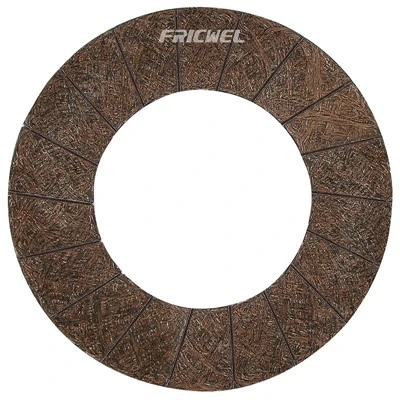
If you’re looking for a supplier that offers this kind of technical support for marine friction discs, I encourage you to reach out to our team. We’ll walk you through your specific needs, answer any questions you have about part design, installation, or troubleshooting, and make sure you get the right disc for your vessel. We’re here not just to sell a part, but to ensure your equipment runs smoothly, whether you’re operating in calm coastal waters or the middle of the ocean.
Passenger Car Transmission Friction Discs References
Society of Maritime Industry and Trade. (2022). Marine Propulsion Components: Performance Requirements and Technical Standards. International Marine Supplier Association.
ISO 9001:2015. (2021). Quality Management Systems – Requirements for Marine Equipment. International Organization for Standardization.
National Oceanic and Atmospheric Administration (NOAA). (2020). Vessel Maintenance Guidelines for Commercial Fishing and Research Vessels. U.S. Department of Commerce.
Fricwel Automotive Limited
Fricwel Automotive Limited is one of the most experienced marine friction discs manufacturers and suppliers in China, also supports customized service with low price. We warmly welcome you to buy advanced marine friction discs made in China here from our factory. Also, free sample is available.
Address: No. 819 Shixin Zhong Rd, Xiaoshan, Hangzhou 311203, China.
E-mail: sales@fricwelauto.com
WebSite: https://www.fricwelfriction.com/
