If you’ve ever worked in industrial automation, process control, or heavy machinery, you know control cables are the unsung heroes of smooth operations. These thin, often overlooked wires carry the critical signals that tell valves to open, motors to adjust speed, and systems to shut down safely in an emergency. But here’s a truth many people only learn after a costly outage: the biggest threat to these cables isn’t heat, vibration, or physical damage—it’s exposure to chemical substances. Control Cables
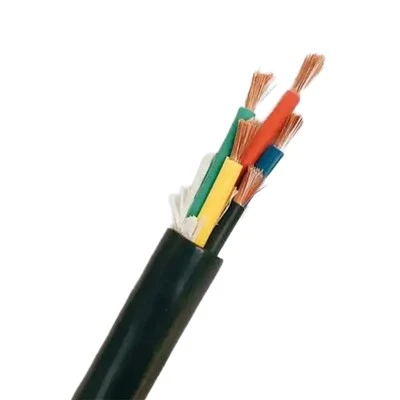
As a control cables supplier who’s been in this space for over a decade, I’ve seen too many operations cut corners on cable selection, only to replace failed lines months or even years early. Today, I want to break down exactly what makes control cables resistant (or not resistant) to chemicals, why that matters for your bottom line, and how to choose the right cable to avoid headaches.
First, let’s get clear on what “chemical resistance” means for control cables. Unlike power cables, which carry high voltages, control cables transmit low-voltage, low-current signals—usually 24V DC or 120V AC. That means their insulation and jacketing are not built to handle high electrical stress, so their job is to protect the inner conductors from environmental damage. Chemicals can break down these materials in a few ways: some dissolve the jacket, others crack it with repeated exposure, and some even seep through to corrode the copper conductors inside. Corroded wires send weak, inconsistent signals, leading to misoperation or full failure—both of which can shut down a production line for days.
Let’s talk about the key materials that make up control cables, and how they hold up against common industrial chemicals. This is where I can speak from hands-on experience: I’ve helped customers troubleshoot everything from food processing plants splashed with acids to chemical manufacturing facilities bathed in solvents, and the material choice always makes the difference.
Polyvinyl Chloride (PVC) is the most common material for control cable jacketing, and for good reason—it’s cheap, flexible, and easy to install. But PVC has a big flaw when it comes to chemicals. It’s fair at resisting mild substances like water, cleaning agents, and dilute oils, but it breaks down quickly when exposed to strong acids (like sulfuric or hydrochloric acid), hydrocarbons (gasoline, diesel, lubricating oils), or ketones (acetone, methyl ethyl ketone). I remember a food and beverage plant customer a few years back who installed standard PVC control cables near a floor cleaning station. The daily exposure to acidic sanitizer ate through the jacket in 6 months, leading to a valve failure that cost them $120,000 in lost production and cleanup. They switched to a different cable from our line, and 5 years later, those cables are still holding strong.
Next, there’s Neoprene (Polychloroprene), a synthetic rubber that’s a step up from PVC for chemical resistance. Neoprene is great at resisting oils, greases, and some mild acids, which makes it popular in automotive and heavy machinery applications. It also handles temperature swings better than PVC, making it a good choice for outdoor installations. But Neoprene struggles with strong chemicals like aromatic solvents (toluene, benzene) and concentrated bases. I had a construction equipment customer who ran Neoprene-jacketed control cables near a spray painting station—within a year, the paint thinner seeped through the jacket, causing the wires to short. We recommended a cross-linked polyethylene (XLPE) jacketed cable instead, which held up for another 3 years on that job.
XLPE is a thermoplastic material that’s known for its excellent resistance to chemicals, heat, and abrasion. Unlike PVC, XLPE has a tight molecular structure that keeps most chemicals from seeping in. It stands up to acids, bases, and a wide range of solvents, which is why it’s the go-to for chemical processing plants, pharmaceutical facilities, and laboratories. The downside? XLPE is less flexible than PVC or Neoprene, so it’s harder to route through tight spaces. It also costs a bit more, but in a facility where chemical exposure is constant, the upfront cost is nothing compared to a shutdown.
Then there’s EPDM (Ethylene Propylene Diene Monomer), another synthetic rubber that’s often used for control cables in harsh environments. EPDM is particularly resistant to weathering, ozone, and dilute acids, making it popular for outdoor applications like wind turbine control systems. It also handles water-based chemicals well, which is why it’s a top choice for water treatment plants. But EPDM isn’t great at resisting oils or hydrocarbons—so it’s a no-go for factories with heavy machining or lubricant exposure.
For the most extreme chemical environments, like oil refineries or chemical manufacturing plants, we recommend cables with fluoropolymer jacketing, like FKM (Fluorocarbon) or PTFE (Polytetrafluoroethylene). These materials are almost impervious to chemicals—they can stand up to strong acids, bases, aromatic solvents, and even aggressive substances like hydrofluoric acid. They also handle high temperatures, so they’re perfect for hot, corrosive environments. The tradeoff here is cost and flexibility: fluoropolymer jackets are expensive, and some types are very stiff, so they’re not ideal for routine installation. But when your operation handles 10 different solvents on a daily basis, there’s no better choice.
Now, it’s not just the jacket material that matters—you also have to consider the insulation inside the control cable. Most control cables use PVC, XLPE, or rubber for insulation around the copper conductors. If the insulation breaks down from chemical exposure, even a great jacket won’t save the cable. For example, if a cable has a Neoprene jacket but a PVC insulation, strong acids can still eat through the insulation and corrode the copper. That’s why we always audit a customer’s full operating environment, not just the obvious chemical exposures, to recommend a cable with matched jacket and insulation materials.
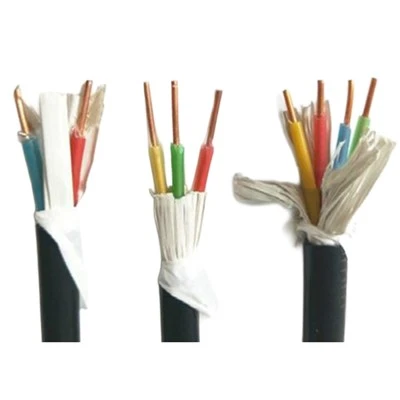
Another factor that’s often overlooked is cable construction. Control cables come in multi-core configurations, with each conductor insulated and grouped together, often with a ground wire. If a cable has a loose outer jacket, chemicals can seep into the gaps between the cores, leading to internal corrosion even if the jacket looks intact. That’s why we use a tightly bonded, extruded outer jacket for all our control cables—no gaps, no weak points, so chemicals can’t get inside. We also specify tinned copper conductors for many chemical-resistant cables: tin coating acts as a barrier between the copper and any moisture or chemicals that do get through, preventing corrosion.
So, how do you assess your own needs when it comes to chemical resistance? It’s not just a matter of picking the most expensive cable—you need to match the cable to your specific environment. Here’s a framework I use with every customer:
- Map all potential chemical exposures: List every substance your cables might come into contact with—cleaning agents, lubricants, solvents, acids, bases, even dust or fumes. Don’t just think about direct splashes; consider vapors, too. Some chemicals evaporate and can eat through jacket material over time, even without direct contact.
- Note the frequency of exposure: Is it daily, occasional, or only during a maintenance event? A cable that sees occasional exposure to a mild cleaner doesn’t need a fluoropolymer jacket, but a cable that’s splashed with acid every hour does.
- Check temperature and vibration: Chemical resistance can change with temperature—some materials break down faster in heat. Vibration can also cause jackets to crack, which lets chemicals in. We account for both in our cable formulations, but it’s still important to share those details with your supplier.
I can’t stress enough that cutting corners here is a false economy. I’ve had customers who tried to save 20% on cable costs, only to replace failed cables 2 years early and spend 5 times the original cost in downtime. Last year, a food processing plant reached out to us after a shutdown caused by a failed PVC cable. They’d installed a “budget” cable from a non-specialist supplier, which used recycled PVC with inferior chemical resistance. We supplied them with Neoprene-jacketed control cables with XLPE insulation, and in the year since, they haven’t had a single cable-related issue.
What if your environment has multiple chemicals? For example, a plant that uses both oils and mild acids. In that case, a cable with a hybrid jacket—like PVC modified for oil resistance—can work, but it’s better to go with a material that handles the harshest of the two. We also offer custom formulations for customers with unique chemical mixes; we can adjust the jacket and insulation materials to meet their exact needs, not just a one-size-fits-all solution.
One common question I get is: “Can I test my existing cables for chemical resistance?” The short answer is, it’s hard to test in-house. Even if a cable looks fine, internal corrosion might be happening. If you’re unsure, it’s worth having a control cable specialist inspect your installation. We offer free on-site assessments for customers who are concerned about chemical exposure—we check the cable materials, their age, and the environment, and make recommendations to reduce risk.
At the end of the day, control cable chemical resistance is about reliability. When a control cable fails, it’s not just a wire that needs replacing—it’s production lines that stop, products that are ruined, and safety systems that could be compromised. As a control cables supplier, my job isn’t just to sell cables; it’s to help my customers choose the right cable for their operation, so they can avoid those costly, disruptive failures.
If you’re dealing with a chemical-intensive environment, or if you’ve been dealing with cable failures that you suspect are chemical-related, don’t wait for a shutdown to address it. Reach out to our team to discuss your needs—we can walk through your application, review our chemical-resistant control cable lines, and help you find a solution that balances performance and cost. The right cable today will save you time, money, and stress down the line.
Compensating Cables References:
- Underwriters Laboratories. (2021). Standard for Safety for Control Cables. UL 62.
- International Electrotechnical Commission. (2019). Cables for Control and Communication in Industrial Environments. IEC 60227.
- American National Standards Institute. (2020). Performance Requirements for Jacketed Cable Materials Exposed to Chemicals. ANSI/ICEA S-95-652.
- DuPont Fluoroproducts. (2018). Chemical Resistance Guide for Fluoropolymer Jackets. Technical Bulletin FPM-102.
- The National Association of Chemical Distributors. (2022). Industrial Cable Materials for Chemical Processing Facilities. Industry Report 22-04.
Anhui Yuantong Cable Co., Ltd.
As one of the most professional control cables manufacturers and suppliers in China, we offer a wide range of cables with superior quality. Please feel free to wholesale bulk customized control cables from our factory. Also, pricelist is available.
Address: Yongfeng Industrial Park, Tianchang City, Anhui Province
E-mail: ahytcable@126.com
WebSite: https://www.yuantongcable.net/
