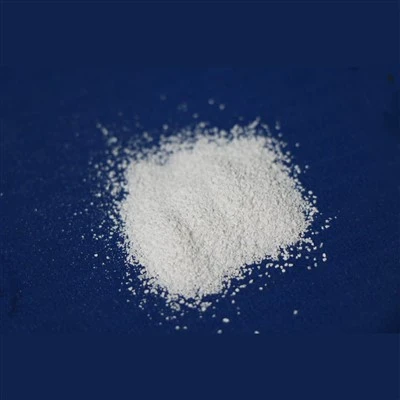
If you’re a manufacturer, formulator, or industrial buyer working with flame retardant materials, you’ve likely come across Aluminum Diisobutylphosphinate (ADB-PIN) as a go-to additive for polyamide and polyester systems. As a supplier who’s shipped thousands of batches of this specialty phosphinate over the past decade, I’ve seen firsthand how its unique chemical properties set it apart from other flame retardants, and why getting to know those properties is key to using it effectively—and choosing a reliable source for it. Aluminum Diisobutylphosphinate

First, let’s break down what makes ADB-PIN chemically distinct. At its core, it’s an organophosphorus salt, with the chemical formula C16H36AlO4P2, formed by pairing two diisobutylphosphinic acid molecules with one aluminum cation. That structure isn’t just random; it directly drives every chemical behavior we observe in lab tests and on production lines. Unlike older halogenated flame retardants that release toxic fumes when burned, ADB-PIN’s chemistry relies on two primary mechanisms of action: condensed-phase flame inhibition, where it forms a protective char layer on the polymer’s surface to block oxygen and heat, and gas-phase flame inhibition, where it releases phosphorus-containing radicals that interrupt the combustion reaction in the vapor phase. That dual action is why it’s so widely used in electronic components, automotive parts, and construction materials—all of which need to meet strict fire safety standards without compromising performance.
One of the most important chemical properties of ADB-PIN is its thermal stability. We test every batch we produce for thermal decomposition temperature, and consistently, it starts breaking down around 300°C, with a peak decomposition temperature near 400°C. That’s a huge advantage for processing, because most engineering polymers it’s paired with—like PA6, PA66, or PBT—are melt-processed at temperatures between 250°C and 320°C. Unlike many other flame retardants that decompose mid-melt, causing polymer degradation, discoloration, or reduced mechanical strength, ADB-PIN stays intact during extrusion, injection molding, or compounding. I’ve had customers reach out to me in a panic before, saying their batches of PA6 turned yellow mid-process because their previous flame retardant broke down too early. Since switching to our ADB-PIN, those same customers report zero discoloration issues and consistent tensile and impact strength across every run. That thermal stability also translates to end-use performance: when a component made with ADB-PIN is exposed to high temperatures in service (say, a car engine bay or a power adapter), it doesn’t break down prematurely, so its flame resistance holds up over time.
Next, its solubility and reactivity profile is tailored for compatibility with common engineering polymers. ADB-PIN is slightly soluble in water (less than 1 g/L at 25°C) and highly soluble in polar organic solvents like alcohols and ketones, but almost insoluble in nonpolar polymers and hydrocarbon solvents. That might sound like a minor detail, but it’s critical for formulating. When you’re mixing ADB-PIN into a polymer melt, it doesn’t dissolve into the polymer matrix—instead, it disperses as fine, uniform particles. That uniform dispersion is what creates a consistent char layer during combustion; if the particles clump together, you get weak spots in the char that can let flames spread. As a supplier, we control our particle size distribution (typically D50 around 5-10 microns) to make sure dispersion is easy, even for customers with standard compounding equipment. Another key point: ADB-PIN is non-corrosive, unlike some other metal-containing flame retardants that can eat away at processing equipment over repeated use. We’ve had customers run our material through the same injection molding machines for two years without any signs of corrosion, which is a huge cost saver compared to alternatives.
But ADB-PIN isn’t perfect—its chemical properties also mean it has some limitations that buyers need to plan for. For one, its flame retardant efficiency drops off at very low addition rates. Most formulators use 15-25% ADB-PIN by weight in their polymer blends, and below 10%, it often doesn’t meet UL 94 V-0 standards. That’s not a flaw in the chemical itself, but a trade-off with other properties: because it relies on forming a char layer, you need enough ADB-PIN on the surface to create that protective barrier. Another limitation is its hygroscopicity: ADB-PIN can absorb small amounts of moisture from the air, especially in humid environments. That moisture, if left in the polymer blend, can cause bubbles during processing or reduce the flame resistance of the final part. That’s why we include a drying recommendation with every shipment: customers should dry ADB-PIN at 100-120°C for 2-4 hours before compounding. We also offer pre-dried bulk shipments for customers in high-humidity regions, to cut down on their prep time and avoid processing issues.
Let’s also talk about chemical compatibility, which is where a lot of new formulators run into trouble. ADB-PIN works great with polyamides (PA) and polybutylene terephthalate (PBT), which are the most common uses, but it’s less compatible with other polymers like polyethylene (PE) or polypropylene (PP) unless you add a compatibilizer. Why? Because as an organophosphorus salt, its polar nature makes it pair well with polar polymers like PA, which have amide groups that can form hydrogen bonds with ADB-PIN’s phosphate groups. Nonpolar polymers like PE don’t have those groups, so the ADB-PIN particles don’t bond well to the matrix, leading to poor mechanical performance and inconsistent flame resistance. I always walk through this with new customers: if you’re working with a nonpolar polymer, we can recommend the right compatibilizer to pair with our ADB-PIN, or even offer custom pre-compounded blends with the compatibilizer already mixed in, so they don’t have to figure that out on their own.
Another key chemical property is its resistance to leaching. Unlike some less stable flame retardants that can migrate out of a part over time—especially if the part is exposed to water or chemicals—ADB-PIN’s ionic bonding with the aluminum cation keeps it locked into the polymer matrix. That makes it ideal for outdoor applications, like decking materials or automotive exterior parts, where exposure to rain or UV light is common. We’ve tested parts made with our ADB-PIN after 500 hours of accelerated weathering, and their flame resistance stayed almost identical to unweathered parts, because the ADB-PIN didn’t leach out. That’s a big reason why so many construction and automotive manufacturers switch to ADB-PIN from older flame retardants that leached and lost effectiveness.
Now, as a supplier, how do these chemical properties translate to what you can expect when you order from us? For one, we test every batch of ADB-PIN before shipment with three core tests: thermal gravimetric analysis (TGA) to confirm decomposition temperature, particle size analysis to ensure uniform dispersion, and moisture content testing to make sure hygroscopicity doesn’t cause processing issues. We also provide a full chemical safety data sheet (SDS) with every order, so you know exactly how to handle, store, and use our product. A lot of suppliers cut corners on testing, but I’ve seen too many customers have bad experiences with inconsistent batches—so we’ve invested in our own in-house testing lab to make sure every shipment meets our strict standards.
I also make a point to work directly with customers to solve formulation problems, not just ship product. Last year, a customer making electronic connectors for laptops came to us saying their blend of PA6 and ADB-PIN was failing UL 94 V-0 because of inconsistent dispersion. We walked them through adjusting their compounding speed and temperature, and also adjusted our ADB-PIN’s particle size slightly to help it mix better with their specific PA6 grade. That small change fixed their issue, and they’ve been a repeat customer ever since. That’s the kind of value you get from working with a supplier who knows the chemical properties of their product inside and out, not just someone who’s just reselling it.
If you’re currently dealing with flame retardant performance issues, processing problems, or just want to switch to a more reliable, non-hazardous flame retardant, our team can walk you through everything you need to know about ADB-PIN. We’ll share our test data, help you optimize your blend ratio, and answer any questions about how its chemical properties will work for your specific application. Don’t settle for generic, untested ADB-PIN batches—reach out to us to discuss your needs, and we’ll help you find the right solution for your manufacturing goals.
Glycol Ethers References
- Horrocks, A.R., & Price, D. (2001). Flame Retardant Materials. Woodhead Publishing.
- Weil, E. D., & Levchik, S. V. (2009). Flame Retardants for Plastics and Textiles: Practical Applications. Hanser Publications.
- Zhang, Y., et al. (2018). Thermal decomposition and flame retardant mechanism of aluminum diethylphosphinate and aluminum diisobutylphosphinate in polyamide 6. Journal of Applied Polymer Science.
- Underwriters Laboratories. (2020). Standard for Safety of Flammability of Plastic Materials for Parts in Devices and Appliances (UL 94).
Hebei Xinxinyuan Energy Co., Ltd.
Hebei Xinxinyuan Energy Co., Ltd. is one of the most professional aluminum diisobutylphosphinate manufacturers and suppliers in China, featured by quality products and good price. Please rest assured to wholesale customized aluminum diisobutylphosphinate made in China here from our factory.
Address: Zhongjie Industrial Park, Huanghua City, Cangzhou City, Hebei Province, China
E-mail: atl2066@qq.com
WebSite: https://www.xinxinyuanfr.com/
