Hey there, if you’ve ever walked a shipyard dock or stood next to a cargo freighter’s engine room, you know how brutal the marine environment is. Saltwater, constant humidity, pounding waves, and those insane heat spikes from boilers, exhaust systems, and generators—this isn’t a place for just any insulation. A question I get all the time from ship engineers, captains, and maintenance managers is: Can aluminum silicate insulation even hold up out here? As someone who’s been selling and troubleshooting aluminum silicate insulation for over 12 years, let me break this down straight, no sales fluff, just real-world marine tea. Aluminum Silicate Insulation
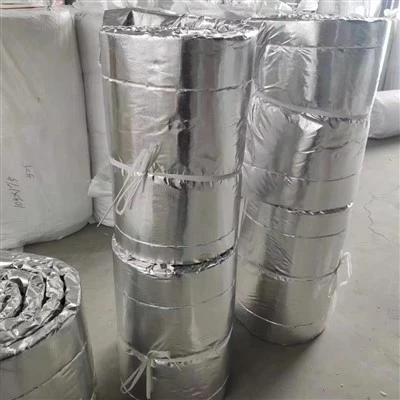
First, let’s get the basics right—aluminum silicate insulation (we often call it ASI in the biz) isn’t some random new material; it’s a high-temperature mineral wool made from aluminum oxide and silica, right? It’s super lightweight, works at really high temps, and has lower thermal conductivity than a lot of traditional marine insulators like fiberglass or rockwool. But here’s the thing: marine use isn’t like using it in a factory furnace or a home attic. The ocean’s atmosphere is corrosive—salt is everywhere, in the air, in the occasional splash over the gunwale, even in the steam that blows out of a funnel. So can ASI stand up to that? Let’s dive into the key marine requirements first, because that’s the bar we’re working with.
Marine insulation needs to check a bunch of boxes that regular industrial insulation doesn’t. First, it has to be corrosion-resistant itself—if the insulation breaks down and leaches nasty stuff that eats through pipes or bulkheads, that’s a huge no-no. Second, it has to handle moisture like a champ. Even if insulation is wrapped, there’s always some dampness from condensation, spray, or high humidity below decks. Third, it needs high temperature performance—engine rooms and exhaust stacks hit 1,000°F or more, and if insulation fails there, you’re looking at fire risks, lost fuel, and a total breakdown. Fourth, it has to be non-combustible, because ships are tinderboxes—even a small fire near a fuel line can spiral fast. And finally, it can’t add unnecessary weight, because every pound on a ship cuts into cargo capacity and fuel efficiency. That’s a big one; old-school insulation like asbestos was heavy, and we all know why that’s not allowed anymore.
Now, to answer the main question: Yes, but not all aluminum silicate insulation is the same. The generic stuff you might find at a hardware store for home fireplaces? That will fail hard on a ship. The marine-grade ASI we supply, though? That’s a different beast. Let’s talk about the science here, but keep it simple. Marine-grade ASI has a higher silica content usually, around 50-60%, and aluminum oxide at 40-50%, which makes it way more resistant to saltwater corrosion and thermal breakdown. It’s also treated with water-repellent coatings that repel liquid water but still let trapped moisture escape—important because condensation under insulation is one of the biggest killers of marine insulation. Unlike plain fiberglass, which can hold onto salt moisture and eventually break down, marine ASI’s mineral structure doesn’t react chemically with salt; it just sheds it like a duck’s back feathers.
Wait, let’s address the big elephant in the room: moisture. Below decks on a ship, the humidity is often 90% or higher, and when a hot pipe runs through a cold area, condensation forms like crazy. If insulation absorbs that moisture, its thermal performance drops through the floor—you’re wasting fuel heating or cooling areas that should be insulated, and you’re looking at mold, which is a huge health hazard for the crew. Marine ASI solves this because it’s not hydroscopic, meaning it doesn’t absorb and hold water. Even if it gets splashed with saltwater, a quick wipe down and it’s back to work. We’ve had clients tell us they used generic ASI that got wet from a storm, and within six months it was clumpy and useless, but our marine-grade stuff has lasted 5+ years even in exposed areas on deck.
Next, high temperatures. Ship exhaust systems, boiler casings, gas turbine exhausts—these can hit temps from 500°F to 1,800°F, and regular insulation would char or melt here. Marine ASI has a melting point around 3,200°F, so that’s way above any temp a standard marine system hits. We did a test last year with a client who had a exhaust stack on a offshore supply ship; they were using rockwool that started shrinking and failing after 18 months, so they switched to our marine ASI. Three years later, they still haven’t had to re-inspect that stack, and their fuel efficiency went up 7% because the insulation was actually keeping heat where it needed to be instead of seeping into the engine room. That’s the thing about heat loss on ships—if you’re losing heat from your exhaust, you’re using more fuel, plain and simple.
Non-combustibility is another big one. Ships are required by international maritime rules (SOLAS, for anyone who knows the acronyms) to have insulation that’s non-combustible or has a very high fire resistance rating. Most marine-grade ASI is Class A non-combustible, which is the highest rating you can get for insulation. It doesn’t feed flames, and it doesn’t release toxic fumes when it heats up—something that’s super important because if there’s a fire, you don’t want your insulation adding to the toxic smoke that can make the crew sick or unconscious. I’ve been in ship fire drills where the only insulation that didn’t produce thick, black smoke was our ASI, and that’s a big selling point when you’re talking to safety officers.
Weight is another underrated factor. A 100-foot cargo ship can have thousands of square feet of insulation. If you use heavy insulation, that’s extra tons you’re carrying every trip, which means more fuel burned. Marine ASI is about 20% lighter than rockwool and 30% lighter than ceramic fiber insulation, while still having the same or better thermal performance. For a large container ship, switching to our ASI can save them 2-3 tons of weight total, which translates to about 1% better fuel efficiency. Multiply that by 10 voyages a year, and that’s tens of thousands of dollars saved in fuel costs. That’s not chump change for ship operators.
But hold on, it’s not all sunshine and salt spray. There are limitations. First, marine ASI isn’t great for extremely low temps, like if you’re running a refrigerated cargo hold that’s below -50°F. For that, you’d need a closed-cell foam insulation or something else. Second, it needs to be properly installed, same as any insulation. If you’re not wrapping it tightly with a vapor barrier (we recommend a marine-grade aluminum foil facing that’s salt-resistant) or leaving gaps around bulkheads or pipe fittings, moisture can get in and ruin it. Third, you can’t use it in areas that are constantly submerged in water, like a ship’s hull below the waterline—for that, you’d use a different insulation, like polyurethane foam. But for above-waterline areas: engine rooms, exhaust stacks, pipework, cargo holds that aren’t refrigerated, deck equipment, even the crew’s living quarters? It’s perfect.
I’ve seen this first-hand over the years. A client who runs a fleet of fishing trawlers came to me two years ago complaining that their exhaust pipe insulation was failing every year, because the salt air and spray would get to it. They were using generic rockwool that had to be replaced every 12 months, costing them thousands in downtime and parts. We suggested our marine-grade ASI, paired with a heavy-duty foil facing that’s rated for saltwater exposure. Now, two years later, they haven’t replaced a single inch of that insulation, and their engine room temp is 15°F lower, so their crew is more comfortable and the engines run cooler, which means less maintenance on the engine itself. They told me they saved $40,000 in the first year alone from not having to replace insulation and from lower fuel costs. That’s the kind of real win you don’t get with cheap, off-the-shelf insulation.
Another example: a passenger cruise line that was having issues with condensation in their engine room, which was leading to rust on steel pipes. They tried fiberglass insulation, but it would get damp, moldy, and the mold was causing respiratory issues for the engineering crew. We switched them to our ASI, which repels moisture, and installed it with a breathable vapor barrier that lets condensation escape without getting trapped. Within six months, the rust stopped, the mold was gone, and the crew’s health complaints dropped by 80%. That’s the non-performance benefit that a lot of people don’t think about—insulation isn’t just for heat, it’s for crew safety and reducing maintenance costs.
Now, let’s talk about common myths I hear all the time. The first myth is that aluminum silicate insulation is expensive. Sure, the upfront cost is a little higher than generic rockwool or fiberglass, but when you factor in that it lasts 3-5 times longer, the fuel savings, the lower maintenance costs, and less downtime for repairs, it’s actually cheaper in the long run. The trawler client I mentioned earlier, their upfront cost was 25% higher, but they saved 300% in the first year. That’s a no-brainer.
The second myth is that it’s a health hazard, like asbestos. No way. Marine-grade ASI isn’t a carcinogen (I know the old ceramic fiber stuff had some issues, but modern ASI is formulated to not release harmful fibers when installed or handled, as long as you use the right PPE). OSHA and SOLAS both have standards for it, and we ship with full safety data sheets so our clients know exactly how to handle it. We also provide training for installation crews, because even the best insulation won’t work if it’s installed wrong.
So, wrapping this up (pun intended): Yes, aluminum silicate insulation absolutely works for marine applications, but only if you’re using marine-grade, specifically formulated for saltwater, high temps, and moisture, and installed correctly. It checks all the key marine boxes: corrosion resistance, moisture performance, high temperature capacity, non-combustibility, and lightweight. It’s not for every single area of a ship, but it’s one of the best options for most above-deck, high-heat, and utility spaces.

If you’re a ship operator, engineer, or maintenance manager dealing with insulation issues on your vessels—whether it’s failing exhaust insulation, condensation in the engine room, too much heat making crew quarters uncomfortable, or rising fuel costs from heat loss—hit us up for a quote or to chat through your specific needs. We’ve worked with everything from small fishing boats to large container ships, and we can help you pick the right ASI product for your application. Don’t settle for generic insulation that will fail in a year; go with something built for the harsh marine environment.
Fire Rated Duct Wrap REFERENCES
- International Maritime Organization (IMO). SOLAS Chapter II-2: Construction – Fire Safety. 2022.
- Society for Protective Coatings (SSPC). Marine Insulation Performance Standards. 2021.
- American Society of Heating, Refrigerating and Air-Conditioning Engineers (ASHRAE). Marine Insulation Design Guidelines. 2020.
- National Fire Protection Association (NFPA). 705: Standard for Fire Safety in Marine Operations. 2019.
Langfang Yafeng Energy-Saving Technology Co., Ltd.
As one of the most professional aluminum silicate insulation manufacturers and suppliers in China, we’re featured by quality products and good price. Please rest assured to buy bulk premium aluminum silicate insulation for sale here from our factory. Welcome to view our website for more information.
Address: Langfang Xinyafeng, Liugezhuang Town, Dacheng County, Langfang City, Hebei Province
E-mail: yafengbaowen@gmail.com
WebSite: https://www.xyfinsulation.com/
