If you’ve ever spent time in a heat treatment kiln operation, you know even a 5% boost in heat transfer efficiency can transform your bottom line. Lower energy bills, shorter cycle times, more uniform part quality, and less downtime—these are the wins that keep kiln operators up at night, and as a heat treatment kiln supplier, I’ve spent thousands of hours working with teams to solve these exact pain points. Over the past 12 years, I’ve installed, serviced, and optimized kilns for small job shops and large aerospace manufacturers alike, and the truth is, most efficiency gains come from small, actionable tweaks—not just a huge equipment overhaul. Let’s break down what actually moves the needle when it comes to getting more consistent, effective heat where it needs to go, without breaking the bank. Heat Treatment Kiln
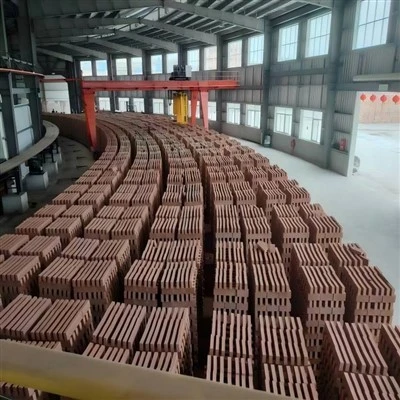
First, let’s start with the foundation of heat transfer in a kiln: how heat moves. Most industrial kilns rely on three core modes—conduction, convection, and radiation. The sweet spot for efficiency? Balancing all three, because ignoring any one leads to wasted energy. Let’s start with the most overlooked of these for many operators: convection. Convective heat transfer uses moving hot air to carry heat to parts, and if your airflow is uneven, parts in cold spots get under-treated while parts near the vents waste energy from overheating. I once worked with a steel forging shop that was rejecting 12% of their parts monthly because of inconsistent tempering; their kiln had a single top-mounted fan that created dead zones in the bottom corners. The fix wasn’t buying a whole new kiln—it was retrofitting adjustable baffle panels and adding two smaller, variable-speed fans to redirect airflow instead of letting it just blast from the top.
Adjustable baffles are a game-changer here, but you can’t just slap them in and forget about them. Different loads need different airflow: a basket of small, dense bearings needs higher velocity to circulate air through every gap, while a stack of flat metal sheets needs slower, more uniform flow to avoid warping. That’s why switching to variable-speed drives (VSDs) for your fans is a no-brainer. Fixed-speed fans run at full power 24/7, even when half that speed would be enough, wasting massive amounts of energy. A standard 10-horsepower fan running at 50% speed uses only 12% of the power it uses at full speed, per data from the American Society of Mechanical Engineers (ASME)—that’s a huge saving for minimal upfront cost. I’ve seen operators pay back the cost of VSD retrofits in as little as 8 months on high-use tempering kilns.
Next up: sealing and insulation, because even the best airflow means nothing if hot air is leaking out of the kiln. A kiln with worn door gaskets, cracked walls, or gaps around ductwork can lose up to 25% of its heat to the surrounding environment, according to the Industrial Heating Equipment Association (IHEA). I once visited a gear manufacturer that thought their kiln was underperforming because their heating elements were old—turns out, their door gasket had a 2-inch tear from repeated loading, and they were paying to heat the entire factory’s loading bay instead of their parts. Routine gasket inspections should be on every operator’s monthly checklist, not just annual maintenance. Look for signs of wear: hardening, cracking, or gaps that smoke or steam seeps out during a load. For high-temperature kilns (over 1200°F), replace gaskets every 18 to 24 months, not every 3 or 4—shortcutting this leads to constant energy loss.
It’s not just door gaskets, though. The kiln’s outer insulation can degrade over time, especially if loads are bumped into the walls or if the insulation gets wet during cleaning. Wet insulation is a double whammy: it traps moisture that requires extra energy to evaporate during preheat, and it reduces insulation performance by up to 50%, per Oak Ridge National Laboratory. I recommend doing a thermal scan of the kiln’s exterior once a year with an infrared camera—this will show you exactly where hot spots are, even if the insulation looks fine on the surface. Fixing a single 1-foot hot spot on a kiln wall can save thousands of dollars a year in energy costs.
Now, let’s talk about the heating elements themselves, because old, inefficient elements don’t just take longer to heat the kiln—they also create uneven heat distribution. If your elements are covered in soot, scale, or residue from previous loads, that insulating layer reduces their heat output by as much as 20%. Routine cleaning of heating elements is a simple task: turn off the kiln, let it cool completely, and gently brush or blow off residue with compressed air (make sure to follow safety protocols, since elements are fragile and can break if handled roughly). For elements that are more than 10 years old, consider upgrading to high-density silicon carbide or molybdenum disilicide elements—these operate at higher temperatures more efficiently, last 2 to 3 times longer, and provide more uniform heat across the kiln chamber. I worked with a heat treat shop that upgraded their batch kiln elements and cut their preheat time by 22%, which meant they could run one extra load every 8 hours without adding extra energy.
Wait, but even the best elements and airflow won’t help if you’re loading parts wrong. That’s another area where I see massive inefficiency. Too often, operators cram as many parts into a kiln as possible, blocking airflow paths between loads. If a solid metal block is sitting directly against a kiln wall, that spot will be cold, and you’re wasting energy heating the empty space around it. The solution is simple: follow load density guidelines, and use racks or spacers to maintain consistent gaps between parts and between parts and kiln walls. For example, small cylindrical parts need at least ½ inch of space between each other, and at least 1 inch of space from the nearest wall, to let air circulate. I also recommend arranging parts to match airflow direction—if your kiln has horizontal airflow, lay parts horizontally so air can flow over and under each one, instead of vertically, which creates gaps that trap cold air. Some operators also find that using perforated load baskets improves airflow by 15-20%, since air can pass through the basket instead of being blocked by solid metal.
Another often-overlooked factor is load preheating. If you’re loading cold parts straight into a kiln that’s already at operating temperature, the kiln has to use extra energy to bring those parts up to temperature, and that sudden temperature drop can also stress the kiln itself. Preheating parts to 200-300°F before they go into the main kiln cuts the required energy for the main heat cycle by up to 30%, according to research from the National Institute of Standards and Technology (NIST). You don’t need a huge separate oven for this—many operators use the exhaust heat from the kiln to preload parts, or even route the kiln’s off-gases into a small preheating compartment attached to the main chamber. That’s a free source of heat you’re probably wasting right now.
Let’s also touch on automation, because manual kiln operation is one of the biggest sources of unnecessary energy use. I’ve seen operators leave kilns at full temperature overnight because they forgot to turn them down, or run heat cycles longer than needed because they didn’t monitor temperature in real time. Upgrading to a programmable logic controller (PLC) that can adjust temperature, airflow, and cycle times automatically is a game-changer. Modern PLCs don’t just hold a constant temperature—they can adjust heating rate based on load type, hold time, and cool-down speed, all while monitoring for hot spots that would require extra energy to correct. For example, if a PLC detects that a section of the kiln is running 50°F hotter than the rest, it can adjust fan speed in that area, or turn down heating elements in that zone, instead of wasting energy heating over-temperature air. I recently worked with a medium-sized automotive parts supplier that upgraded their kiln control system and reduced their annual energy bill by $42,000—money they’ve since reinvested in expanding their business.
Now, let’s address some common myths I hear all the time. First, “Higher fan speed always means better efficiency.” No—if you run fans faster than needed, you create turbulence that doesn’t improve heat transfer, and you’re just wasting electricity. I recommend testing your kiln’s airflow at different fan speeds, and tuning to the minimum speed that gives consistent temperature across all zones. Second, “Older kilns can’t be efficient.” I’ve optimized kilns that were 30 years old to operate at 90% of the efficiency of new models for a fraction of the cost of replacement. It’s all about targeted upgrades, not a full replacement. Third, “Sealing a kiln is too much work for small gains.” I’ve seen a kiln with a $100 door gasket tear leading to $2,000 a month in wasted energy—small, regular maintenance pays for itself fast.
Let’s wrap this up with a real example that’s stuck with me. A job shop in Ohio called me two years ago, frustrated because their tempering kiln was costing them $18,000 a month in energy, and their part rejection rate was 11%. They’d done the usual: cleaned elements, checked gaskets, replaced the filter. When I walked through their facility, I noticed they were stacking their steel brackets so tightly that air couldn’t flow between them, and their fan was running at full speed even for small loads. We adjusted their load racks to create consistent gaps, upgraded the fan to a variable-speed drive, and set a new load profile that cut cycle time by 18%. Within three months, their energy bill was down $3,200 a month, and their rejection rate dropped to 2.5%. All for less than $15,000 in upgrades. That’s the kind of win that makes this job worth it.
Improving heat transfer efficiency in a heat treatment kiln isn’t about guessing or buying the most expensive equipment—it’s about understanding how heat moves in your specific kiln, fixing the small leaks and bottlenecks, and making adjustments that match your unique loads. Routine maintenance, smart airflow tuning, careful loading, and targeted upgrades will give you the biggest returns, often faster than you expect.
If you’re ready to take the guesswork out of your kiln efficiency and cut your energy costs while improving part quality, we’re here to help. We’ve worked with kiln operators across every industry, from job shops to aerospace manufacturers, to design custom optimization plans that fit your budget and your operations, no one-size-fits-all solutions. Whether you need a quick energy audit, a retrofitting plan, or help upgrading your control system, we can walk through your current setup and show you exactly where you can gain. Reach out to us to schedule a consultation, and let’s turn your kiln into a more efficient, profitable asset for your business.
Circular Tunnel Kiln References
American Society of Mechanical Engineers. (2019). Energy Efficiency in Industrial Heat Treatment Processes. ASME International.
Industrial Heating Equipment Association. (2021). Kiln Sealing and Insulation Best Practices. IHEA Technical Bulletin 12.
National Institute of Standards and Technology. (2020). Preheating Strategies for Batch Heat Treatment Kilns. NIST Technical Note 1987.
Oak Ridge National Laboratory. (2018). Insulation Performance Degradation in High-Temperature Industrial Kilns. ORNL Report ORNL/TM-2018/1452.
Henan Yaxin Kiln Co., Ltd.
Henan Yaxin Kiln Co., Ltd. is one of the most professional heat treatment kiln manufacturers and suppliers in China. With abundant experience, we warmly welcome you to buy high quality heat treatment kiln with the latest design from our factory. Good service and punctual delivery are available.
Address: Jixian Industrial Zone, Shangqiu City, Henan Province
E-mail: 1543563178@qq.com
WebSite: https://www.hnyxkiln.com/
