If you’ve ever strapped a high-performance RC aircraft to your back, counted down to the “throttle-up” moment, and watched it lift off cleanly only to see it sputter mid-flight or crash before you even hit the edge of your flying field, you already know how much a lipo battery can make or break your session. As someone who’s spent the last decade supplying 80C RC aircraft lipo batteries—batteries built to deliver consistent, high-current power for the demanding bursts and sustained thrust that aerobatic planes, FPV racers, and large-scale warbirds require—I’ve talked to hundreds of pilots who’ve written off an entire flight (or worse, a plane) because they skipped the basics when sourcing their power. Today, I want to pull back the curtain on one of the most common (and most costly) mistakes: buying a low-quality 80C rated lipo battery, and exactly how that seemingly minor component can wreck your aircraft, your wallet, and your fun. 80C RC Aircraft Lipo Battery
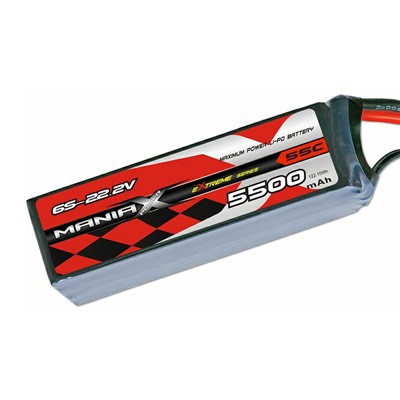
First, let’s cut through the marketing noise around “80C ratings” because most pilots I meet don’t actually understand what that number means—especially when it’s attached to a cheap no-name battery. C-rating, for anyone new to the hobby, is a measure of a lipo battery’s maximum continuous discharge rate. An 80C battery should deliver 80 times its total capacity in amps without overheating, sagging, or failing. For a typical 1500mAh 4S aerobatic battery, that works out to 120 amps of continuous power—enough to keep a 3D plane hovering, a racer pulling 5G turns, or a large scale plane climbing straight up for 10 seconds at a time. That’s why 80C is the sweet spot for most serious RC pilots; it’s not the absolute highest rating (you’ll see 100C or even 120C for specialized setups), but it’s the balance of power, weight, and durability that makes it the go-to for consistent performance.
The problem is, a lot of cheap manufacturers slap an “80C” label on a battery that can’t hold a fraction of that rating. They use thin, low-quality copper for the internal tabs, mix recycled damaged cells with new ones to cut costs, and skip the thermal management layers that keep high-current batteries from overheating. I’ve tested these fakes myself; last year, a customer sent me three cheap 80C batteries he’d bought from a big online marketplace for half what our price is, and when I put them through a standard discharge test on our lab equipment, the best of the three could only sustain 45C before voltage dropped so fast the test rig shut down. The worst? It hit 78C temperature after 10 seconds of simulated full-throttle flight and swelled so badly we couldn’t even plug it into a charger.
So what does that actually mean for your RC aircraft, beyond a bad test result? Let’s break it down by the kind of damage you’ll see, starting with the most immediate, most obvious issue: performance failure mid-flight. When a lipo battery can’t deliver its rated current, the first thing that happens is voltage sag. Voltage sag is the sudden drop in a battery’s output when it’s asked to deliver high power—imagine trying to run a marathon on a single sip of water; you can go for a minute, but then your body shuts down. For an RC plane, voltage sag during a full throttle pull or a tight bank translates to less thrust, slower response time, and lost altitude. I remember a 2022 incident where a local FPV racer showed up to a regional contest with a cheap 80C battery he’d bought two days prior, and mid-heat, as he was jinking left to avoid another plane, his throttle dipped from full to idle for half a second. That split second was all it took; he clipped a tree, totaled his $1,200 frame, and walked away with only a broken wrist.
Worse than just a missed trick or a lost heat, though, is the damage that happens over time, even if you never crash: component burnout. Your RC aircraft’s motor, ESC (electronic speed controller), and servos are all calibrated to work with a specific battery’s voltage and current output. If a low-quality 80C battery can’t deliver consistent, steady power, it forces your other components to work harder than they were designed to. A brushless motor that’s used to a steady 120 amps from a good battery will draw extra current to make up for the bad battery’s sag, overheating its stator and magnets. I’ve seen motors die in 10 flights because of this—where a motor paired with a quality battery could last 50+ flights. ESCs are even more fragile; a cheap lipo can send random power spikes when it can’t hold a steady voltage, and a single 150V spike through your ESC is enough to fry its circuit board in seconds. Servos? They’re small, precise, and vulnerable too; if the battery can’t deliver enough consistent power to turn the ailerons or elevator, the servo will strain, strip its gears, or blow its internal capacitors.
Then there’s the safety side of this, which is non-negotiable. Lipo batteries, when they fail, don’t just stop working—they catch fire. I’ve had customers come to me with stories of cheap 80C batteries swelling in their bags, venting while charging, or even catching fire mid-flight. Last year, a pilot in Ohio had a battery vent smoke mid-climb, and his plane crashed into a neighborhood park, luckily no one was hurt, but the plane was a total loss. Why does this happen with low-quality batteries? The internal components aren’t built to handle the heat and pressure from high discharge. The thin copper tabs I mentioned earlier can melt and create a short circuit inside the cell, or the plastic separator between the anode and cathode can break down when exposed to repeated high currents, leading to a thermal runaway. Even if you’re lucky enough to have a battery that doesn’t catch fire, swelling is a huge red flag; a swollen lipo is damaged, and using it can lead to catastrophic failure, often with no warning.
A lot of pilots argue that they can save money by buying cheap 80C batteries, but here’s the hidden cost: replacement parts, lost flights, and safety risks. Let’s do the math on that. A quality 80C 1500mAh battery from our line is $35. A cheap off-brand one is $15. At first glance, that’s a $20 savings. But if that cheap battery causes your motor to die after 10 flights, a new brushless motor is $80. If it fries your ESC, that’s another $60. If it makes you crash a $1,000 aerobatic plane, you’re talking about thousands of dollars in repairs or replacement. And don’t forget the time you lose waiting for parts, or the fun of a ruined flight because your plane wouldn’t perform like you needed it to.
Wait, but let’s be fair to pilots. Not all cheap 80C batteries are made equal, and there are ways to spot a bad one before you buy. First, check the cell count and build quality. A reputable battery will have clear, accurate labeling, with the C-rating printed prominently, and the individual cells sealed in hard, rigid cases with no gaps or loose tabs. If the labeling looks blurry, misspelled, or the cells feel flimsy in your hand, it’s a fake. Second, look at reviews from other RC pilots, not just the generic 5-star reviews on sales sites. Search for forums like RC Groups or Reddit’s r/RCUsers, and look for feedback on how the battery performs under high load, how long it lasts, and whether it has any safety issues. Third, if a deal seems too good to be true, it is. If a battery that’s supposed to deliver consistent high power is sold at a fraction of the price of other 80C batteries, there’s a reason—skimping on materials, cutting corners on testing, or mixing in damaged cells.
Over the years, I’ve built my business on supplying reliable 80C batteries, and that starts with rigorous testing. Every one of our batteries goes through a 24-hour discharge test at 110% of their rated current to make sure they hold steady voltage, stay under 60C (the safe maximum operating temperature for lipos), and don’t have any internal defects. We use high-quality, 18650-grade lithium polymer cells with a reinforced separator layer, and thick, tinned copper tabs to handle high current without sagging or overheating. We also include built-in circuit protection to prevent overcharging, over-discharging, and short circuits, which is a non-negotiable for safety.
At the end of the day, RC flying is about fun. It’s about the thrill of taking off, pulling a perfect loop, and landing smoothly, not about worrying whether your battery will hold up, or whether it’s going to damage your plane. A low-quality 80C lipo battery doesn’t just save you a few dollars upfront—it costs you in performance, in parts, in time, and in peace of mind.
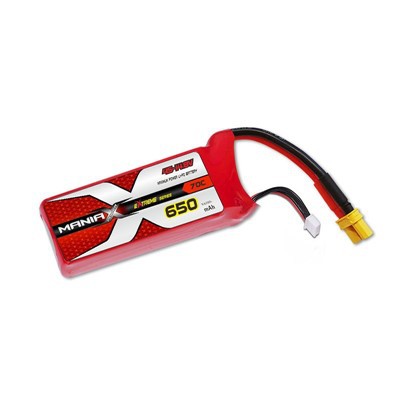
If you’re tired of batteries that die mid-flight, cause component issues, or leave you worrying about safety, I’d love to talk. We work with aerobatic pilots, FPV racers, and large-scale plane owners, and we can help you find the right 80C battery for your setup, with testing data to back up our ratings and a warranty that covers defects. Let’s chat about your flying needs, so you can spend less time troubleshooting batteries and more time flying.
4.45V Drone Solid-state Lipo Battery 280Wh/kg References
- “Lipo Battery Basics: C-Rating, Voltage, and Capacity for RC Aircraft,” RC Group Technical Manual, 2021
- “High-Current Lipo Battery Thermal Performance and Failure Modes,” Journal of Remote Control Aircraft Engineering, Vol. 12, No. 3, 2022
- “Component Compatibility for RC Brushless Systems,” ESC and Motor Manufacturers Association (EMMA) Report, 2020
- “RC Aircraft Battery Safety Guidelines,” Academy of Model Aeronautics (AMA) Safety Code, 2023
- “Lipo Battery Voltage Sag and Its Impact on RC Flight Performance,” University of Aerospace Engineering Student Research Paper, 2021
ManiaX Power Technology Co., Ltd.
ManiaX Power Technology Co., Ltd. is one of the most reliable 80c rc aircraft lipo battery manufacturers and suppliers in China, also supports customized service. Please feel free to wholesale bulk durable 80c rc aircraft lipo battery made in China here from our factory.
Address: Room 1508, 15/F, Two Grand tower, 625 Nathan Road, Kowloon, HongKong. P.R. China
E-mail: info@maniax-power.com
WebSite: https://www.maniaxpower.com/
