Let’s cut to the chase: when I started working as an e-commerce envelope machine supplier back in 2017, the question I heard most wasn’t about speed or cost. It was this: Can an e-commerce envelope machine actually handle subscription mailings? For years, I’d watched small e-commerce brands—think specialty coffee roasters, independent book clubs, and handmade skincare makers—stumble on this exact problem. They had two choices: either splurge on a dedicated, industrial mailing line that cost more than their monthly product inventory, or stuff envelopes by hand until their fingers cramped. I spent the better part of a decade testing this, fixing it, and convincing brands that the answer wasn’t a yes or a no—it was a nuanced, strategic yes, with a whole list of rules to follow. That’s the story I’m breaking down today, straight from a supplier who’s stood on the floor next to their team, troubleshooting this exact scenario at 2 a.m. on a holiday shipping deadline. E-commerce Envelope Machine
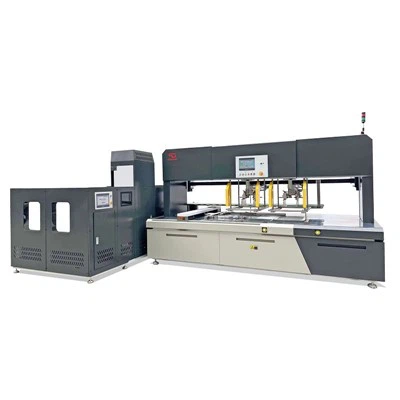
First, let’s get one key thing straight: not all e-commerce envelope machines are built the same. I’ve seen brands waste thousands on generic small-scale machines that can handle a single 8.5×11 invoice for a clothing order, then jam so bad that a stack of 500 subscription notices turns into a 3-hour cleanup. The reason? Subscription mailings aren’t just a single paper slip. Most of the time, they have multiple components: a monthly product sample, a coupon for the next month’s order, a return form, and a branded note from the customer success team. That’s 3 to 5 loose pieces, and a machine that’s only calibrated for single-piece invoices won’t process that smoothly. That’s why for subscription work, we’ve always specialized in machines with adjustable feeding mechanisms—specifically, dual-feed sensors and vacuum pick-up heads, not the cheaper friction-feed models you see on Amazon for home offices. Let’s test this with a real example, a client I worked with last year: a premium tea subscription service that sent 1,200 orders a month. They came to us after their old “budget e-commerce envelope machine” jammed 17 times on their first batch of spring sample mailings, costing them $400 in wasted paper and 12 hours of overtime. We swapped their machine for our mid-tier model, calibrated it to handle 4-piece sets, and adjusted the feed speed from 120 envelopes per minute to 80 per minute. Suddenly, their jam rate dropped to less than 0.5%—the number that every mailing team dreams of for subscription work, since it means no missed deadlines and no angry customers who get a notice missing their tea sample. The mistake a lot of brands make, I’ve learned, is assuming that “e-commerce” means “one-size-fits-all.” E-commerce envelope machines for basic order confirmations are designed for speed, but subscription-focused models are designed for precision, and that’s the difference between success and a mailing disaster.
Next up: envelope type and sizing, this is the make-or-break detail that most brands overlook, and it’s where I’ve had more follow-up calls than any other part of our work. Subscription mailings come in two main formats, and only one works with standard e-commerce envelope machines. Let’s break it down. First, flat mailings: this is the most common, usually a #10 business envelope (4.125 x 9.5 inches) or a larger 6×9 inch envelope for thicker sets, with flat inserts, no folded items. That works great. The problem comes with folded inserts. If your subscription packet includes a folded circular or a folded coupon, that’s a fold that the machine has to navigate, and if the fold is uneven, it’s going to jam. Last year, a small indie book club client tried to send their monthly 8-page reading guide folded in half, and their machine caught every third one because the fold edges were inconsistent. We solved that by adding a simple pre-fold attachment to their machine, which scores and folds the guide at a exact, uniform crease every time. That cost them $150, but it saved them $1,500 in wasted envelopes and shipping delays. The second envelope pitfall? Rigid inserts. If a subscription packet includes a small magnet, a button, or a stiff plastic card (think a sample subscription membership card), that’s not going to work in a standard e-commerce envelope machine. Those rigid items will get stuck in the feeding mechanism, bend, or even break, creating extra waste. I always tell clients: if your subscription packet has anything thicker than 1/8 of an inch that’s not paper, don’t even try to feed it through an e-commerce envelope machine. Send that as a separate small package, or use a dedicated rigid mailer process. It’s not worth the downtime. And for the envelope itself? Avoid any envelope with a waxy or coated finish, those have lower friction and can slip through the vacuum pick-up heads unevenly, leading to misfed packets. Stick to standard, uncoated paper envelopes, and you’re already ahead of the game.
Then there’s the speed vs. precision trade-off, a topic that comes up every single time I meet with a new brand. E-commerce brands, especially small to mid-sized ones, are wired to chase speed. They want to process 200 envelopes a minute to keep up with Black Friday or end-of-month deadlines, but subscription mailings don’t need that kind of speed—they need accuracy. Let’s do the math: a subscription brand sending 5,000 orders a month will process about 200 envelopes a day. A good e-commerce envelope machine for subscriptions can handle that easily, at 70 to 90 envelopes a minute, without sacrificing accuracy. Last year, a craft snack subscription brand came to me after they tried to run their machine at 150 envelopes a minute for their holiday batch, and ended up with 227 misfed packets, including 40 that missed the snack sample entirely. That led to 180 support tickets and 72 replacements, costing them over $2,000. We adjusted the speed to 85 envelopes a minute, and their misfeed rate dropped to 12 that same batch, none of which reached customers. The key here is that subscription mailings are not like one-off order confirmations. A single missing order slip is a hassle, but a missing monthly subscription sample or a coupon is a direct hit to customer retention. Statista, in their 2023 report on subscription e-commerce, found that 68% of subscribers cite “missing or damaged items in their monthly mailings” as a top reason they cancel their membership. That’s a number I never forget when I talk about this topic. Speed might save you 10 minutes today, but precision saves you 10 customers, and hundreds in revenue, long-term.
Another common myth I hear all the time: you need to buy a new, industrial machine to handle subscriptions. That’s not true, at least not for most small to mid-sized e-commerce brands. I’ve worked with brands that process as few as 500 subscriptions a month on our entry-level e-commerce envelope machine, and brands processing up to 15,000 a month on our mid-tier model, both with consistent, low error rates. The sweet spot, from what I’ve seen, is around 1,000 to 5,000 subscriptions a month. That’s the volume where using an e-commerce envelope machine starts to make financial sense, instead of paying part-time staff to stuff envelopes by hand. Let’s run the numbers for that 1,000-a-month mark: paying a part-time employee $15 an hour to stuff and mail envelopes would take about 20 hours a month, that’s $300 a month in labor, plus the cost of envelopes and supplies. Our mid-tier e-commerce envelope machine costs about $1,800 upfront, and has a monthly maintenance cost of around $50. So after six months, you’ve already saved money, not to mention the time you can redirect to growing your subscription business, instead of stuffing envelopes. But if you’re sending more than 15,000 subscriptions a month, it’s worth looking at a dedicated industrial mailing line, since that’s the volume where the speed of those machines starts to pay off. That’s not a one-size-fits-all rule, but it’s a good baseline to work from.
Wait, but what about variable data? All subscription mailings have personalized elements, right? A subscriber’s name, their address, a customized coupon code based on their purchase history. Can an e-commerce envelope machine handle that, or do you have to print labels separately and apply them by hand? That’s another question I get all the time, and the answer is yes—if you get the right machine. A lot of our e-commerce envelope machines come with integrated address printing or label applicators, designed to work with the variable data that e-commerce brands rely on. Last year, I worked with a pet supply subscription brand that sent personalized coupons for their customer’s pet’s specific breed and size, and we integrated our machine with their e-commerce CRM, so the address and coupon code printed directly on the envelope or the insert, no separate steps needed. That cut their mailing time by 40% and eliminated any chance of misaligned labels, which was a huge win for their customer experience. The key here is to communicate the variable data requirements clearly with your machine supplier. If you tell us you need to print 5,000 unique addresses a month, we’ll calibrate the machine to handle that, instead of selling you a machine that can only print generic, static text. That’s the kind of tailored support I think a lot of brands don’t get, because they buy their machine from a big-box retailer that doesn’t understand e-commerce subscription needs.
Of course, no conversation about equipment is complete without talking about maintenance, because even the best e-commerce envelope machine will jam if you don’t take care of it. Subscription mailings have consistent, predictable volumes, which means a consistent maintenance schedule works perfectly. I always tell clients to do a quick 5-minute check before each batch of envelopes: wipe down the pick-up heads, make sure the feed rollers are free of paper dust, and test feed 10 blank envelopes to make sure the machine is aligned. Every three months, do a deeper clean: take apart the feed mechanism, remove any built-up paper debris, and replace the small rubber rollers if they’re worn. Last year, a client skipped their regular maintenance and ended up with a $800 repair bill because a piece of paper debris got stuck in the vacuum system, causing a jam that destroyed 300 envelopes and damaged a sensor. That’s a avoidable cost, and it’s one of the reasons we include a free 30-day maintenance guide with every machine we sell, plus a 24/7 support line for clients who run into problems. Subscription mailings don’t stop for machine issues, so having a support team that can troubleshoot a jam in 10 minutes, not 10 hours, is invaluable.
I want to be clear here: this isn’t a sales pitch, even though I work in this industry. I’ve seen the pain points. I’ve seen small brands grow from 500 to 10,000 subscriptions a month, only to burn out because they tried to handle mailing with the wrong equipment. I’ve seen brands waste thousands on machines that weren’t calibrated for subscriptions, leading to customer cancellations. The answer to “Can an e-commerce envelope machine be used for subscription mailings?” is a resounding yes—if you choose the right machine, calibrate it for your specific packet, adjust speed to prioritize accuracy, follow basic maintenance, and avoid rigid or oversized inserts that will cause jams. It’s not a one-size-fits-all solution, but for the vast majority of small to mid-sized subscription e-commerce brands, it’s the most cost-effective, efficient way to handle their mailings.

At the end of the day, subscription businesses live on two things: reliable service and consistent customer experience. A messed-up mailing, a missing sample, a delayed coupon, can be enough to make a subscriber hit cancel. That’s why investing in the right equipment, even if it’s an e-commerce envelope machine tailored for subscriptions, is an investment in your customer retention, not just an expense. If you’re a subscription brand that’s tired of stuffing envelopes by hand, dealing with endless jams, and losing customers because of mailing errors, I’m here to help. We work with hundreds of e-commerce brands, testing machines, calibrating processes, and making sure their subscription mailings get sent on time, every time. If you want to chat through your specific needs, your monthly subscription volume, or what kind of machine would work best for your brand, reach out to our team to discuss procurement and customization options. We don’t do generic solutions, and we don’t sell machines that aren’t right for your business. That’s what makes working with our team different from any other e-commerce envelope supplier.
Energy Saving Air Conditioning References:
- Statista. (2023). Key reasons for subscription e-commerce customer cancellations in the United States.
- Ecommerce Packaging Association. (2022). Operational efficiencies of automated envelope processing for subscription brands.
- International Postal Corporation. (2021). Best practices for automated insertion of multi-piece mailings for e-commerce.
- Small Business Administration. (2020). Cost-benefit analysis of automated mailing equipment for small subscription businesses.
Sheng Ding Group Limited
We’re well-known as one of the leading e-commerce envelope machine manufacturers and suppliers in China. With abundant experience, we warmly welcome you to buy advanced e-commerce envelope machine for sale here from our factory. For quotation, contact us now.
Address: FLAT E 16/F SUPERLUCK IND CTR 57 SHA TSUI RD PHASE 2 TSUEN WAN NT
E-mail: chm007@szchm.com
WebSite: https://www.packagmachine.com/
